North Korea Leaves Room for Dialogue... Bolton Memoirs, an Unexpected Boomerang
'Bolton Memoirs' Show Reduced U.S. Hawk Influence, Japan's True Intentions Exposed, Blue House's Struggles Highlighted... Korean Peninsula Situation Enters a Breather Phase
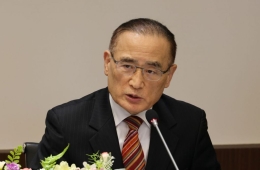
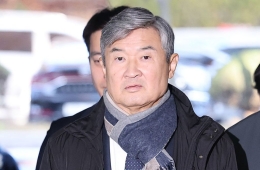
[Asia Economy Reporters Ryu Jeong-min and Kim Dong-pyo] Since North Korean State Affairs Commission Chairman Kim Jong-un abruptly suspended the announced military actions against South Korea on the 24th, North Korea's offensive rhetoric against the South has noticeably softened. On the same day, Kim Yong-chol, Vice Chairman of the Workers' Party Central Committee, issued a statement sharply criticizing South Korean Minister of National Defense Jeong Kyeong-doo personally, while also leaving room for inter-Korean dialogue, reaffirming the possibility of a shift in the atmosphere.
For now, North Korea has also halted its propaganda campaign through critical articles against the South. North Korean domestic media have not published any articles criticizing the South for two consecutive days. Kim Yong-chol's statement was not even published in the Rodong Sinmun, which is read by North Korean citizens. However, concerns remain that North Korea might present a "peace cost bill" in exchange for suspending military responses, by imposing conditions related to the South's "attitude and actions."
In his statement, Kim Yong-chol defined the situation as "a point in time when the prospects for inter-Korean relations can be speculated upon depending on the future attitude and actions of the South Korean authorities." After implementing measures such as suspending military actions, withdrawing loudspeakers aimed at the South, and halting the propaganda campaign against the South, he effectively passed the ball to the South, saying they will observe the South's response.
![[Image source=Yonhap News]](http://www.asiae.co.kr/news/img_view.htm?img=2019092016415974704_1568965319.jpg)
The general consensus is that it is premature to directly link the shift in North Korea's stance to a "thaw" in the situation on the Korean Peninsula. While military provocations may be restrained, the possibility remains that North Korea will demand "reciprocal measures" in response to their "preemptive actions." There is talk that they might demand the reduction or cancellation of the upcoming joint South Korea-U.S. military exercises scheduled for August.
Professor Jeong Dae-jin of Ajou University explained, "Depending on whether the joint South Korea-U.S. exercises resume, North Korea has left room to exercise its war deterrence, including strategic provocations." This means that North Korea has a significant possibility of reversing the suspension measures at any time.
The Blue House is paying close attention to the possibility of a shift in North Korea's stance but is taking a "silent but active" approach rather than an immediate reaction. Given that this is a sensitive period that could determine the success or failure of President Moon Jae-in's "Korean Peninsula Initiative," the administration is proceeding with steps that consider medium- to long-term strategies.
![[Image source=Yonhap News]](http://www.asiae.co.kr/news/img_view.htm?img=2020052412441154280_1590291851.jpg)
An interesting point is that the change in the atmosphere on the Korean Peninsula is not unrelated to the controversy surrounding former White House National Security Council (NSC) Advisor John Bolton's memoir. Bolton's actions, which poured cold water on diplomatic efforts for denuclearization, have unexpectedly boomeranged back to the Korean Peninsula.
On the day of reporting the military response measures, North Korea's Korean Central News Agency mentioned, "At the preliminary meeting, the Central Military Commission of the Workers' Party of Korea evaluated the recent situation." As a result, Bolton's memoir controversy provided Chairman Kim with an opportunity to analyze the situation.
With growing concerns that all efforts to improve inter-Korean relations might be in vain, North Korea cannot ignore the fact that if it rashly initiates military provocations, it would bear all political burdens.
Bolton's memoir revealed the hidden aspects of diplomacy for denuclearization on the Korean Peninsula, surprising the world, but conversely, it also exposed the true intentions of the U.S. "hawks." Bolton's actions led to a reduction in the hawks' influence. Ultimately, it became clear that he fired a warning shot to disrupt North Korea-U.S. dialogue.
![[Image source=Yonhap News]](http://www.asiae.co.kr/news/img_view.htm?img=2020062311222220760_1592878942.jpg)
Through Bolton's memoir, the actions of the Abe Shinz? Japanese government, which played the role of a "spoiler" in improving inter-Korean relations, were also exposed. This could lead to a weakening of Japan's diplomatic position in South Korea-Japan relations, as it becomes difficult to take Japan's advice on Korean Peninsula issues at face value.
Another point of interest is that Bolton's memoir revealed his role in obstructing inter-Korean relations improvement, which in turn highlighted the strenuous efforts of President Moon and the Blue House under difficult circumstances. North Korea's recent hardline stance also carries a meaning of distrust toward President Moon, but there is a possibility that perspectives might change through Bolton's memoir.
Hot Picks Today
 "Now Our Salaries Are 10 Million Won a Month" Record High... Semiconductor Boom Drives Performance Bonuses at Major Electronic Component Firms
- Experts Already Watching Closely..."Target Price Set at 970,000 Won" Only Upward Momentum Remains [Weekend Money]
- "Heading for 2 Million Won": The Company the Securities Industry Says Not to Doubt [Weekend Money]
- Starting Tomorrow, 36 Million to Receive "High Oil Price Relief Payments" Targeting Bottom 70% Income Bracket
- "Chanel Open Run? I Get a Free Pass"... The World of the Top 0.1% That Money Alone Can't Enter [Luxury World]
On the 25th, Park Ji-won, Distinguished Professor at Dankook University, said in an interview with tbs Traffic Broadcasting's radio program "Kim Eo-jun's News Factory," "If Chairman Kim (Jong-un) believes Bolton's story, I hope he understands the sincere efforts of President Moon, who endured difficult humiliations but contributed to North Korea-U.S. summits and South-North-U.S. relations," adding, "(North Korea) might interpret that 'the axis opposing denuclearization is Bolton.'"
© The Asia Business Daily(www.asiae.co.kr). All rights reserved.