Corporate Strangulation Tsunami Legislation... Business Community Explodes "On the Verge of Suffocation"
Legislative Notice for Amendments to Commercial Act and Fair Trade Act
Government Tightens Grip on Companies Relying on Ruling Party's Majority
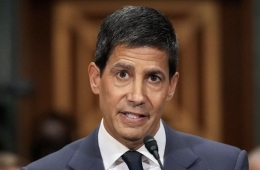
![On the afternoon of the 10th, Deputy Minister of Justice Ko Gi-young is presenting an overview of the amendment to the Commercial Act, which includes the introduction of derivative lawsuits and the separate appointment of audit committee members, at the Seoul High Prosecutors' Office in Seocho-gu, Seoul. [Image source=Yonhap News]](http://www.asiae.co.kr/news/img_view.htm?img=2020061015014687127_1591768906.jpg)
On the afternoon of the 10th, Deputy Minister of Justice Ko Gi-young is presenting an overview of the amendment to the Commercial Act, which includes the introduction of derivative lawsuits and the separate appointment of audit committee members, at the Seoul High Prosecutors' Office in Seocho-gu, Seoul. [Image source=Yonhap News]
View original image[Asia Economy Reporter Changhwan Lee] "All the bills the government has announced for legislative notice are unfavorable to corporate management. Companies are already struggling due to the novel coronavirus disease (COVID-19), and they are not punching bags to be suffocated. I question whether the government or political circles truly have the will to revive the economy."
The business community's dissatisfaction is exploding as the government simultaneously pushes for the passage of 'economic tightening' bills, including the amendment to the Commercial Act centered on the introduction of a multiple derivative lawsuit system, the amendment to the Fair Trade Act containing the abolition of the exclusive right to file complaints by the Fair Trade Commission, and the amendment to the Labor Union Act allowing dismissed workers to join unions.
An executive of a major corporation said on the 11th, "The amendments to the Commercial Act and Fair Trade Act announced by the government are representative corporate regulatory bills that threaten corporate management rights and can shrink investment activities," adding, "What is more concerning is that the bills could be further strengthened during the National Assembly passage process."
The Ministry of Justice announced that it would give legislative notice on the same day of the amendment to the Commercial Act, which focuses on the multiple derivative lawsuit system and the separate appointment of audit committee members. The Fair Trade Commission also gave legislative notice of a full amendment to the Fair Trade Act, which includes the abolition of the exclusive right to file complaints and an increase in fines for violations.
The multiple derivative lawsuit system allows shareholders of a parent company to hold legally responsible the directors of subsidiaries who neglect their duties and cause damage to the company. The separate appointment of audit committee members is a method of independently appointing audit committee members from among current directors to monitor management activities more independently.
The business community views these systems as anti-corporate regulations so strong that they are hard to find precedents for overseas, which could significantly restrict corporate management activities. In particular, under the current situation where the largest shareholder's voting rights are limited to 3%, there are concerns that if the separate appointment system for audit committee members is introduced, hostile takeover (M&A) forces or private equity funds aiming only for stock price increases could appoint audit committee members to pressure the company's management.
An official from the Korea Chamber of Commerce and Industry said, "As far as I know, the separate appointment system for audit committee members has never been introduced abroad," adding, "While it could provide an opportunity for audit committee members to operate independently from the influence of major shareholders, it could also pose another threat from the perspective of corporate managers."
The multiple derivative lawsuit system has only been introduced in a limited way in some countries such as the United States and Japan, and no country allows minority shareholders to hold subsidiaries legally responsible as in the current amendment. According to the amendment, lawsuits can be filed if shareholders hold 1% of all shares in unlisted companies or 0.01% in listed companies.
In contrast, the United States and Japan allow lawsuits only if 100% of the subsidiary's shares are held, and countries such as the United Kingdom, France, and Germany are understood to have no related systems. Companies point out that the multiple derivative lawsuit system could cause side effects where the parent company excessively intervenes in subsidiary management, thereby restricting management.
With the amendment to the Fair Trade Act abolishing the exclusive right to file complaints by the Fair Trade Commission, anyone can report unfair trade practices such as price-fixing or bid-rigging by companies to the prosecution, and the prosecution can initiate investigations at its own discretion.
The business community argues that if the exclusive right to file complaints is abolished, anyone can file complaints without investigations by the specialized Fair Trade Commission, which could restrict corporate management activities and cause confusion. There are concerns that those dissatisfied with a company's prices, production volume, M&A, or bids, or negatively affected by them, could abuse this by filing 'collusion complaints.'
The amendment to the Labor Union Act, promoted by the Ministry of Employment and Labor, allowing dismissed or unemployed workers to join unions, is also judged to negatively affect corporate management activities. The business community fears that if the Labor Union Act is amended to allow dismissed and unemployed workers to join unions, the already confrontational labor-management relations in South Korea, ranked among the lowest globally in terms of labor-management cooperation, will worsen further.
Hot Picks Today
 "Buy on Black Monday"... Japan's Nomura Forecasts 590,000 for Samsung, 4 Million for SK hynix
- "Plunged During the War, Now Surging Again"... The Real Reason Behind the 6% One-Day Silver Market Rally [Weekend Money]
- "We're Now Earning 10 Million Won a Month"... Semiconductor Boom Drives Performance Bonuses at Major Electronic Component Firms
- [PE Now] F&B Companies Making a Second Attempt at Sale: The Formula for a Successful Deal
- Experts Are Already Watching Closely..."Target Stock Price 970,000 Won" Now Only the Uptrend Remains [Weekend Money]
Choo Kwang-ho, Director of Economic Policy at the Korea Economic Research Institute, pointed out, "If the bill is proposed and amended as per the Ministry of Employment and Labor's notice, it will have a considerable adverse effect not only on overcoming the current economic crisis but also on corporate reshoring and other efforts."
© The Asia Business Daily(www.asiae.co.kr). All rights reserved.