To Prevent North Korea-Originated 'Infodemic,' Government's Monopoly on North Korea Information Must Be Broken
Report on Fake News Response by Kyungnam University Institute of Far Eastern Studies

North Korean State Affairs Commission Chairman Kim Jong Un attended the completion ceremony of the Suncheon Fertilizer Factory on May 1, Labor Day, according to Korean Central TV on the 2nd. Smoke from a cigarette is rising from Chairman Kim's hand as he smiles brightly.
View original imageLast month, experts suggested that in order to prevent the recurrence of instability on the Korean Peninsula and a global incident caused by rumors of the death of North Korean State Affairs Commission Chairman Kim Jong-un, the government should disclose the information it monopolizes on North Korea more transparently.
On the 11th, the Institute of Far Eastern Studies at Gyeongnam National University released a report titled "The Reality and Response to False Information Related to North Korea," stating, "It is necessary for the government to actively disclose and provide information related to North Korea within the possible scope."
The report first pointed out that the diversification of information distribution channels is the reason behind the increased impact of fake news related to North Korea. The report stated, "The channels through which generated fake news about North Korea spread were domestic mainstream media, but recently, with the development of information and communication, there is a tendency to expand to social network services (SNS) or personal broadcasting platforms."
Against this background, fake news is being exploited for partisan and economic interests. The report analyzed, "The motives for generating fake news and producing fake news can be divided into two: cyber psychological warfare significance within polarized political camps, and the production and distribution of sensational information that easily misleads the public to create economic gains."
The report explained, "(Through fake news) there is a motive to emphasize the abnormal state of North Korea, highlight a hostile and confrontational social atmosphere, aim for the collapse of the North Korean regime, and obtain economic benefits through false information."
The social and security adverse effects caused by fake news related to North Korea are extensive. The report stated, "The death of North Korea's top leadership can be a factor that harms inter-Korean relations and the stability of the Korean Peninsula, and the spread of false information related to this stimulates political, economic, and social instability in South Korea."
It continued, "Fake news related to North Korea spreads citizens' security anxiety and causes unnecessary efforts and costs in terms of our military's guard posture and military crisis response." Furthermore, "For youths whose beliefs or views are not firmly established, there is a high risk that inappropriate beliefs and political views may be created and reinforced due to fake news."
The report identified "truth" as the tool to counter fake news. It suggested, "In North Korea-related information, instead of a binary opposition between the government and the private sector, the government should sufficiently provide information related to North Korea and move toward a direction where the authenticity or interpretation of information is discussed together with the private sector."
Additionally, it emphasized, "Measures to gradually allow freer circulation of North Korea information should be explored," and "It is necessary to expand access routes for the public to objective and high-quality information about North Korea."
At the same time, the report proposed, "Beyond controlling North Korea information, attempts to actively push North Korea-related information using the government or public institutions should also be considered."
Hot Picks Today
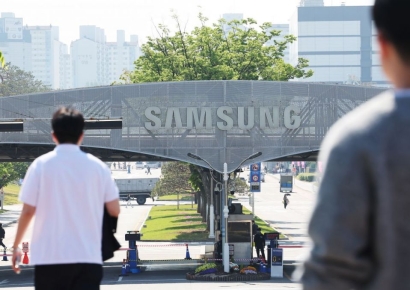 "Now Our Salaries Are 10 Million Won a Month" Record High... Semiconductor Boom Drives Performance Bonuses at Major Electronic Component Firms
- Wallets Open Wide on Big News...300 Trillion Won Heads to the U.S., "Tax Breaks" Fail to Keep Funds at Home
- "Hope You Enjoy the 'Welfare' for Bereavement of Children"... Ridicule of Strike Non-Participants Intensifies Union Conflict at Samsung Electronics
- "Heading for 2 Million Won": The Company the Securities Industry Says Not to Doubt [Weekend Money]
- Experts Already Watching Closely..."Target Price Set at 970,000 Won" Only Upward Momentum Remains [Weekend Money]
Lee Gwan-se, director of the Institute of Far Eastern Studies at Gyeongnam National University, said, "The series of processes related to the production, distribution, and amplification of false information surrounding Chairman Kim Jong-un should not be dismissed as a simple incident, but related parties should take it as an opportunity to build national trust."
© The Asia Business Daily(www.asiae.co.kr). All rights reserved.