Next Year's Budget Focuses on COVID-19 Response and Inclusive Policies... Concerns Over Fiscal Soundness Remain
Government Announces '2021 Budget Formulation Guidelines'
Fiscal Innovation Promoted Through Mandatory 10% Structural Adjustment of Discretionary Spending by Ministries
However, Effectiveness Uncertain... "Supplementary Policies Needed Alongside Fiscal Expenditure"

[Asia Economy reporters Kim Hyunjung and Joo Sangdon] As the government identifies large-scale fiscal projects such as post-COVID-19 economic recovery and realization of an inclusive society as the core investment directions for next year’s budget, attention is also focused on measures to secure tax revenue and enhance fiscal soundness. The government plans to establish a soundness foundation through expenditure restructuring by each ministry, but the effectiveness is expected to be limited compared to the strong commitment to expansionary fiscal policy.
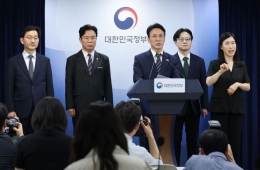
According to the "2021 Budget Formulation Guidelines" announced by the Ministry of Economy and Finance on the 24th, the government’s investment next year will focus on ▲dynamic economy ▲innovative growth ▲inclusive society ▲and national safety. In particular, restoring the economic dynamism weakened by COVID-19 is prioritized, and active fiscal investment will be made in innovative inclusive growth, which has been a major policy task. With forecasts suggesting that Korea’s economic growth rate this year could be negative (-0.6%, Standard & Poor’s), it is deemed inevitable to pour money into economic recovery. Additionally, measures to respond to the global value chain, such as upgrading infectious disease prevention and treatment systems triggered by the COVID-19 crisis and early self-reliance in materials, parts, and equipment caused by the deterioration of Korea-Japan relations, will also be pursued.
Specifically, to expand the domestic demand base, support will be provided for building new distribution infrastructure such as online sales channels and smart stores for self-employed and small business owners, and efforts will be made to diversify production bases and export markets to respond to the global value chain. Plans also include strengthening social safety nets by expanding employment safety nets for platform workers and day laborers in blind spots, enhancing the coverage of basic livelihood security, and solidifying the elderly job projects, which had been controversial as "tax jobs." Large-scale budgets are expected to be invested in expanding infectious disease specialized hospitals and personnel, securing health stockpiles such as masks, and researching treatments and vaccines, which have become necessary due to COVID-19.
Concerns about fiscal soundness have been raised. Although it is a time when policy tasks need to shift in preparation for the "post-COVID-19" era, the government still maintains large-scale fiscal policies centered on inclusive growth, such as expanding the basic pension recipients and the Korean-style unemployment assistance (providing 3 million KRW for six months). Although three major strategies and detailed tasks to enhance fiscal soundness?▲expenditure restructuring ▲expansion of sustainable foundations ▲establishment of an innovative fiscal management framework?have been presented, their effectiveness has been criticized as lacking. A representative measure is the mandatory 10% restructuring of discretionary spending by each ministry to redirect unnecessary budgets to priority investment projects, but this was already applied during this year’s budget formulation. The Ministry of Economy and Finance has not presented concrete results on this and only stated that it will pursue this more intensively with incentives and penalties this year. Additionally, the policy to organize and manage overlapping projects or budgets by ministries as collaborative budgets is still at the pilot stage under the name of "convergence budget," making it difficult to guarantee its innovativeness.
In this regard, there are also arguments that policy formulation should consider heterogeneity by income class and age group rather than unconditional fiscal expansion. Kim Wonki, a professor of economics at Chonnam National University, emphasized, "Fiscal spending has a negative impact on consumption by the middle class in the 3rd and 4th income quintiles and the elderly aged 50 and above," adding, "Since fiscal spending can offset the economic stimulus effect, introducing supplementary policies can maximize the economic stimulus effect."
Hot Picks Today
 "Now Our Salaries Are 10 Million Won a Month" Record High... Semiconductor Boom Drives Performance Bonuses at Major Electronic Component Firms
- Living the Homebody Dream? "I Was Shocked by My Spending" How to Cut Costs to 5,000 Won for Essentials [The Principles of Benefits]
- Is It Really Like an Illness? "I Can't Wait to Go Again"—Over 1 Million Visited in Q1, Now 'Busanbyeong' Takes Hold [K-Holic]
- "Heading for 2 Million Won": The Company the Securities Industry Says Not to Doubt [Weekend Money]
- Experts Already Watching Closely..."Target Price Set at 970,000 Won" Only Upward Momentum Remains [Weekend Money]
Meanwhile, each ministry must submit budget requests to the Ministry of Economy and Finance by May 29 this year according to the formulation guidelines announced by the ministry. Based on this, the Ministry of Economy and Finance plans to formulate the next year’s budget and submit it to the National Assembly by September 3.
© The Asia Business Daily(www.asiae.co.kr). All rights reserved.