Ministry of Land, Infrastructure and Transport and Mobility Industry Preparing for the 'Tada Aftermath'

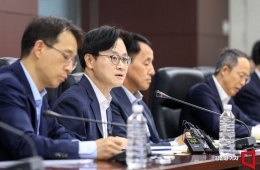
▲ Kim Hyun-mi, Minister of Land, Infrastructure and Transport (Provided by Ministry of Land, Infrastructure and Transport)
View original image[Asia Economy Reporter Lee Chun-hee] The Ministry of Land, Infrastructure and Transport (MOLIT) and the mobility industry have come together to discuss new mobility services based on the new Passenger Transport Service Act, scheduled to be implemented around September next year.
On the 17th, MOLIT and the mobility industry held a meeting at Seoul City Tower in Jung-gu, Seoul, agreeing to swiftly proceed with follow-up measures after the amendment of the Passenger Transport Service Act, aiming for a prompt service launch and rapid implementation of necessary countermeasures.
The meeting was attended by a total of 13 mobility companies, including existing taxi-based operators such as KST Mobility (Macaron) and Kakao Mobility, rental car-based operators like Cube Car (Papa) and Buxi, as well as companies preparing new businesses. Socar and VCNC, which operate Tada, did not attend.
Minister Kim Hyun-mi of MOLIT stated, "The Passenger Transport Service Act, which originated in 1962, has been reborn as an institutional foundation for innovation, shedding its outdated framework. I urge everyone to accelerate efforts so that the public can quickly experience various mobility platform services." Four companies?KST Mobility, Buxi, Cube Car, and Kakao Mobility?also presented their achievements and business plans, including the effects of combining taxis with platforms, raising expectations for the upcoming services.
A MOLIT official said, "With the amendment of the Passenger Transport Service Act passing the National Assembly on March 6, a new institutional space has opened for platform operators, allowing not only simple brokerage but also direct transportation business. The mobility industry, which had faced difficulties in business promotion due to legal uncertainties, can now make bolder attempts within a new and stable foundation."

▲ 'Shuckle,' a demand-responsive large shuttle taxi service by Hyundai Motor Company and KST, currently being piloted in Eunpyeong-gu, Seoul (Provided by Hyundai Motor Company)
View original imageBefore the expected implementation of the amendment in September next year, MOLIT plans to utilize the 'Regulatory Sandbox' system to enable the launch of various services. Currently, Konatus's voluntary taxi ride-sharing brokerage platform 'Banban Taxi' and Hyundai Motor Company-KST's demand-responsive large shuttle taxi service 'Shuttle' are operating under the Regulatory Sandbox system. Additionally, activation measures such as reducing platform transportation business contribution fees for early-stage startups will be implemented.
Entry barriers will also be significantly lowered. In Seoul, the license quota for platform franchise businesses, which was previously 4,000 vehicles, will be drastically reduced to 500 vehicles. Driver qualifications will be obtainable within 1 to 2 days to ensure smooth driver supply.
Hot Picks Today
 Cerebras Soars 70% on IPO Debut: Is Nvidia's Reign Ending as a New AI Semiconductor Power Emerges?
- "After Vowing to Become No. 1 Globally, Sudden Policy Brake Puts Companies’ Massive Investments at Risk"
- [Breaking] Democratic Party's Kim Sangwook and Progressive Party's Kim Jonghun Agree on Single Primary Format for Ulsan Mayor Candidate Selection
- "Mom, Isn't It Comfortable Living With Me?"... 'Unexpected Result' Shows Increased Drinking Out of Frustration
- "He's Handsome, It's Such a Pity?"... Lawyer Responds to Bizarre 'Appearance Evaluation' of High School Girl Murder Suspect
Minister Kim urged, "Mobility innovation means that all citizens can move at the time they want, in the way they want, to the place they want, and that everyone involved can enjoy the benefits. Please join forces to establish a Korean-style innovation model."
© The Asia Business Daily(www.asiae.co.kr). All rights reserved.