Used goods and concert ticket trading scams bait Simultaneous fraudulent activities nationwide Victims' cases collected Repeated use of same accounts and contacts
Suspected organized cybercrime Individual investigations... difficult to consolidate Organized and sophisticated with overseas bases Strong investigation policy by the National Police Agency
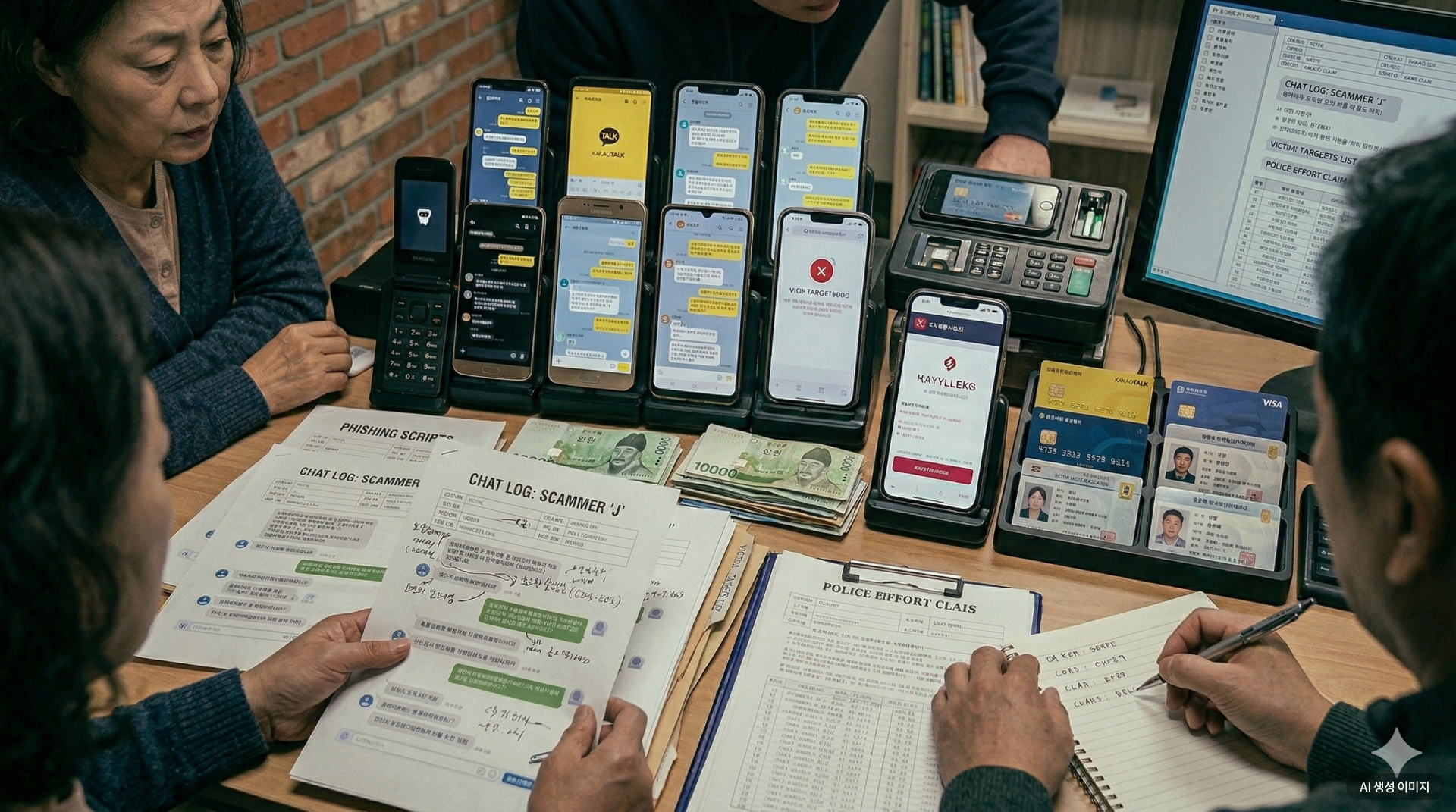
Fraudulent schemes using online secondhand transactions and concert ticket sales as bait have occurred simultaneously across the country, with perpetrators siphoning off money from victims. As the number of victims has grown to several hundred, it has been confirmed that the same bank accounts and contact information were repeatedly used for different crimes, leading authorities to suspect an organized cybercrime ring.
Number of Victims Surges from 10 to 200... Confirmed Losses Total KRW 220 Million
According to The Asia Business Daily's coverage on March 25, victims of these incidents have gathered in online open chat rooms to share their experiences. While there were around 10 victims as of December last year, the figure has recently surged to about 200.
The victims were commonly tricked by a tactic in which sellers on platforms like Junggonara, Bungaejangter, and X (formerly Twitter) demanded "additional payments" during the transaction process. The sellers, posing as legitimate by sending a copy of their ID card or business registration certificate, would first gain the victims' trust. After the victim made a payment, the seller would claim that the depositor's name was entered incorrectly and request an additional deposit to a different account. If the victim demanded their money back, the seller would insist that the original transaction must be canceled and a new deposit made for a refund to be processed.
The total confirmed losses alone amount to approximately KRW 220 million. For now, victims have no choice but to file separate reports with their respective local police stations. However, since the individual losses are often small, it is difficult for the police to secure sufficient investigative resources. The victims are also scattered nationwide, making it challenging to respond collectively.
Same Accounts Used in Different Crimes... Nationwide Cases Difficult to Consolidate
Victims discovered connections between cases by directly comparing the account numbers received from sellers. After checking the accounts into which funds were deposited, they found that at least 29 accounts had repeatedly appeared in dozens of different types of fraud cases. The perpetrators used the same contact information while using different names, such as "Mr. Ahn" for electronics purchases and "Mr. Heo" for fitness equipment transactions. The account provided under Heo's name also appeared in concert ticket scams.
Currently, related cases are being investigated separately in various locations, including Gangnam Police Station in Seoul, Seongnam Sujeong Police Station in Gyeonggi Province, and Yuseong Police Station in Daejeon, as well as across Seoul, Gyeonggi, Busan, Daejeon, and South Jeolla. Yeoju Police Station in Gyeonggi was unable to identify a suspect in a case received last December and reclassified it as an unresolved case earlier this month.
A police official involved in the investigation stated, "There are suspicions of connections, but it is not easy to merge cases from different police stations," adding, "The principle is to transfer the case to the jurisdiction of the account holder's registered address."
Expanding Operations Overseas... Need for Active Investigation
Recently, cybercrime rings have become more organized and sophisticated, establishing overseas bases. As a result, victims are calling for more proactive investigations into these cases as well. On the 22nd, the National Police Agency announced that it had uncovered a crime ring based in Cambodia that had defrauded about 1,400 people of KRW 6.7 billion through secondhand marketplace scams. The scope of crimes has expanded from methods like voice phishing and romance scams—which typically target larger sums—to secondhand trading platforms where smaller transactions are common.
Accordingly, the National Police Agency plans to deploy specialized investigative personnel, including anti-corruption and economic crime units and cybercrime squads at regional police agencies, to conduct intensive investigations into face-to-face transaction scams and online shopping mall fraud until October.
Meanwhile, Chae Hyunil, a lawmaker from the Democratic Party, has proposed the "Multi-Victim Fraud Prevention Act," which aims to enable a swift response to online-based crimes targeting multiple victims. However, the bill is currently pending in the National Assembly due to disagreements over the scope of authority.