With the Samsung Electronics labor union announcing a general strike planned for May, movements are being detected in the global memory landscape. The Taiwanese semiconductor industry is closely monitoring the situation, analyzing that if Samsung Electronics encounters disruptions in memory production, they could benefit from the aftermath. Major companies are keeping a close eye on the progress of the strike.

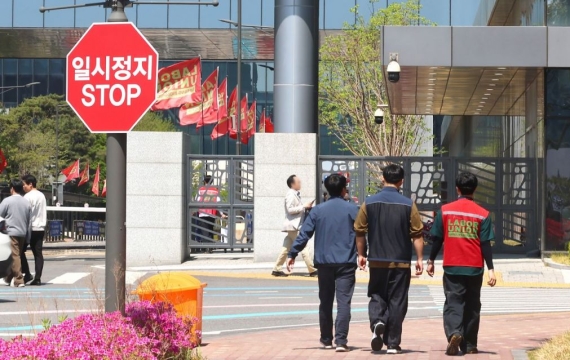
At the general strike rally held in front of the main gate of Samsung Electronics Hwaseong Plant in Hwaseong, Gyeonggi Province, on July 8, 2024, the National Samsung Electronics Workers' Union, the largest union of Samsung Electronics, declared a three-day total strike. Union members are shouting slogans. Photo by Yongjun Cho jun21@
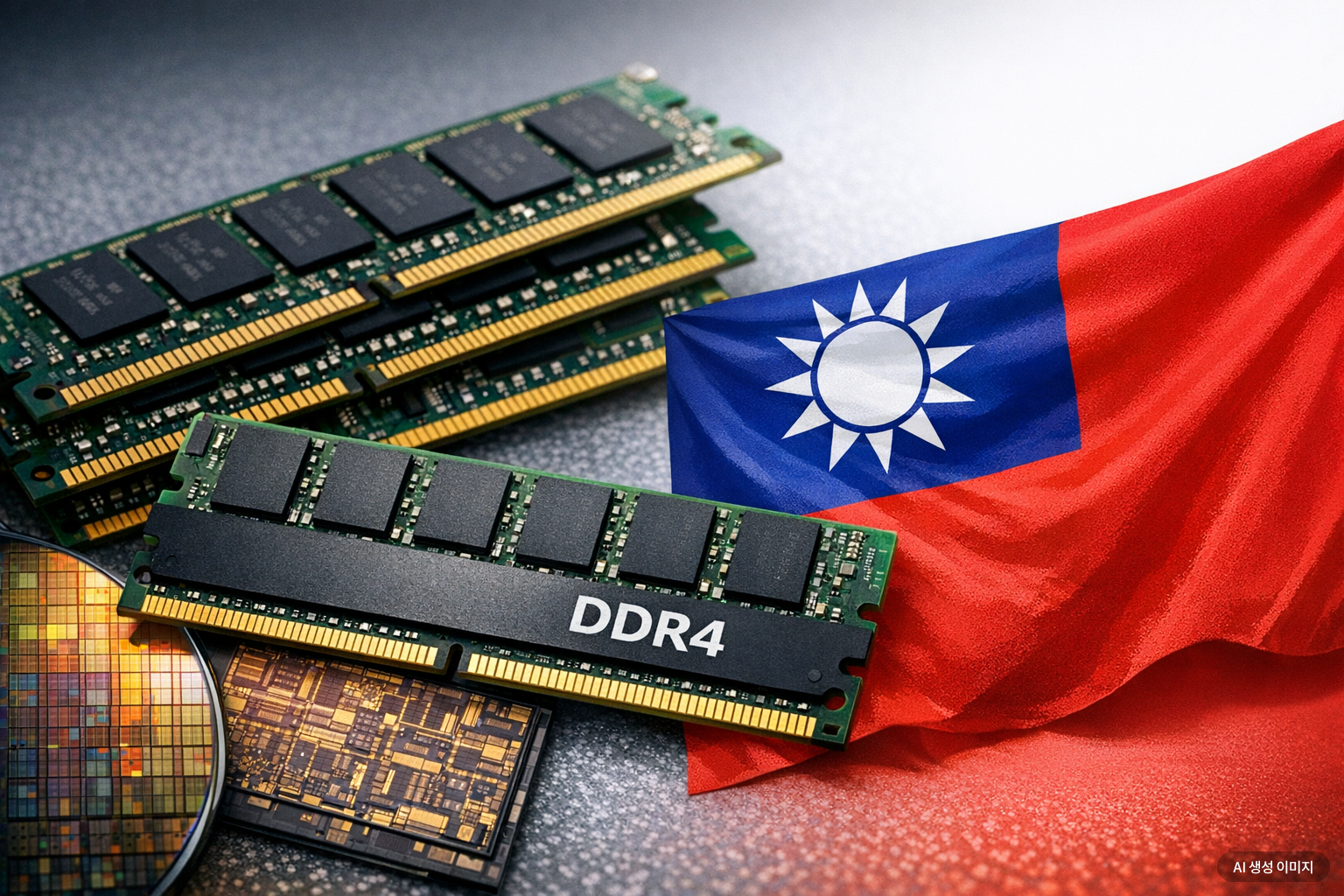
원본보기 아이콘According to the Economic Daily News in Taiwan on March 23, local memory semiconductor companies such as Nanya, Winbond, and PSMC are working to assess the situation, believing that the general strike by the Samsung Electronics union could further affect the global memory supply chain. They see that any disruption in production at Samsung Electronics, the world’s largest DRAM supplier, could lead to memory shortages and a sharp spike in prices.
Previously, the Samsung Electronics Union Joint Struggle Headquarters secured the right to strike after a vote held since March 9, in which 93.1% voted in favor. The Joint Struggle Headquarters is a negotiation group formed by three unions, with the Samsung Electronics Branch—a super-enterprise union that became the majority with over 60,000 members—at the forefront. They are demanding the removal of the cap on performance bonuses and plan to continue their struggle, starting with a rally on April 23 and leading up to a general strike in May. If the strike materializes, it will be the second strike in Samsung Electronics' history since its founding.

Wu Yating, Senior Vice President of TrendForce, said, “As the Samsung Electronics union strike intensifies, the likelihood of disruptions in memory production is increasing. This strike could negatively impact not only the production of DRAM and high-bandwidth memory (HBM) but also prices, although the exact scale of the impact requires further analysis.” In the fourth quarter of last year, Samsung Electronics held a global market share of 36.6% in DRAM and 40% in NAND, exerting critical influence in the memory supply chain.
Taiwanese memory manufacturers see this situation as an opportunity to strengthen their price negotiation power for their products. While the so-called ‘memory big three’ compete fiercely in cutting-edge ultra-fine processes, Taiwanese companies have focused on general-purpose DRAM and power memory, targeting niche markets. In fact, since last year, memory prices have been on a steep upward curve, and the combined sales of major Taiwanese memory companies have repeatedly hit record highs.

An official from the local semiconductor industry said, “Currently, SK hynix and Micron are focusing their capacity on high-bandwidth memory (HBM) for artificial intelligence (AI), resulting in tight supply for general-purpose DRAM and NAND. In this situation, if Samsung’s supply is also cut off, it is difficult to predict how much memory prices will rise.” KB Securities recently estimated that DRAM and NAND prices would rise by 148% and 111%, respectively, this year compared to the previous year.
Seo Seungyeon, a researcher at DB Financial Investment, said, “We expect DRAM prices to continue rising through next year, driven by solid AI and general server demand, tariffs, and a shortage in legacy supply. Considering the big tech companies’ competitive AI investments and the shift of capacity to HBM, the tight supply-demand situation for general-purpose DRAM is likely to continue the DRAM boom until the first half of 2027.”
Economic Daily News (Taiwan) = Ye Tingchun, Yin Huichong / Translation = The Asia Business Daily
※ This column was published as part of a strategic partnership between The Asia Business Daily and the Economic Daily News (Taiwan).
-

Reporter Kim Jinyeong camp@asiae.co.kr
-
Edit Kim Hyunhee faith100@asiae.co.kr
© The Asia Business Daily(www.asiae.co.kr). All rights reserved.
!["Please Help Us": How Much Do Those Bowing Deeply for Your Vote Really Earn? [Data Pick]](https://cwcontent.asiae.co.kr/asiaresize/323/2026052010120870131_1779239528.png)