Exports and stock market boom raise expectations for domestic stocks' earnings improvement
As Korea's exports, led by semiconductors, improve sharply and the stock market revives, expectations are growing that the wealth effect will spill over into the domestic market, including department stores, big-box discount stores, and hotels.
Retail stocks' average gain of 18% outpaces the KOSPI average
Expectations grow for earnings improvement in domestically focused stocks amid export recovery and stock market boom
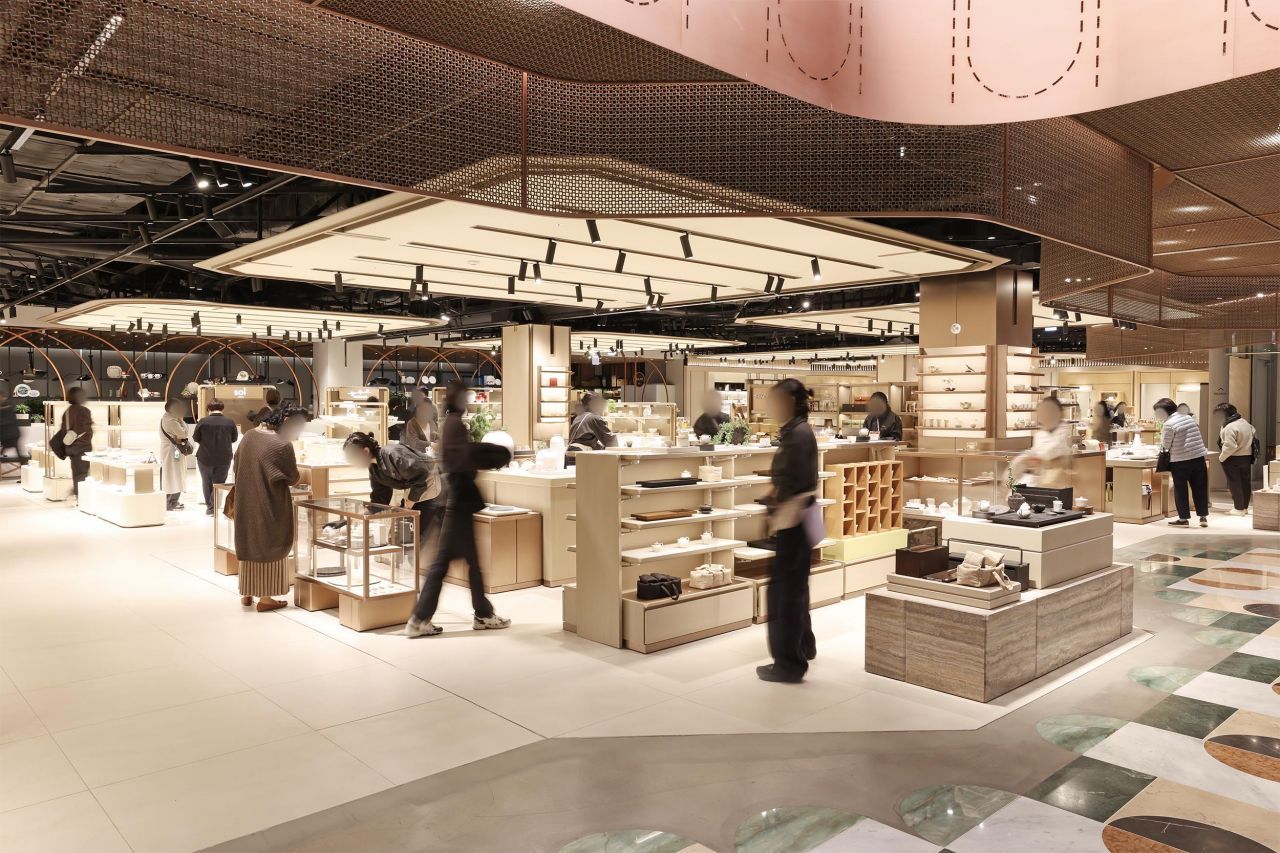
According to the Korea Exchange and KB Securities on the 12th, the sector that has delivered the highest returns in the Korean stock market so far in February is retail, with an average gain of 18%. Since the start of February, share price gains of major retail stocks, such as department stores and big-box discount stores, have far outpaced the KOSPI average.
Lotte Shopping's share price has risen by 37% in February, while Emart is up 35%, Shinsegae 17%, and Hyundai Department Store 16%. These gains in retail stocks have significantly outstripped the KOSPI's return, which has been limited to an increase of around 1–2% this month.

Hotel-related stocks, another representative domestically driven sector, have also posted strong returns. GS P&L, which has Parnas Hotel as a subsidiary, has seen its share price climb by about 20% this month alone, while Seobu T&D, which owns the Seoul Dragon City hotel complex, has recorded a 39% increase in its share price so far this year, both far exceeding the KOSPI's performance.
Apparel-related stocks have also risen sharply. Handsome, which reported a surprise earnings beat in the fourth quarter of last year, has seen its share price jump by around 20% this month, while LF has also gained more than 14% over the same period.
Asset price rises -> consumption stimulus: 'wealth effect' expected to emerge
Market participants expect domestic consumption to enter a full-fledged recovery this year, supported by booming exports in key industries such as semiconductors, shipbuilding, defense, and power equipment, as well as a thriving stock market. In particular, they see the rapid rise in stock prices as potentially fattening consumers' wallets and creating a positive cycle that leads to an improvement in domestic demand.
Yoo Junghyun, a researcher at Daishin Securities, said, "Since the fourth quarter of last year, a clear consumption recovery has been confirmed across most distribution channels," adding, "The steep rise in the stock market is likely to generate a wealth effect."

Consumption recovery driven by booming exports in key industries and a stock market rally
Rising asset prices -> Stimulating consumption; 'wealth effect' expected
The recent rebound in the consumer sentiment index is also heightening expectations for an improvement in domestic demand. The Bank of Korea's Composite Consumer Sentiment Index (CCSI) for last month came in at 110.8, up 1 point from 109.8 in December 2024. A reading above 100 indicates that consumer sentiment is more optimistic than the long-term average (2003–2024).
Last month, the Bank of Korea's News Sentiment Index stood at 117.48, its highest level in four years and six months since July 2021 (117.71). The News Sentiment Index quantifies economic sentiment reflected in news articles on the economy. With the KOSPI surpassing 5,000 points this year and the stock market remaining buoyant, overall consumer sentiment is assessed to have improved.
Lee Euntaek, a researcher at KB Securities, said, "The sharp rally in the stock market is highly likely to stimulate Korea's gross domestic product (GDP) and consumer sentiment this year," explaining, "A stock market surge typically affects the real economy with a lag of about one year, and given that our market jumped 76% last year, it is bound to have an impact this year."
-

Reporter Lee Changhwan goldfish@asiae.co.kr
-
Edit Kang Dongwon kangdw76@asiae.co.kr
© The Asia Business Daily(www.asiae.co.kr). All rights reserved.