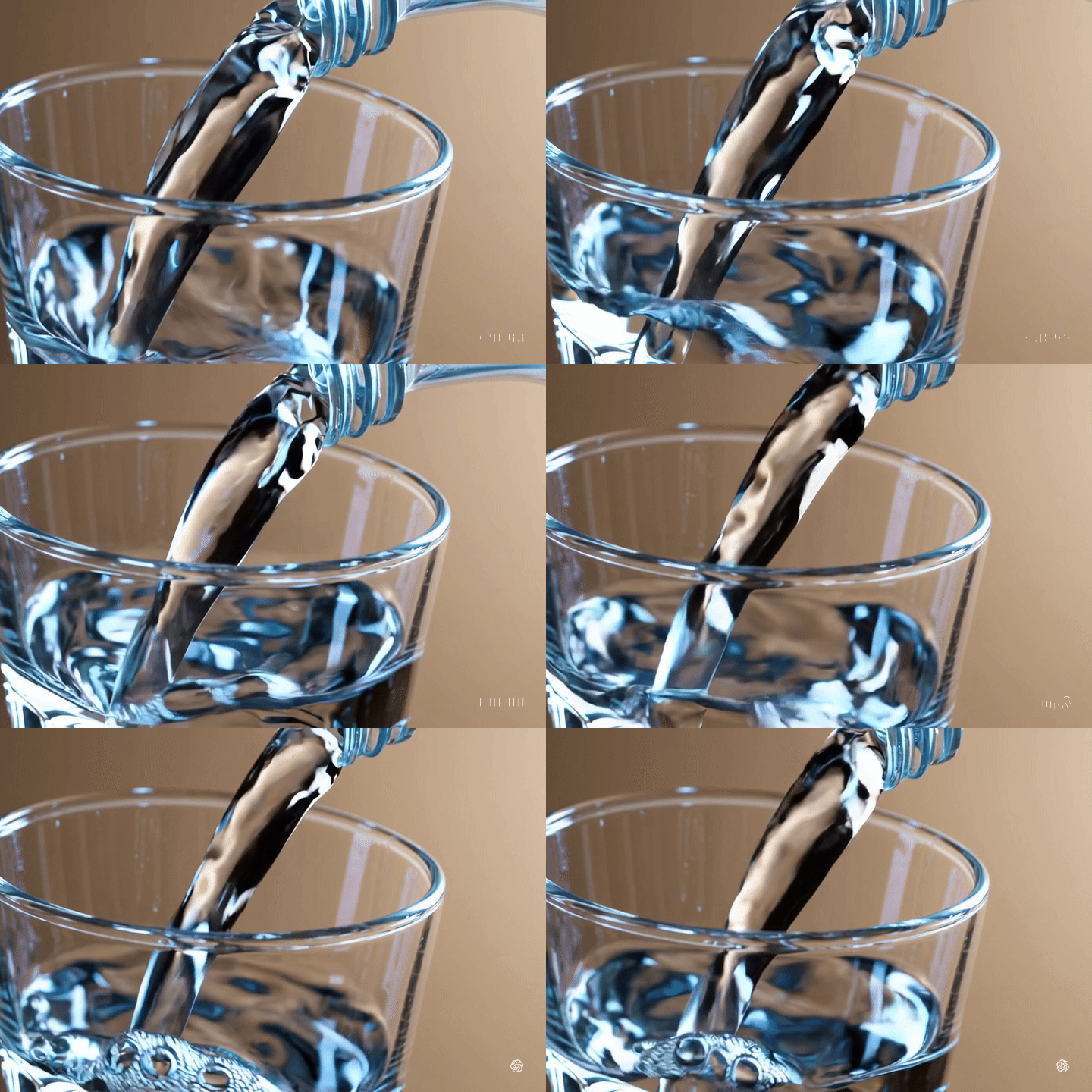
A study has found that bottled water in single-use plastic bottles contains
up to three times more micro- and nanoplastics than tap water.

"A research team at Ohio State University in the United States compared six commercial bottled water brands with tap water from four water treatment plants in Ohio,and found an average of 6 million micro- and nanoplastic particles per liter in the bottled water, while about 2 million were detected in the tap water.
The researchers estimated that when drinking water from plastic bottles,a person could ingest between 2.6 million and 11.5 million micro- and nanoplastic particles per liter.
By contrast, tap water poured into a cup contained between 1.6 million and 2.6 million particles per liter.On average, the number of plastic particles in bottled water was about two to three times higher than in tap water.Even the least-contaminated bottled water was at a similar level to the most-contaminated tap water."
- Science news outlet StudyFinds
Bottles and caps are the source of contamination... more shaking, more particles

The substance most frequently detected in bottled water was PET (polyethylene terephthalate),
the main material used to make plastic water bottles.
This was followed by polyamide, which is used in purification filters,
and rubber components presumed to originate from the sealing material in bottle caps.

This shows that plastic particles originating from the container itself, rather than from the water,
are acting as the main source of contamination.
Opening and closing the bottle, shaking it during transport,
and everyday temperature changes
can all continuously introduce plastic particles into the water.
Risk of long-term accumulation... concern over crossing the blood-brain barrier

Concerns are also growing over the effects of micro- and nanoplastics on the human body.
In general, particles larger than 150 micrometers are excreted from the body,
those between 10 and 130 micrometers can move into tissues,
and particles smaller than 10 micrometers can penetrate into cells.
In particular, nanoplastics smaller than 1 micrometer can travel through blood vessels to various organs,
and there are even concerns that they may be able to cross the blood-brain barrier, which protects the brain.
"Use stainless steel or glass bottles after filtration"

The most practical alternative suggested is to filter tap water
and then drink it from glass or stainless steel containers.
This cannot completely remove plastics entering from the water source,
but it can block additional contamination originating from plastic bottles.
"We need to reduce our consumption of bottled water and minimize plastic exposure."We cannot completely avoid micro- and nanoplastics, but by cutting back on single-use plastics we can reduce our level of exposure." - Dr. Megan Jamieson Hart, who led the study
-

Reporter Seo Jiyeong zo2zo2zo2@asiae.co.kr
-
Edit Oh Hyunyoung hyun05@asiae.co.kr
© The Asia Business Daily(www.asiae.co.kr). All rights reserved.