Transaction slump deepens due to high-end housing regulations
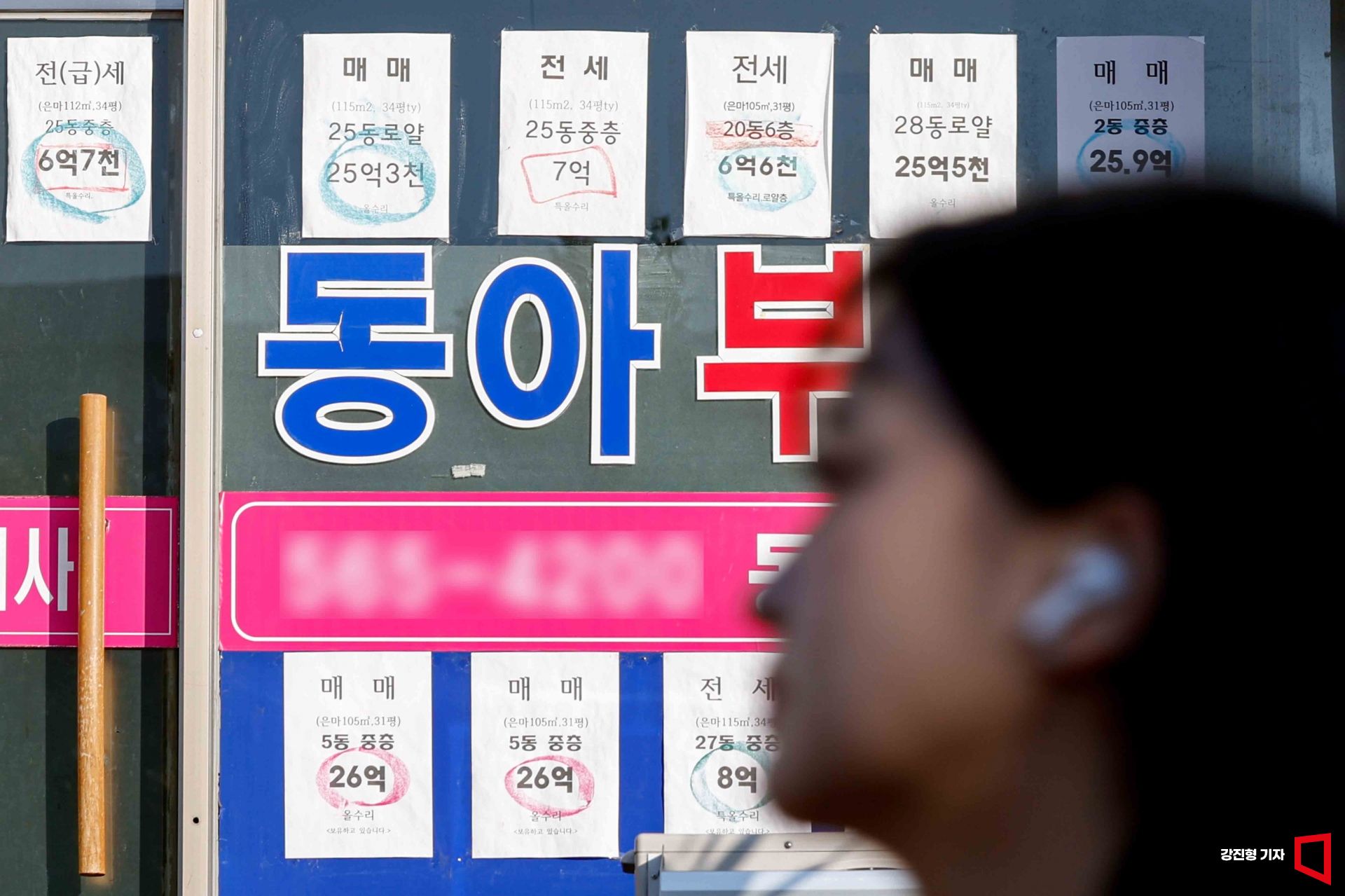
As listings have recently increased in the so-called "Gangnam 3 Districts," asking prices there have begun to edge down. Even properties that were listed above the most recent transaction prices after steeply discounted units were sold off are now seeing their asking prices reduced.
According to real estate big data company Asil on the 9th, the asking price for a low-floor 59㎡ exclusive area unit in "Jamsil Elseu" in Jamsil-dong, Songpa-gu, Seoul, dropped by 20 million won from its initial listing price of 2.98 billion won to 2.96 billion won on the 6th. A day earlier, on the 5th, the asking price for a high-floor 59㎡ exclusive area unit in the same complex was also cut by 30 million won, from 3.02 billion won to 2.99 billion won. In Banpo-dong, Seocho-gu, a 59.92㎡ exclusive area unit in "Banpo Sseomit" was re-listed at 3.43 billion won, 10 million won below its initial listing price.
'Jamsil Els' asking price falls by 30 million won
'Banpo Summit' also falls by 10 million won
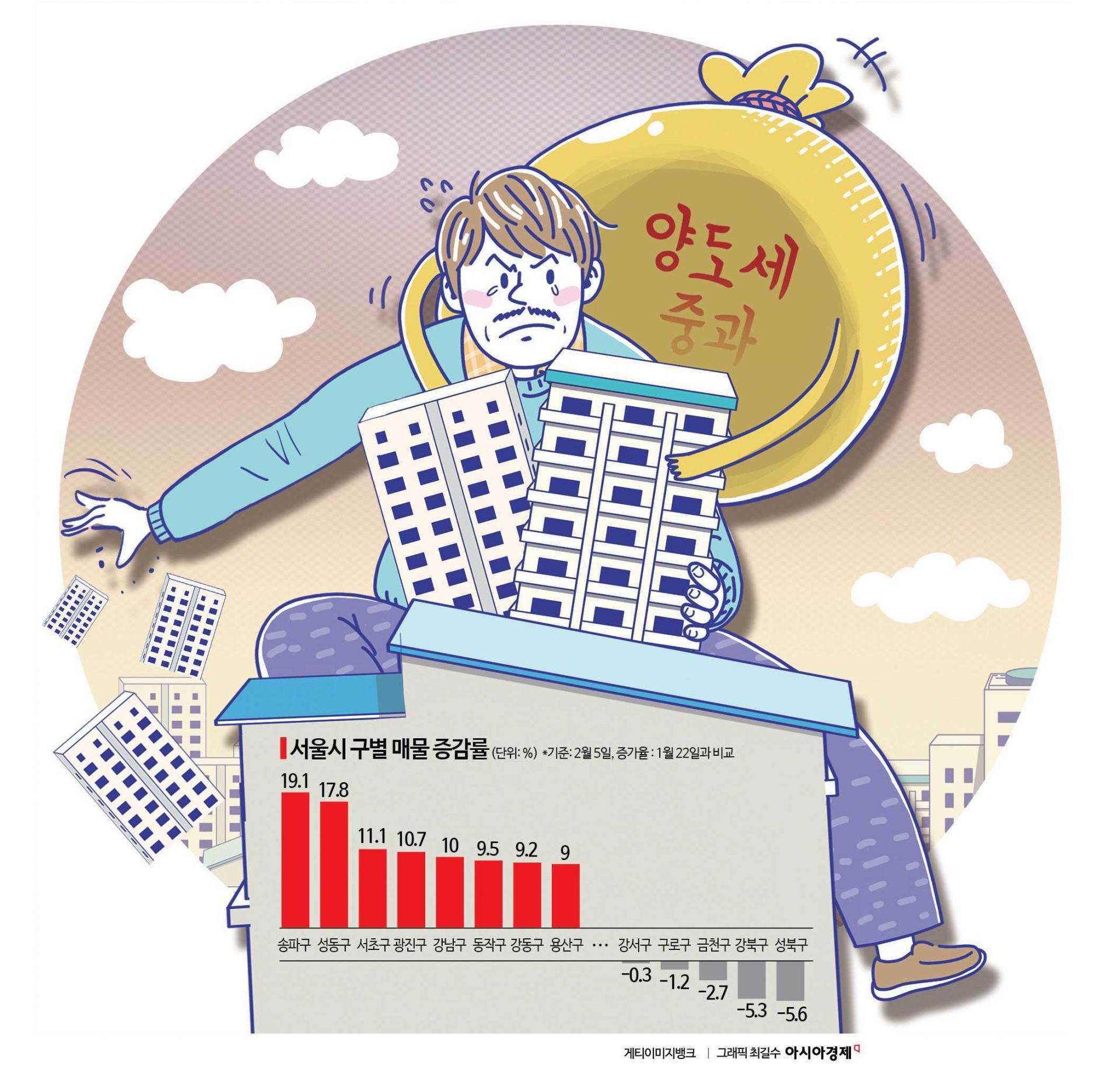
Homeowners have begun to lower asking prices for properties that are not urgent sales because more homes have recently been put on the market. As of the 5th, there were 59,706 apartment listings in Seoul, an increase of about 6.2% compared with the day before the president first posted a message related to multi-home owners on social media on January 23.
The increase was particularly pronounced in the Gangnam 3 Districts and Seongdong-gu among Seoul’s autonomous districts. Listings in Songpa-gu rose 19.1% over the same period, from 3,471 to 4,137, followed by Seongdong-gu (17.8%), Seocho-gu (11.1%), Gwangjin-gu (10.7%), Gangnam-gu (10%), Dongjak-gu (9.5%), and Gangdong-gu (9.1%). All of these are regarded as so-called "prime areas" within Seoul.
President Lee's warning of heavier capital gains tax has a deterrent effect
Listings are appearing mainly among high-priced apartments
Rising tax burden in high-tax areas is prompting multi-homeowners to sell
With increased listings, asking prices are likely to fall
Listings are emerging mainly among high-priced apartments. In Garak-dong, Songpa-gu, "Songpa Helio City" listings surged 52%, from 512 to 778. In Jamsil-dong, "Jamsil Elseu" listings increased 43%, from 72 to 103, while "Riche-nous" in the same area rose 36.3%, from 110 to 150. In Seongdong-gu, "Trimage" listings climbed 19.3%, from 62 to 74, and "Acro Seoul Forest" listings rose 18%, from 28 to 33. In Banpo-dong, Seocho-gu, "Banpo Sseomit" listings also jumped 49%, from 45 to 67. Market prices in these complexes are all at 2 billion won or more. Yoon Sumin, real estate specialist at NH Nonghyup Bank, analyzed, "Ultimately it is a battle over property taxes rather than capital gains tax," adding, "In the Gangnam area, where a perception that prices have already peaked is established, policy remarks have coincided with this timing, leading to an outflow of listings."

According to a simulation by Woo Byungtak, senior specialist at Shinhan Bank Premier Pathfinder (assuming an increase in the fair market value ratio for the comprehensive real estate tax from 60% to 80% and a 45% rate for property tax), if one owns an 84.97㎡ exclusive area unit in Acro River Park in Seocho-gu at an actual transaction price of 5.5 billion won (with the officially assessed value estimated at about 3.3 billion won), the total annual property tax burden is estimated at 22.78 million won. This is slightly higher than under the previous calculation method (21.25 million won). For Banpo Xi (84㎡ exclusive area), the annual property tax is also expected to rise to 18.43 million won from the previous estimate of 17.90 million won. This kind of tax burden is seen as prompting multi-home owners in prime areas to decide to sell.
Although listings are increasing, transactions are not taking place immediately. This is because, after the October 15 measures, loan regulations were tightened, making it difficult for genuine end-users to access properties priced at 2 billion won or more in these areas. Currently, mortgage loan limits are differentially applied according to home prices: up to 600 million won for homes priced at 1.5 billion won or less, 400 million won for homes priced between 1.5 billion and 2.5 billion won, and 200 million won for homes priced above 2.5 billion won. As a result, transactions in prime areas are effectively limited to wealthy buyers who have sufficient cash on hand or can obtain business loans.
Because of this, there are expectations that the increase in listings will continue to drive down asking prices. A certified real estate agent in Songpa-gu explained, "Prices have not yet dropped sharply," but added, "As May 9 approaches, prices could fall further."
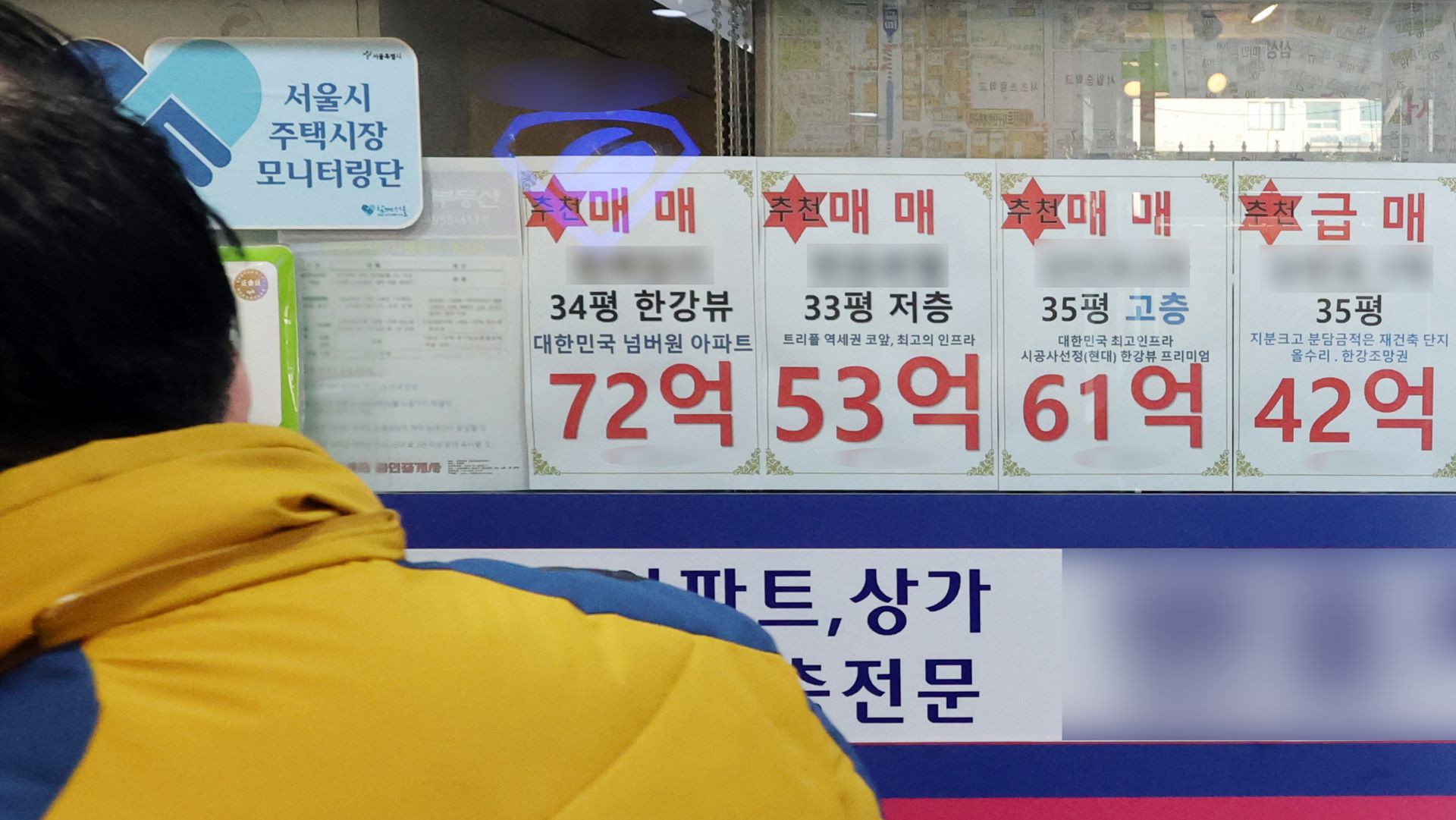
In contrast, listings have actually decreased in some outlying areas such as Seongbuk and Gangbuk. According to Asil, listings in Seongbuk-gu fell 5.6%, while Gangbuk-gu and Geumcheon-gu saw declines of 5.3% and 2.7%, respectively. By complex, "Raemian Jangwi First High" in Seongbuk-gu saw listings drop 33.4%, from 30 to 20, while "Kkumui Sup I-Park" fell by 7 to 21 listings. In Mia-dong, Gangbuk-gu, "Doosan We’ve Trezioum" listings decreased by about 38%, from 45 to 28.
Listings in outlying areas such as Seongbuk and Gangbuk have instead decreased
Jeonse demand shifts to purchases... listings are being rapidly depleted
These areas have many listings priced at 1.3 billion won or less and are therefore classified as places where purchases for actual residence are possible using mortgage loans. It is analyzed that properties have been quickly absorbed as previously jeonse or wolse tenants without homes have turned to buying in order to ease housing insecurity. A certified real estate agent near Gangbuk-gu said, "In Gangbuk or Seongbuk, there is a lot of movement by genuine end-users, so the situation is different from what people commonly refer to as Gangnam and Mayongseong (Mapo, Yongsan, and Seongdong-gu)," adding, "As Seoul home prices have continued to rise, tenants living on jeonse are taking out additional loans and moving to Seongbuk-gu, where there are relatively new or recently built apartments, instead of moving to prime areas."
However, some also predict that the shortage of listings in outlying areas will not last long. Over the long term, the trend of keeping "one solid home" and disposing of the rest is expected to remain in place. While listings in outlying areas are being temporarily depleted as end-user demand concentrates there, there is a possibility that homeowners who have finished calculating their property tax burdens will put additional properties on the market. A real estate agent in Seongbuk-gu said, "Until January, there were many listings of large-complex pre-sale rights, so transactions were brisk, but now it feels like everyone who wanted to buy has already bought," adding, "Demanders who have failed to secure jeonse or wolse contracts are now looking for relatively inexpensive rental units rather than purchases, so the market is effectively in a lull."
Ham Youngjin, head of the WM Consulting Center at Woori Bank, said, "As the government is reviewing grace measures for remaining jeonse properties (homes with existing lease contracts), there is a high possibility that additional listings will come onto the market," and added, "Rather than prices falling sharply, the trend is likely to be one of a slowdown in the pace of increase."

-

Reporter ming@asiae.co.kr
-
Edit Kang Dongwon kangdw76@asiae.co.kr
© The Asia Business Daily(www.asiae.co.kr). All rights reserved.