
Individual Profit-Taking Amid Stock Market Surge Shifts to Overseas Stocks
An analysis has found that the recent sharp rise in the domestic stock market, which has relatively low long-term expected returns, has actually strengthened profit-taking among Korean investors. The proceeds from profit-taking have been reinvested in the US stock market, fueling the so-called "Seohak Ant" phenomenon-individual investors actively investing in overseas stocks. The recent won-dollar exchange rate, which has hovered above 1,480 won, has further intensified this trend, as expectations of continued high exchange rates have increased the prospect of currency gains on top of investment returns. The Bank of Korea has stated that if the expected return gap between the Korean and US stock markets narrows, the repatriation of individual investment funds to the domestic market could become smoother. However, as these expectations have formed over a long period, it is pointed out that policy efforts for institutional reforms-such as improving corporate governance and expanding shareholder returns-must be pursued in parallel.

Despite 28.9% Rise in KOSPI from September to October, Individuals Continue Net Selling
Higher Short-Term Returns Compared to S&P 500 Become a Selling Factor
According to the Financial Stability Report released by the Bank of Korea on December 23, the KOSPI index surged by 28.9% from September to October this year, significantly outpacing the US S&P 500's 5.9% rise. Nevertheless, individual investors continued to be net sellers of domestic stocks and net buyers of overseas stocks. The Bank of Korea explained that the relationship between domestic and overseas stock investments can either be complementary-where net investments in both rise simultaneously-or substitutive-where an increase in one leads to a decrease in the other. Recently, the substitutive relationship has become more pronounced.
Since 2020, the investment pattern of individuals in domestic and overseas stocks was mainly complementary, with net buying in both markets occurring simultaneously. However, recently, the trading directions between domestic and overseas stocks have temporarily diverged, strengthening the substitutive relationship. During 2020-2021, the net overseas stock investment by individuals exceeded ten times the level of 2018-2019. At the same time, individuals also made large net purchases of domestic stocks, resulting in net buying in both markets. In contrast, from February to July 2024, individuals were net sellers of 14 trillion won in domestic stocks, while making net purchases of 8.3 billion dollars in overseas stocks. From July to October this year, individual investors continued this trend, being net sellers of 23 trillion won in domestic stocks and net buyers of 10.3 billion dollars in overseas stocks, demonstrating a clear shift in trading patterns toward opposite directions.
Personal domestic and overseas stock investment relationship shifts mostly from supplement to replacement
From July to October, 23 trillion won sold domestically and 10.3 billion dollars purchased in overseas stocks
Long-term expected return gap solidifies investor funds concentrated in the US stock market
The previously complementary relationship between individual investors' domestic and overseas stock investments was influenced by factors such as increased domestic liquidity and the benefits of diversification across markets. During periods of expanding domestic liquidity, individual investors increased their net purchases in both domestic and overseas stocks, thereby strengthening the complementary relationship. Jang Jeongsu, Deputy Governor of the Bank of Korea, stated, "Holding both domestic and overseas stocks simultaneously creates diversification effects, which likely contributed to the complementary relationship. In particular, US stocks, which account for the majority of Korean individual investors' overseas investments, have a lower correlation in returns (including currency gains) with domestic stocks compared to Japanese or German stocks, allowing Korean investors to expect relatively greater diversification benefits."
The recent strengthening of the substitutive relationship between individual investors' domestic and overseas stock investments has been driven by differences in returns and exchange rate factors. Due to the long-term return gap, investors' expectations for returns have become fixed-lower for the domestic market and higher for the US market. As a result, when the short-term return of the domestic market rises more sharply than the long-term expected return, investors tend to sell domestic stocks and buy overseas stocks. This incentive was particularly strong during September and October of this year, when domestic stock prices rose much more than those in the US, leading to a pronounced substitution effect between the two markets. With the recent sharp increase in the exchange rate, expectations for continued high exchange rates have persisted. The Bank of Korea analyzed that when purchasing overseas stocks, investors can expect not only stock investment returns but also currency gains, further strengthening the relative attractiveness of overseas stocks.

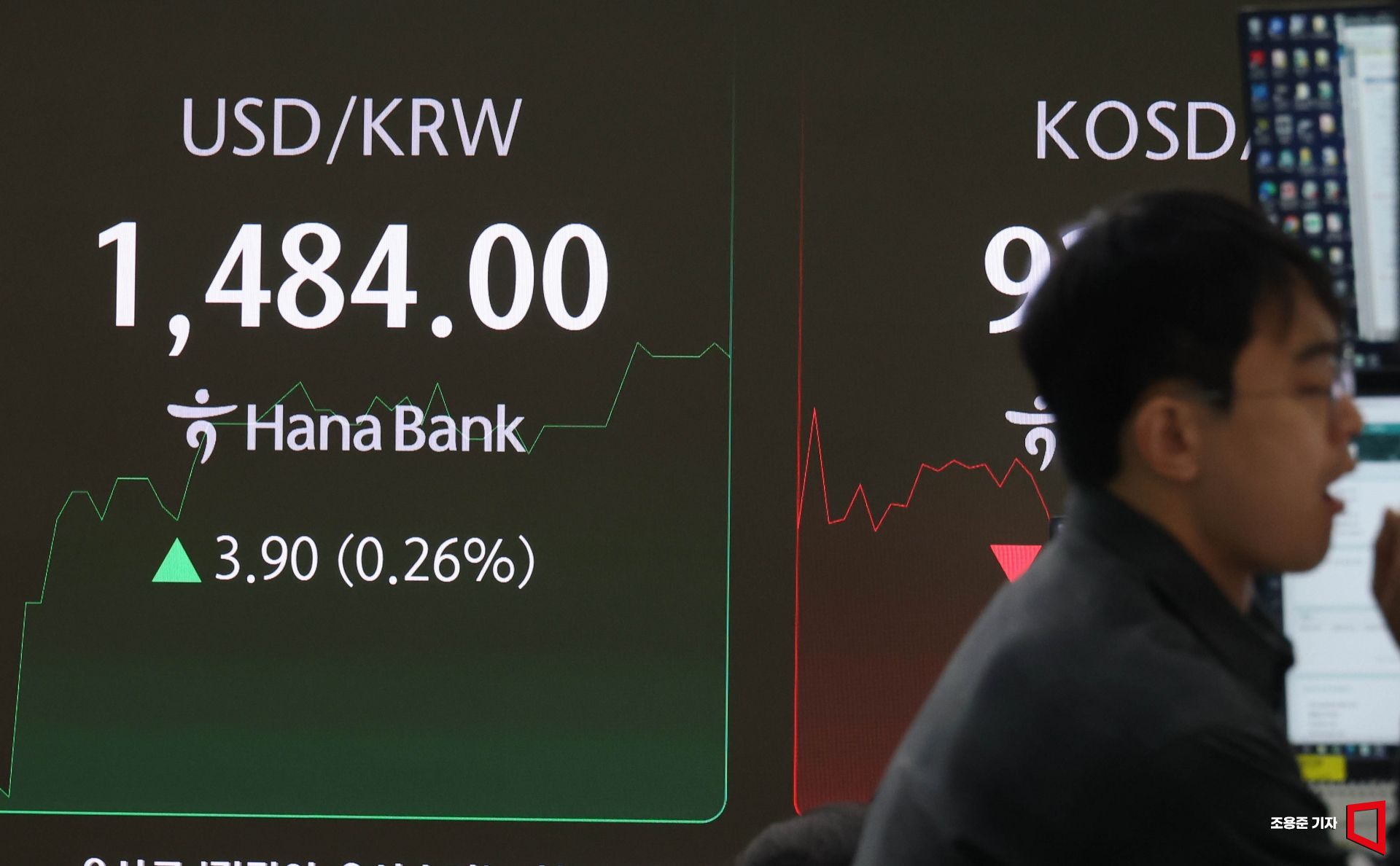
Expecting currency exchange gains when investing in overseas stocks with the exchange rate maintained at around 1,480 won
Profit-taking pattern when domestic stock prices rise, chasing buying pattern for overseas stocks
The Bank of Korea conducted an empirical analysis of the factors influencing individuals' net investments in domestic and overseas stocks. The results showed that as the long-term return gap between domestic and overseas stocks widened, short-term return fluctuations led to opposite effects of chasing gains and profit-taking. Both domestic (KOSPI) and overseas (S&P 500) stocks showed changes in net investment according to the gap between short- and long-term returns, confirming the effect of return expectations based on long-term returns. However, when short-term returns rose, net investment in overseas stocks increased, while net investment in domestic stocks decreased. This suggests that when both markets rise simultaneously, profit-taking in domestic stocks and chasing gains in overseas stocks can occur.

Possibility of Domestic Capital Reflow if the Expected Return Gap between Korea and the US Narrows
Institutional Efforts Such as Governance Improvement and Expansion of Shareholder Returns Must Be Carried Out in Parallel
Deputy Governor Jang stated, "With the expected return gap between the Korean and US stock markets persisting for a long time, the recent rapid rise in domestic stock prices has led to divergent trading patterns between the two markets. This suggests that if the expected return gap narrows, the repatriation of individual investment funds to the domestic market could become smoother." He emphasized, however, "Since this expected return gap has formed over a long period, a temporary improvement in returns alone is unlikely to change investor expectations. Policy efforts for institutional reforms-such as improving corporate governance and expanding shareholder returns-are needed to enhance the long-term performance and stability of the domestic capital market."