Seongsan IC to Sinnai IC 20.5km Inner Circular Road and Northern Arterial Underground Project
The Seoul Metropolitan Government will move 20.5 kilometers of the Inner Circular Road and the Northern Arterial Road underground, stretching from Seongsan Interchange (IC) to Sinnai Interchange (IC), by 2037. A new six-lane underground road will be constructed, and the existing elevated expressway will be demolished after the underground road opens. The project is expected to cost 3.4 trillion won. The city aims to eliminate the two arterial roads that have caused urban fragmentation and thereby enhance the competitiveness of the Gangbuk area.
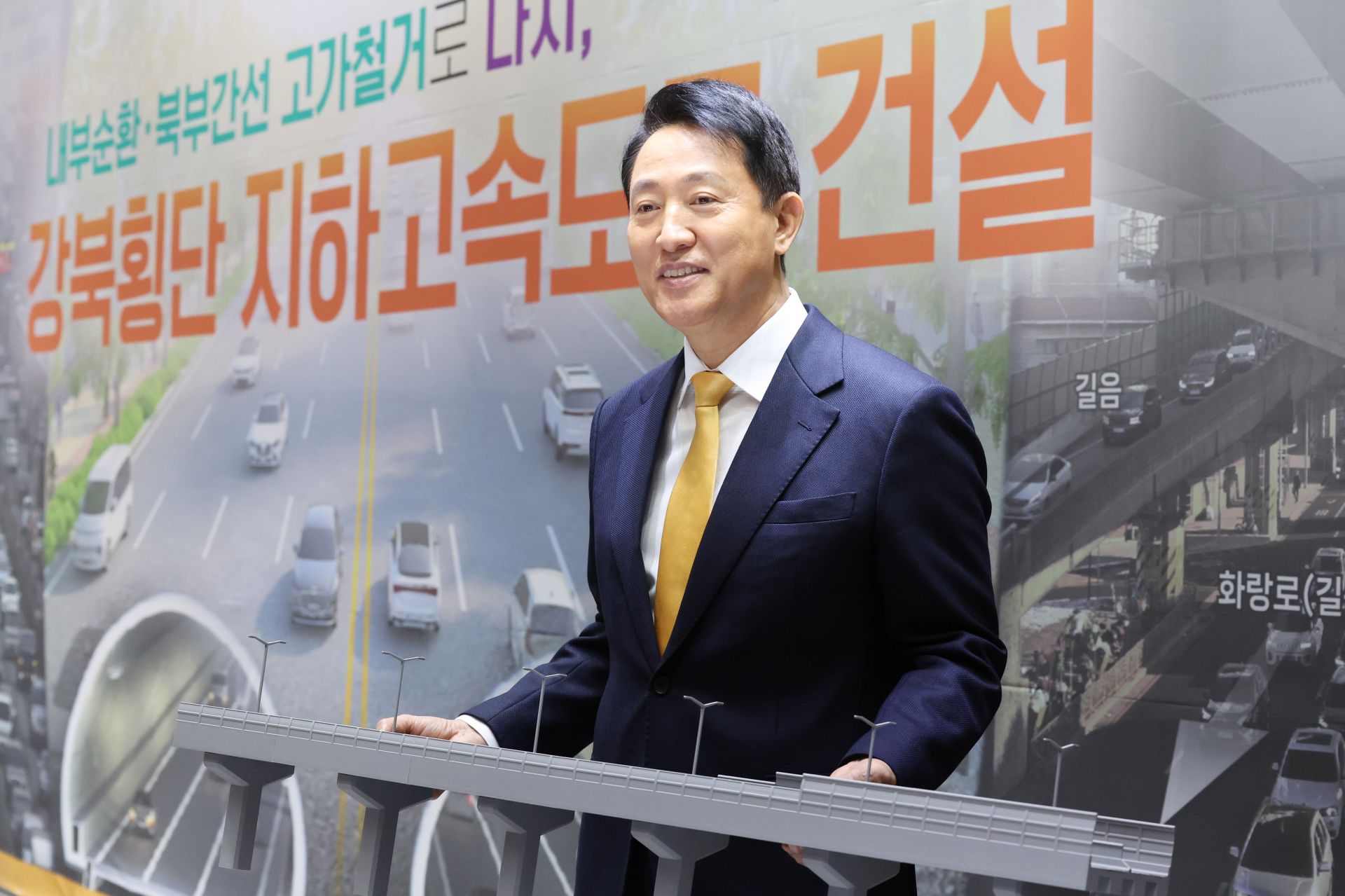
On the morning of December 18, Seoul Mayor Oh Sehoon announced the "Gangbuk Transverse Underground City Expressway Construction Plan" at Seoul City Hall, stating, "Through the undergrounding of the Inner Circular Road and the Northern Arterial Road, we will return leisure spaces to the citizens."

Section of the "Gangbuk Transverse Underground City Expressway Construction Plan" project unveiled by Seoul Mayor Oh Se-hoon on the morning of the 18th. Seoul City
원본보기 아이콘The core of the project is to demolish a total of 20.5 kilometers: the section of the Inner Circular Road from the Seongsan Bridge area (Seongsan IC to Gilum IC), and the section of the Northern Arterial Road from Gilum IC to Sinnai IC in Sinnai-dong.
Instead, a six-lane underground road will be constructed. Taking into account the addition of one or two lanes on the surface where the elevated road is demolished, the Inner Circular Road will be expanded from the current 12 lanes (6 elevated + 6 surface) to 14 lanes (6 underground + 8 surface). The Northern Arterial Road will be expanded from the current 10 lanes (4 elevated + 6 surface) to a maximum of 14 lanes (6 underground + 8 surface).
The project cost is estimated at 3.4 trillion won, which covers the construction of the underground expressway, demolition of the existing elevated road, and renovation of the surface roads. However, this is a provisional figure at the planning stage. The city will further refine the project scale and implementation method after comprehensively reviewing future traffic demand forecasts, congestion mitigation effects, and financial conditions.
During the project, Seoul will also consider undergrounding the remaining section of the Inner Circular Road, the "Hawolgok to Seongdong section," which totals 6.5 kilometers. Effectively, this would mean the entire Inner Circular Road would be moved underground.
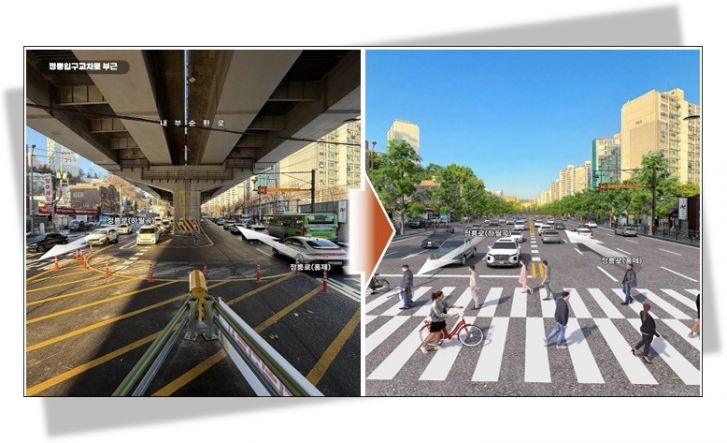
New underground 6-lane urban expressway, existing elevated road to be demolished
Total project cost of 3.4 trillion won invested... Completion targeted for 2037
Inner Circular Road expanded from 12 to 14 lanes, Northern Arterial Road expanded to 14 lanes
Average speed of 35km/h in congested sections expected to increase to 67km/h with underground construction
Mayor Oh expects that undergrounding the Inner Circular Road and the Northern Arterial Road will significantly improve connectivity between regions and greatly enhance the residential environment in the area. On this day, Mayor Oh identified the Inner Circular Road and the Northern Arterial Road as the main causes of development delays in the Gangbuk area. He stated, "Although the Inner Circular Road and the Northern Arterial Road have been the only transportation axis connecting east and west in Gangbuk for 30 years, the roads remain unchanged, and the average speed is just 35 km/h, so they no longer function as true arterial roads."
In addition, the maintenance costs for the aging elevated structures are increasing. The city expects the maintenance costs for the Inner Circular Road and the Northern Arterial Road to more than double, from 39.1 billion won in 2024 to 98.9 billion won in 2055. Both safety risks and financial burdens are intensifying.
Through this project, Seoul expects the underground city expressway to provide a smooth traffic flow with an average speed of 67 km/h. In particular, the surface roads will be renovated to improve connectivity and accessibility between regions. For example, the city plans to restore waterways such as Hongjecheon and Mukdongcheon, which were previously degraded by the elevated roads, and create new waterfront leisure spaces. Once the project is completed, the city anticipates a dramatic improvement in the urban environment for approximately 2.8 million residents in eight Gangbuk autonomous districts and 134 neighborhoods, as well as a significant boost to regional competitiveness and urban vitality.
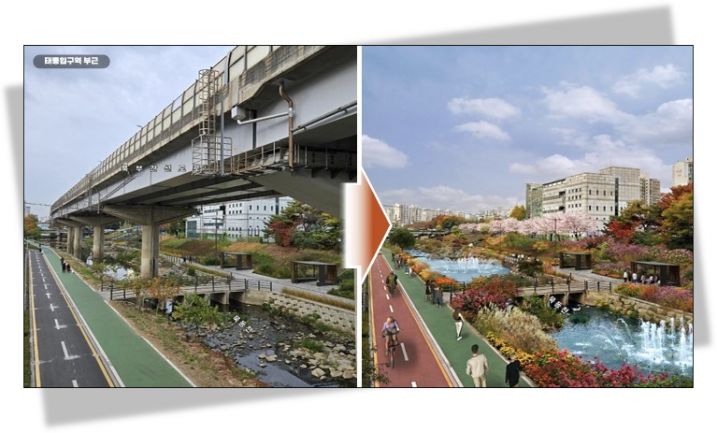
Aging elevated road maintenance costs surge... Aiming to alleviate safety and financial burdens
Creating waterfront and leisure spaces on the surface, including restoration of Hongjecheon and Mukdongcheon
Improving living environments for about 2.8 million people in 8 Gangbuk autonomous districts and 134 neighborhoods
Considering additional underground construction for the remaining 6.5 km section of the Inner Ring Road
Forming and promoting the 'Gangbuk Renaissance Planning Team' with participation from citizens and experts
Seoul plans to begin preparing detailed implementation measures next year, carry out design and preliminary procedures from 2026 to 2029, start construction in 2030, and complete the entire project by 2037. To minimize inconvenience for road users, construction of the underground expressway will start first, and the surface roads will be demolished after the underground road opens.
To ensure smooth project implementation, a dedicated "Gangbuk Renaissance Planning Team" will be established. This organization, which will include citizens, experts, and local governments, will be divided into three subcommittees: housing and urban development, roads and transportation, and culture and welfare. Through this public-private-academic consultative body, the city will hold working meetings, public hearings, and various forums to gather a wide range of opinions.
Mayor Oh stated, "The large-scale renovation of Gangbuk's road space is a major project requiring a significant budget and more than 10 years to complete. It is not just a simple road improvement, but a key initiative to usher in a new renaissance for Gangbuk. We will do our utmost to enhance Gangbuk's competitiveness and quality of life through the successful implementation of this project."


![[Reportage]"It Only Leads to Arguments"... Chungnam's True Sentiments Hide Deeper After Martial Law](https://cwcontent.asiae.co.kr/asiaresize/304/2026051223490460082_1778597344.jpg)