
According to recent research, the average commuting time for Korean office workers is 1 hour and 48 minutes, the longest among 43 countries surveyed.
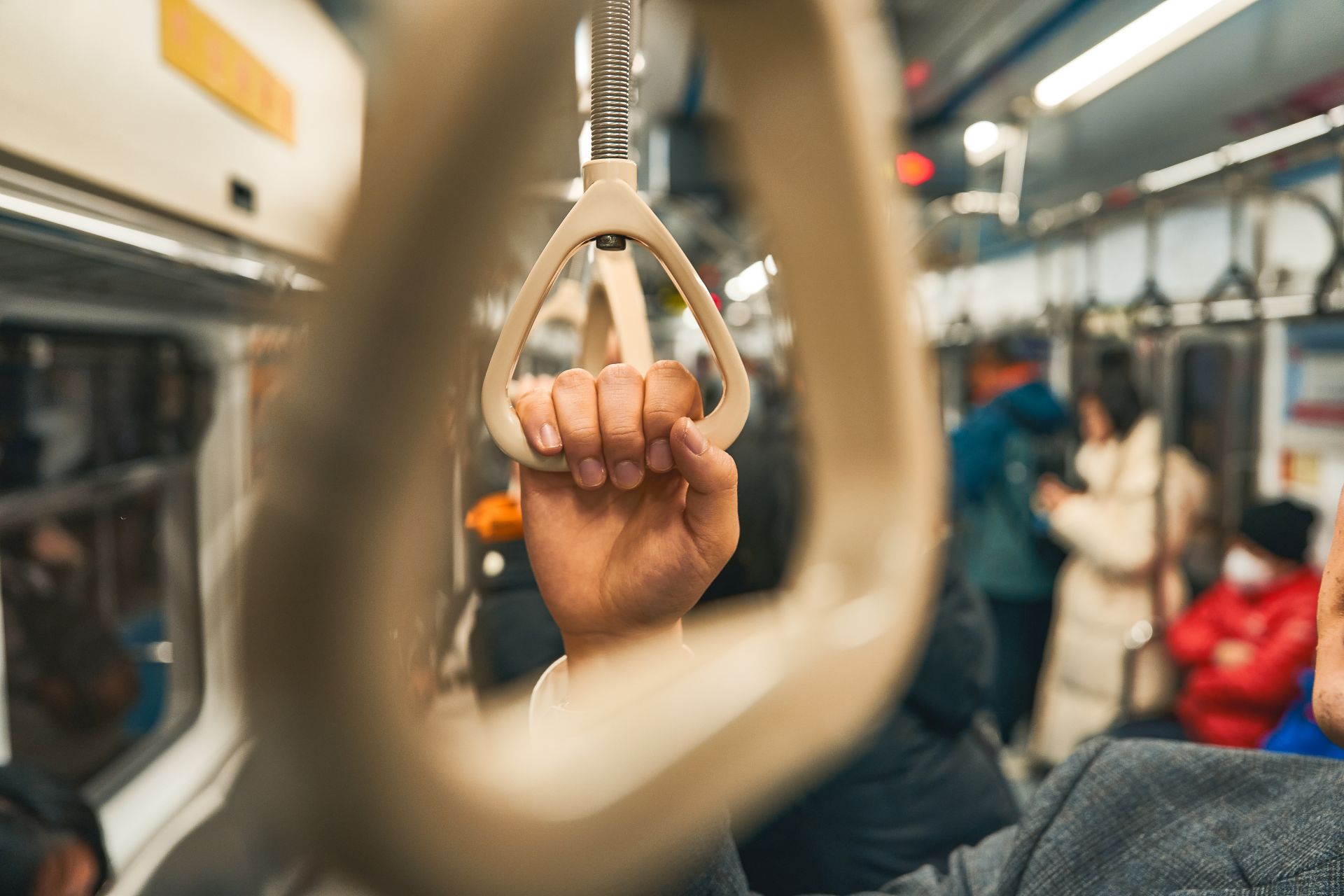
This figure is about 1.5 times longer than the global average of 1 hour and 8 minutes reported in the same survey.
The social perception that 'a daily round trip of 2 hours is standard' has been confirmed by actual statistics.
"Commuting time affects an individual's meals, movement, and rest, and is closely linked to health."
- Dr. Eric Galbraith, corresponding author of the study

Experts emphasize maintaining proper posture as a way to manage health during long commutes.
Before boarding, rotate your waist and neck to the left and right 10 times each,
and repeat a stretch that opens your chest and extends both arms backward at least five times.

If you commute on foot, choosing a route rich in natural elements is effective.
People who commute through environments with trees and grass experience lower stress levels and greater emotional stability.
It is also important to take at least 20 minutes to have a well-balanced meal.
ㅡ
Commuting times are longer in the Seoul metropolitan area, where the population is concentrated, than in non-metropolitan regions

Commuting times in South Korea are longer in the Seoul metropolitan area, where jobs and population are concentrated, compared to non-metropolitan regions.
In 2019, the average commuting time for residents of the metropolitan area was 90.4 minutes, which is 27.3 minutes longer than the 63.1 minutes in non-metropolitan areas.
Among non-metropolitan cities, Busan recorded 78.4 minutes, followed by Daegu at 73.0 minutes and Gwangju at 68.0 minutes.

The issue of long commuting times in South Korea has also been shown to have negative emotional effects.
People whose one-way commute exceeds 60 minutes have a 49% higher risk of feeling loneliness in family relationships compared to those whose commute is 30 minutes or less,
and a 36% higher risk of experiencing loneliness in relationships with others.

This increase in loneliness was particularly pronounced among those commuting by private car,
while those who used public transportation, walked, or cycled did not show a statistically significant increase.

"Commuting time can go beyond being a simple inconvenience and may accelerate social isolation."
- Research team at Kangbuk Samsung Hospital
-

Reporter Bang Jeil zeilism@asiae.co.kr
-
Edit Oh Hyunyoung hyun05@asiae.co.kr
© The Asia Business Daily(www.asiae.co.kr). All rights reserved.





![[Culture Interview] "Unifying the Fragmented Music Market... Super Fans Are the Next Competitive Edge"](https://cwcontent.asiae.co.kr/asiaresize/304/2026042817051344090_1777363513.jpg)