Editor's Note We are living in an era where 'agflation'-agricultural inflation driven by climate change-has become the norm. Every time abnormal weather such as droughts, heavy rains, or heat waves occurs, food prices fluctuate dramatically. Unpredictable weather, which leads to poor harvests, is often cited as the main cause of soaring agricultural prices. This is only half true. The opaque agricultural distribution structure manipulates prices, often using the weather as a shield. Farmers are frustrated as their painstakingly grown produce fails to fetch fair prices in the market, while consumers repeatedly pay significantly more than the shipping price at the production site, perpetuating a vicious cycle. The Asia Business Daily investigates the hidden cartel within the agricultural distribution structure masked by weather, and explores alternatives to the agricultural auction system that has been entrenched for 40 years.
Products purchased from distributors require large quantities to receive benefits For small business owners, buying online is much more advantageous than going door-to-door
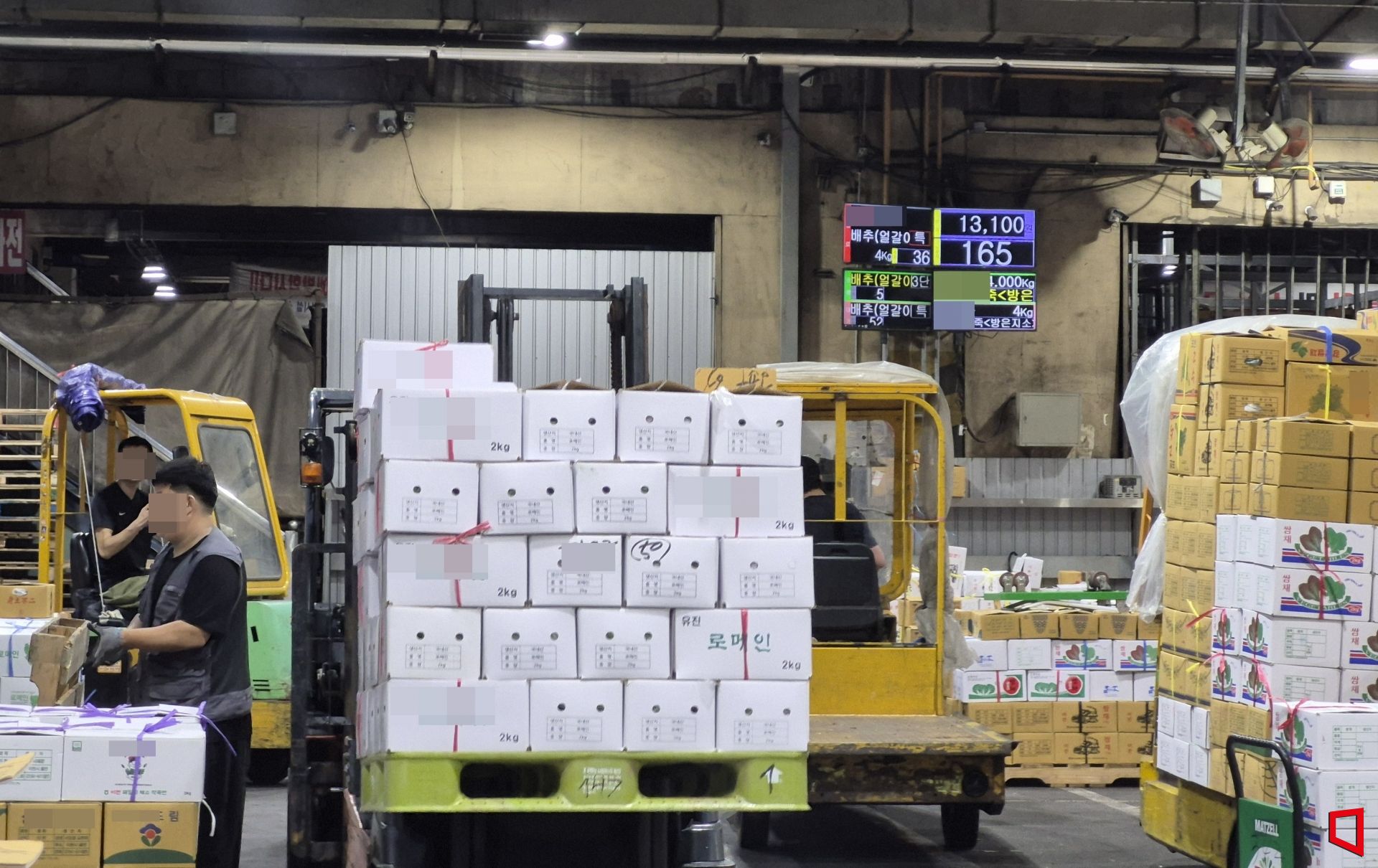
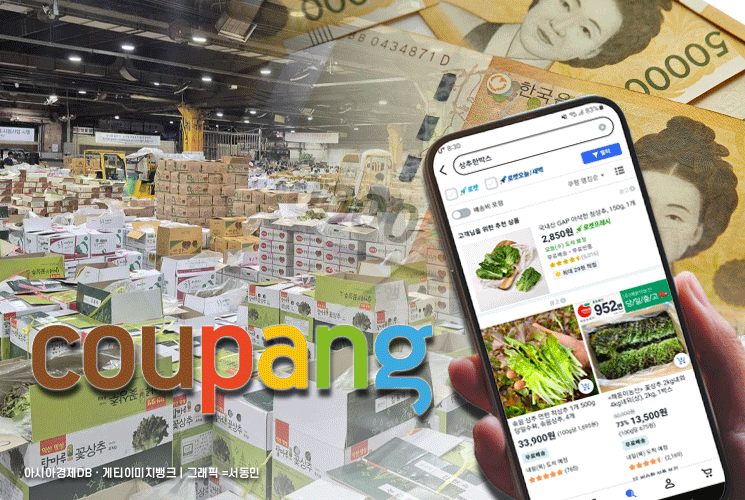
Lee Seongpil (45, alias), a self-employed owner of a meat restaurant in Yongsan-gu, Seoul, orders the lettuce he needs for his business every day through Coupang. Using the real-time price alert application 'Pulsent,' which is linked to 2kg box prices, he orders the desired quantity of the most affordable product and receives it via same-day or early morning delivery.
Until recently, Lee used to purchase lettuce from intermediate wholesalers at major agricultural and marine product wholesale markets in Seoul, who added a margin to the daily auction price. However, after doing the math, he found that buying online was much better in terms of both cost and product quality than going from market to market. He said, "For small business owners like me, who rely on daily earnings, it's inevitable to search for products that reduce basket costs, even a little." He added, "Compared to vegetables purchased through wholesale markets, ordering through Coupang saved me about 1,000 to 2,000 won per day, which amounts to about 20,000 to 30,000 won per month."
Comparison of Green Leaf Lettuce Prices Shows Average 5,600 Won Cheaper Than Wholesale Price Farmers Also Prefer Direct Purchase... Receive 2,000 to 3,000 Won More Than at Auction
Coupang's Direct Transactions from Production Areas Near Population Decline Regions Near 7,000 Tons by Year-End Despite Multi-Level Distribution Structure Keeping Production Area Prices Flat for Years, Prices Are Rising
"Much More Cost-Effective"... Satisfaction with Online Direct Transactions Rises Among Small Business Owners and Producers
In fact, from August 22 for two months, the price of a 4kg box of a premium green leaf lettuce product, as tracked by Pulsent's price trend data, averaged 39,600 won. During the same period, the average price for a 4kg box of green leaf lettuce (standard grade) sold by intermediate wholesalers, as recorded by the Korea Agro-Fisheries & Food Trade Corporation's (aT) distribution information system KAMIS, was 45,160 won-about 5,600 won higher.
Lee said, "When buying from intermediate wholesalers or distributors, you need to order large quantities to get price benefits. In the past, I would buy a week's worth of lettuce at a time, and if I couldn't sell it all, I had to throw away the leftovers, which resulted in significant losses." He continued, "With Coupang, I can order only as much as I need to sell each day, and for occasional purchases of other vegetables, I check for the lowest price and order accordingly, which is much more efficient."
He also noted, "Vegetables put up for auction are usually a day or two old after shipping, but produce delivered through online orders is packed and shipped immediately upon ordering, so there's no compromise on freshness. Many small business owners in nearby commercial areas, especially among the younger generation, also prefer ordering through online platforms rather than offline markets."
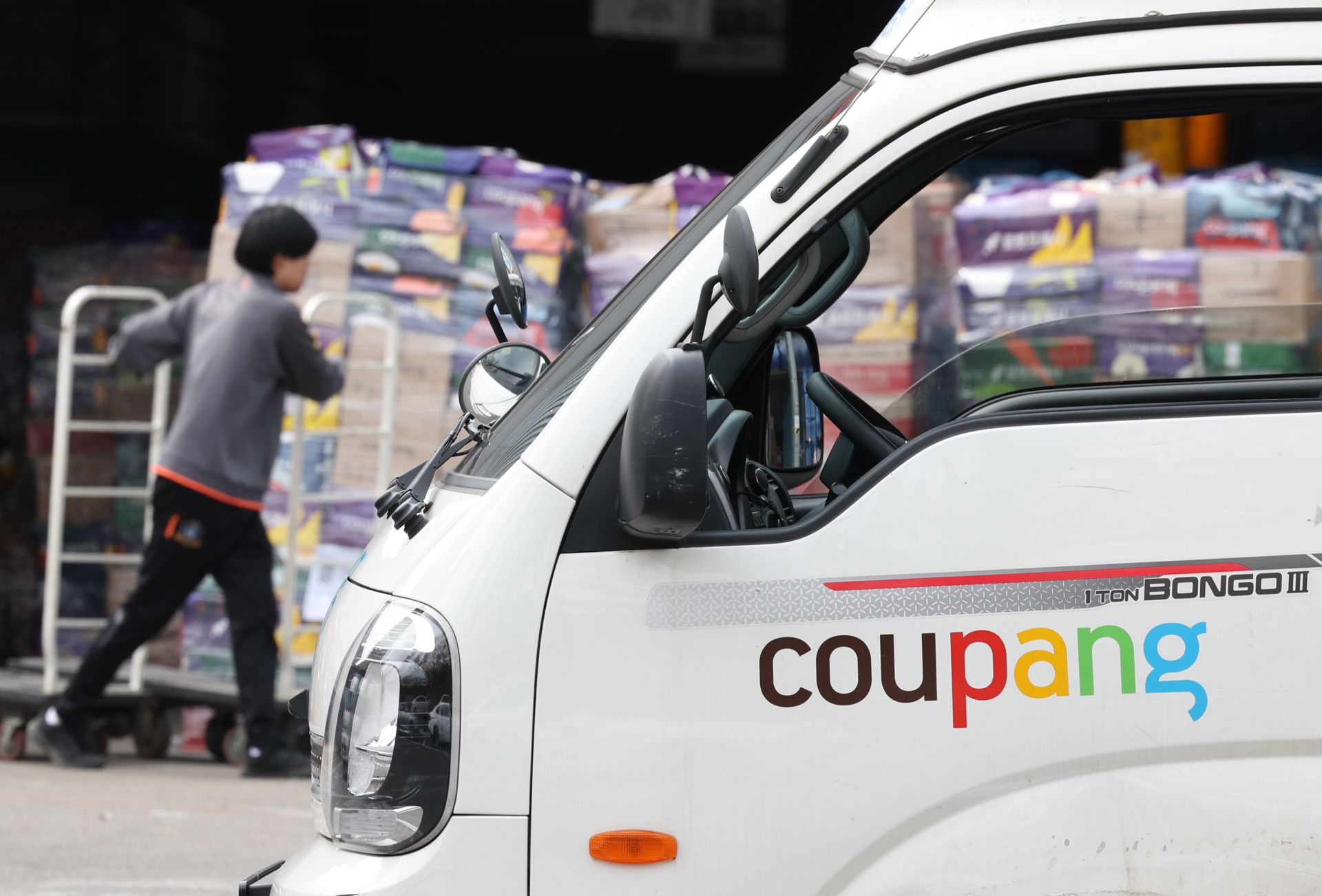
Farmers who supply products to Coupang through direct purchase contracts are also highly satisfied with online platform transactions. For example, the 'Suanbo Peach Joint Shipping Association' in Chungju, North Chungcheong Province, has been partnering with about 60 local farms to directly trade peaches with Coupang every summer since 2022. The refrigerated delivery truck from Coupang Rocket Fresh picks up selected produce from the farms and delivers it nationwide by early morning.
Shin Seungchang, president of the Suanbo Peach Joint Shipping Association, said, "We prioritize supplying high-quality peaches to Coupang and also participate in wholesale market auctions. For a 4kg box, supplying to Coupang yields about 2,000 to 3,000 won more than going through auctions." Shin added, "To get even a slightly higher price at auction, we have to move the peaches to several wholesale markets, which increases logistics costs such as transportation and loading/unloading fees. Direct purchase by Coupang is run on a fixed price system, so there is no risk of sharp price fluctuations, making it more stable."
As farmer satisfaction increases, Coupang's proportion of direct transactions with production areas is also rising. In seven population-declining or population-extinction-risk areas (as designated by the Ministry of the Interior and Safety and the Korea Employment Information Service) including Yeongam and Hampyeong in South Jeolla Province, Chungju in North Chungcheong Province, and Seongju, Uiseong, Yeongcheon, and Goryeong in North Gyeongsang Province, Coupang purchased more than 6,600 tons of fruit across about 30 categories from January to September this year, up about 20% from the same period last year. By the end of the year, the total is expected to approach 7,000 tons. The company explained that, in addition to direct purchase, Coupang also handles early morning delivery, marketing, and customer service, reducing the cost burden for farms.
Half of Consumer Prices Are Distribution Costs... Shipping Prices Have Stagnated for 25 Years
Among producers and small and medium-sized merchants, there is a growing perception that the current agricultural distribution system, which involves wholesale corporations and intermediate wholesalers, is structurally problematic and inefficient. Producers point out that they do not receive fair prices, while merchants find that as products pass through more intermediaries, they become more expensive and less convenient compared to other purchasing options. These are seen as the main limitations of the auction system.
This is due to distribution costs that accumulate at each stage. According to a domestic distribution survey by aT, as of 2023, distribution costs accounted for 49.2% of the total cost in the distribution of agricultural and livestock products-including food crops (rice, potatoes, sweet potatoes, etc.), leafy and root vegetables (cabbage, lettuce, radish, etc.), fruit vegetables (watermelon, melon, tomato, etc.), seasoning vegetables (chili, garlic, onion, etc.), fruits, and livestock products. This means that if a consumer pays 1,000 won for a particular agricultural product, nearly half-492 won-goes to distribution costs. This is about 10 percentage points higher than the 39.8% recorded in 1998, when tracking began.
Notably, at the shipping stage, where producers consign products and settle payments, the distribution cost share increased by only 0.2 percentage points over 25 years, from 9.3% to 9.5%. In contrast, wholesale stage distribution costs rose by 5.8 percentage points (from 9.7% to 14.5%), and retail stage costs by 4.4 percentage points (from 20.8% to 25.2%). While production area prices have remained stagnant, costs incurred at each distribution stage have increased every year.
Jiwoo, an agricultural corporation in Iksan, North Jeolla Province, which distributes paprika, used to send products through as many as seven or eight stages-'wholesale market → intermediary → wholesaler → retailer,' and so on. However, after starting direct transactions with Coupang in 2020, it quickly shifted to a distribution structure where freshly harvested products are delivered directly to customers via early morning delivery. Lee Jaegyu, CEO of Jiwoo, said, "The chronic problem of wholesale agricultural distribution is that margins are added at every stage, significantly increasing consumer prices. When distributing paprika to wholesale markets, the final consumer price often increased two to three times."
Eo Gigu, Chairman of the National Assembly's Agriculture, Food, Rural Affairs, Oceans and Fisheries Committee and a member of the Democratic Party, pointed out, "The current agricultural distribution structure is distorted, with intermediate distributors monopolizing profits, farmers not receiving their fair share, and consumers paying inflated prices."
Concentration at Garak Market, Double and Triple Logistics Costs... Passed on to Consumers
Industry insiders cite centralization as a structural cause of rising distribution costs in agricultural distribution. Agricultural products from all regions of the country, from the northernmost to the southernmost areas, are concentrated at major public wholesale markets in the Seoul metropolitan area, such as the Garak-dong Agricultural and Marine Products Wholesale Market in Songpa-gu. After auction prices are set there, products are redistributed nationwide, incurring double and triple costs for logistics, storage, and labor.
According to the annual statistics published by aT on agricultural and marine product wholesale markets, the total transaction amount for fresh produce at 32 public wholesale markets nationwide last year was 15.85 trillion won, with Garak Market alone accounting for 5.64 trillion won. Garak Market was the only market with transaction amounts exceeding 2 trillion won, accounting for more than 35% of the total.
A representative from a Garak Market wholesale corporation explained, "From the moment producers load products onto vehicles and transport them to the wholesale corporation, costs are incurred at every step. In addition to fees and margins at each distribution stage as products are supplied to intermediate wholesalers, small and medium-sized merchants, and finally consumers, there are also additional costs for loading and unloading, storage, transportation, and labor."
He added, "Participants in the auction system are aware of its inefficiencies, but continue to rely on it because they believe there is 'no better alternative.' To reduce the distribution costs that are added to consumer prices, it is worth considering activating regional auction markets closer to production areas and establishing public logistics centers at the government or local government level to enable the sale and consumption of agricultural products by region."
<To be continued in Part 4 of 'The Weather Is Not to Blame.'>
Logistics costs increase two to three times due to concentration around Garak Market Need to improve the centralized auction structure, such as revitalizing regional auction markets



!["Please Help Us": How Much Do Those Bowing 90 Degrees These Days Actually Earn? [Data Pick]](https://cwcontent.asiae.co.kr/asiaresize/323/2026052010120870131_1779239528.png)