The distribution industry has also begun to respond to the controversy. Kurly recently suspended the sale of London Bagel Museum products entirely on its online mall. Kurly was the first platform to introduce London Bagel Museum products online last year. Currently, when searching for 'London Bagel Museum' on Kurly's homepage, only the phrase 'Product preparation in progress' is displayed.
An Open-Run Hotspot with Annual Sales of 80 Billion Won
London Bagel Museum, known as an "open-run hotspot" and the driving force behind the bagel craze in Korea, is now facing its greatest crisis. Just four years after its founding, the company surpassed 80 billion won in annual sales and was hailed as a "premium bakery legend." However, following the recent death of an employee, the organizational fatigue and poor management that had accumulated beneath the surface during its rapid growth have now come to light.
According to industry sources on November 7, the Ministry of Employment and Labor has recently expanded its oversight to include all London Bagel Museum branches, as well as all 18 business sites under its operating company, LBM. Since October 29, the ministry has been investigating the headquarters and Incheon branch of London Bagel Museum for compliance with the 52-hour workweek, the legality of employment contracts, and possible wage arrears. It is reported that the scope of supervision was expanded after employee surveys and interviews conducted during the inspection revealed evidence of some legal violations.

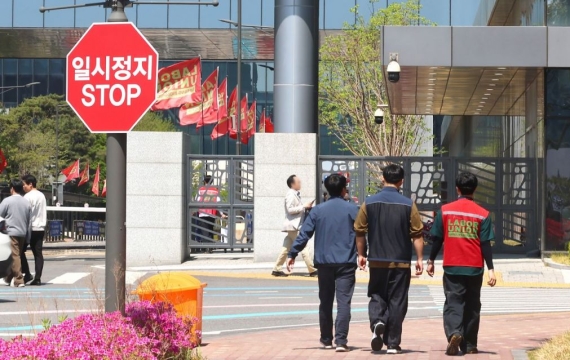
On the 3rd, Green Party officials are shouting slogans while holding a party speech meeting related to the death of London Bagel Museum workers in front of the Anguk branch of the London Bagel Museum in Jongno-gu, Seoul. Photo by Yonhap News
원본보기 아이콘Worker Dies After 80 Hours of Labor... Controversy Over Labor Exploitation
The incident began when it was revealed that on July 16, a 26-year-old worker surnamed Jeong was found dead at the London Bagel Museum staff accommodation in Michuhol-gu, Incheon. The bereaved family claimed that Jeong had endured an extremely long workweek of 80 hours and 12 minutes in the week prior to his death.In addition, it was reported that over the 12 weeks leading up to his death, he worked an average of 60 hours and 21 minutes per week. This falls under the categories of acute, short-term, and long-term overwork as defined by the Korea Workers' Compensation and Welfare Service.

On the 6th, Justice Party officials hold placards at a press conference urging measures to prevent the recurrence of the "death from overwork" incident involving the London Bagel Museum, held in front of the Seoul Regional Employment and Labor Office in Jung-gu, Seoul. Photo by Yonhap News
원본보기 아이콘According to the guidelines of the Korea Workers' Compensation and Welfare Service, acute overwork is defined as an average weekly working time exceeding 64 hours in the week prior to death; short-term overwork is when the workload or working hours in the week before death increase by more than 30% compared to the average of the previous 12 weeks; and long-term overwork is when the average weekly working time exceeds 60 hours over a 12-week period.
While London Bagel Museum stated that legal disputes with the bereaved family have been settled through an agreement, the controversy has not subsided. Whistleblowing from within the company has continued, including allegations of unpaid severance pay, split contracts, and missing overtime pay. There have even been claims that work records disappeared due to malfunctioning fingerprint scanners. Many see this incident as exposing the deep-rooted structural fatigue that has built up within the organization.
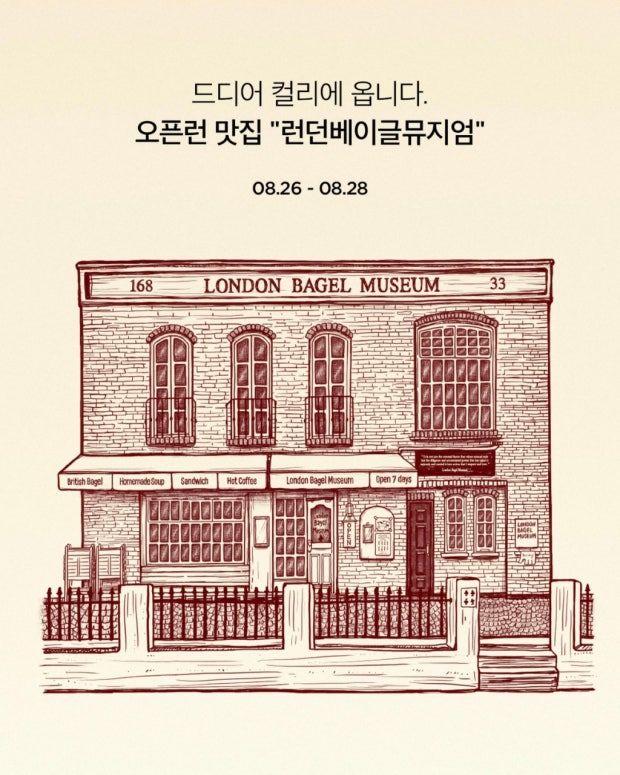
The industry is watching closely to see if Kurly's actions will spark a broader boycott. London Bagel Museum is also present in major offline retail channels such as Lotte Department Store, The Hyundai Seoul, and Shinsegae Starfield.
'The Paradox of Scarcity Marketing'... Overload Driven by Surging Demand
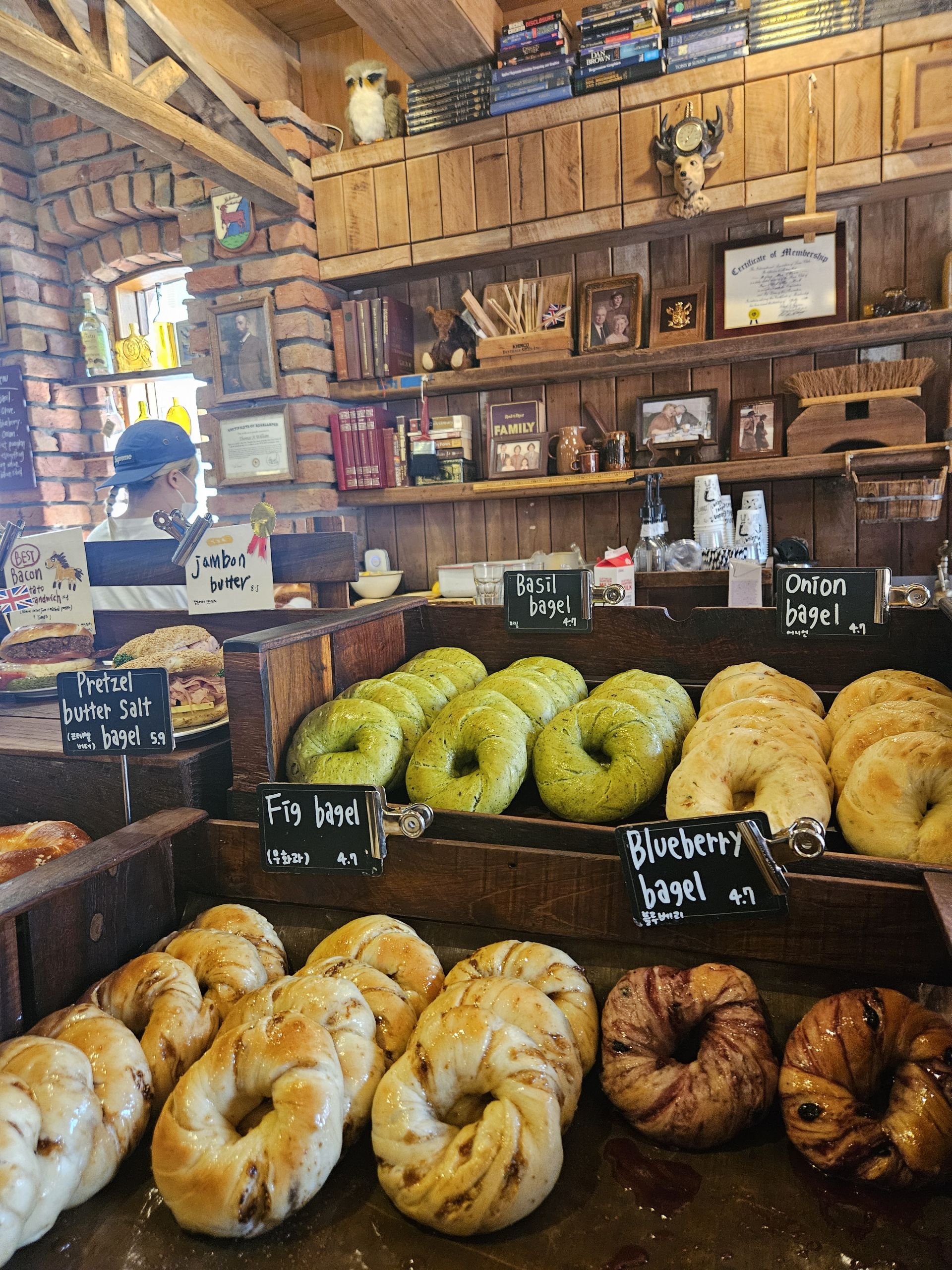
London Bagel Museum made its mark on the food service industry when it opened its first store in Anguk-dong, Jongno-gu, Seoul in 2021. With overseas travel suspended due to COVID-19, its exotic interior and diverse bagel menu appealed to the "overseas vibe" sought by consumers, and it quickly gained explosive popularity through word-of-mouth on social media. On weekends, hundreds of people would line up, making it a renowned "open-run destination," and it was selected as the "No. 1 store in waiting list size" for two consecutive years on the reservation app Catch Table.
Buoyed by its popularity, the company's performance soared. LBM, the operating company, recorded 79.6 billion won in sales and 24.3 billion won in operating profit last year. Sales increased by 120% from the previous year, and the operating margin reached 30.5%, surpassing even Sungsimdang (25%). Despite a general downturn in the food service industry, London Bagel Museum achieved unrivaled profitability and was recognized as the "most successful bakery."

In particular, the strategy of offering "bread you can't easily buy" increased consumer loyalty. London Bagel Museum maintained its exclusivity by turning down offers from large corporations such as Shinsegae and Hyundai Department Store, and operating only seven standalone stores nationwide.
However, this growth has been accompanied by an excessive workload for internal staff. According to the office of Assemblyman Lee Hakyoung of the Democratic Party of Korea, the number of industrial accident approvals for London Bagel Museum surged from one case in 2022 to 12 in 2023, 29 in 2024, and 21 as of September 2025. This amounts to a cumulative total of 63 industrial accidents in just four years since opening.
Structural Risks Created by SNS-Driven Emotional Consumption
This crisis also exposes the structural limitations faced by the entire food service industry. Recently, food service brands are consumed more for their "image" than their "product." Consumers purchase not only the taste or quality of the food but also the experiences and emotional narratives offered by the brand. Especially for brands like London Bagel Museum, which grew through social media, every aspect-from store interiors and waiting lines to packaging and reservation systems-becomes content.
An industry insider commented, "London Bagel Museum's customers are not just buying taste-they are consuming the feeling of 'participating in this brand.'" "To maintain the brand, the same 'experience' must be provided every day, but since people are ultimately responsible for creating that experience, if issues arise with working conditions or ethics, the brand image can quickly be shaken and loyal customers may rapidly leave," he pointed out.
This is also why the silence of founder Lee Hyojeong (Ryo), who led the branding, has amplified the crisis at London Bagel Museum. Despite being the key figure behind the brand's "emotional appeal" and "worldview," she has not made an official statement since the employee death came to light. Criticism intensified as the death coincided with the sale of the company, with many accusing her of "evading responsibility." In July, she sold the company to private equity fund operator JKL Partners for about 200 billion won.
An industry expert familiar with the franchise sector stated, "The crisis at London Bagel Museum will be remembered not just as a simple labor issue, but as a case of 'brand management failure.' Short-term performance gains can quickly turn into a long-term crisis."
-

Reporter Han Yeju dpwngks@asiae.co.kr
-
Edit Kim Hyunhee faith100@asiae.co.kr
© The Asia Business Daily(www.asiae.co.kr). All rights reserved.