
Huh, that's our baby's name?
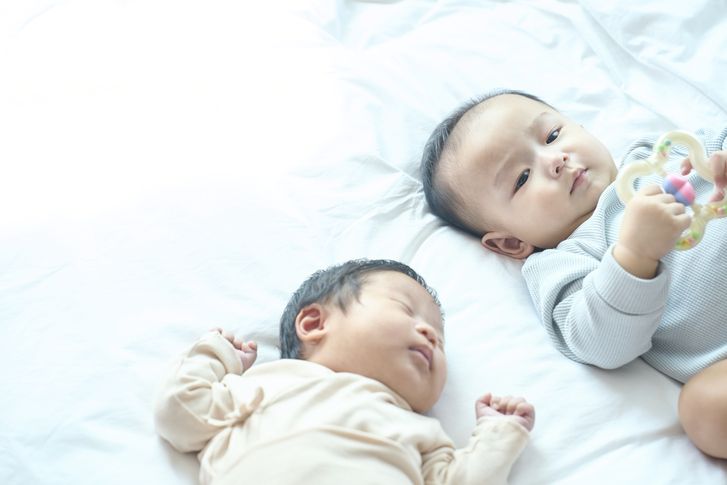
According to data from Seoul last year, the most popular names registered at birth were 'Taeo' (8.01%, 359 boys) and 'Ian' (7.30%, 327 boys) for boys, and 'Harin' (6.60%, 272 girls) and 'Yuna' (6.43%, 265 girls) for girls. All of these names are considered to be concise in pronunciation, with a focus on sound and modernity rather than the specific meaning of Chinese characters.

Example of Birth Registration Form. Provided by the Court Electronic Family Relationship Registration System.
원본보기 아이콘Mr. A (39), an expectant father whose child is due at the end of this month, said, "Even if a unique name has a good meaning, I worry my child could be teased at school, so I'm considering more common names."
The fading name change trend: "I'd rather get it right from the start"

The once-hot trend of changing one's name is cooling down. Recently, the number of name change applications has dropped below 100,000, showing a clear decline.
According to the Supreme Court's 'Judicial Yearbook' released on the 5th, the number of name change applications last year was 93,179, the lowest since 2005 (76,976 cases). After receiving court approval for a name change, one must report it to the family relationship registration office, which can be done by visiting a city or town office or online through the Supreme Court Electronic Family Relationship Registration System (efamily.scourt.go.kr).

Name Change Application Example. Provided by the Court Electronic Family Relations Registration System.
원본보기 아이콘Following a 2005 Supreme Court ruling that recognized the right to pursue happiness, stating that "if there is a reasonable cause for a name change and the purpose is not to conceal a crime or evade legal restrictions, the name change should be permitted," the number of applications peaked at around 160,000 in 2009. From then until 2022, annual applications remained between 110,000 and 150,000. However, in 2023, the figure fell below 100,000 for the first time in 18 years, reaching 99,165.
The sharp decline in name changes is attributed to the fact that names are no longer a source of social disadvantage or embarrassment. Nowadays, many parents carefully consider not only the meaning of the Chinese characters but also the pronunciation and impression of the name from the start, reducing the need for a name change later on.
"You have to change your ID, driver's license, passport, and cards..." Some regret changing their names

The inconvenience of various administrative procedures after a name change is also cited as a reason. Not only do you have to reissue your resident registration card, driver's license, and passport, but you also need to contact each bank, telecom company, credit card provider, and insurance company to change your name on all accounts. Ms. Cho (31), who changed her name several years ago, recalled, "When I was applying for jobs or changing jobs, it was extremely complicated to prove my academic records and awards that were registered under my previous name. At times, I even wondered if it would have been better not to change it at all."
No Jincheol, a professor of sociology at Kyungpook National University, explained, "In the past, many people ended up with names they didn't want due to family traditions or generational naming rules. However, today's parents pay close attention to pronunciation and impression when naming their children, which has significantly reduced the need for name changes."
-

Reporter Byun Seonjin sj@asiae.co.kr
-
Edit Lee Seonju sjlee109@asiae.co.kr
© The Asia Business Daily(www.asiae.co.kr). All rights reserved.
!["Please Help Us": How Much Do Those Bowing 90 Degrees These Days Actually Earn? [Data Pick]](https://cwcontent.asiae.co.kr/asiaresize/323/2026052010120870131_1779239528.png)