Real estate measures drive demand for high-priced officetels and row houses
"Properties unsold for a year have also been traded"
"Prices rise when regulations are imposed" due to the Moon Jae-in administration's learning effect
Homeowners say "No urgent reason to sell" as asking prices rise daily
Industry also protests "It looks like the government is only trying to increase tax revenue"
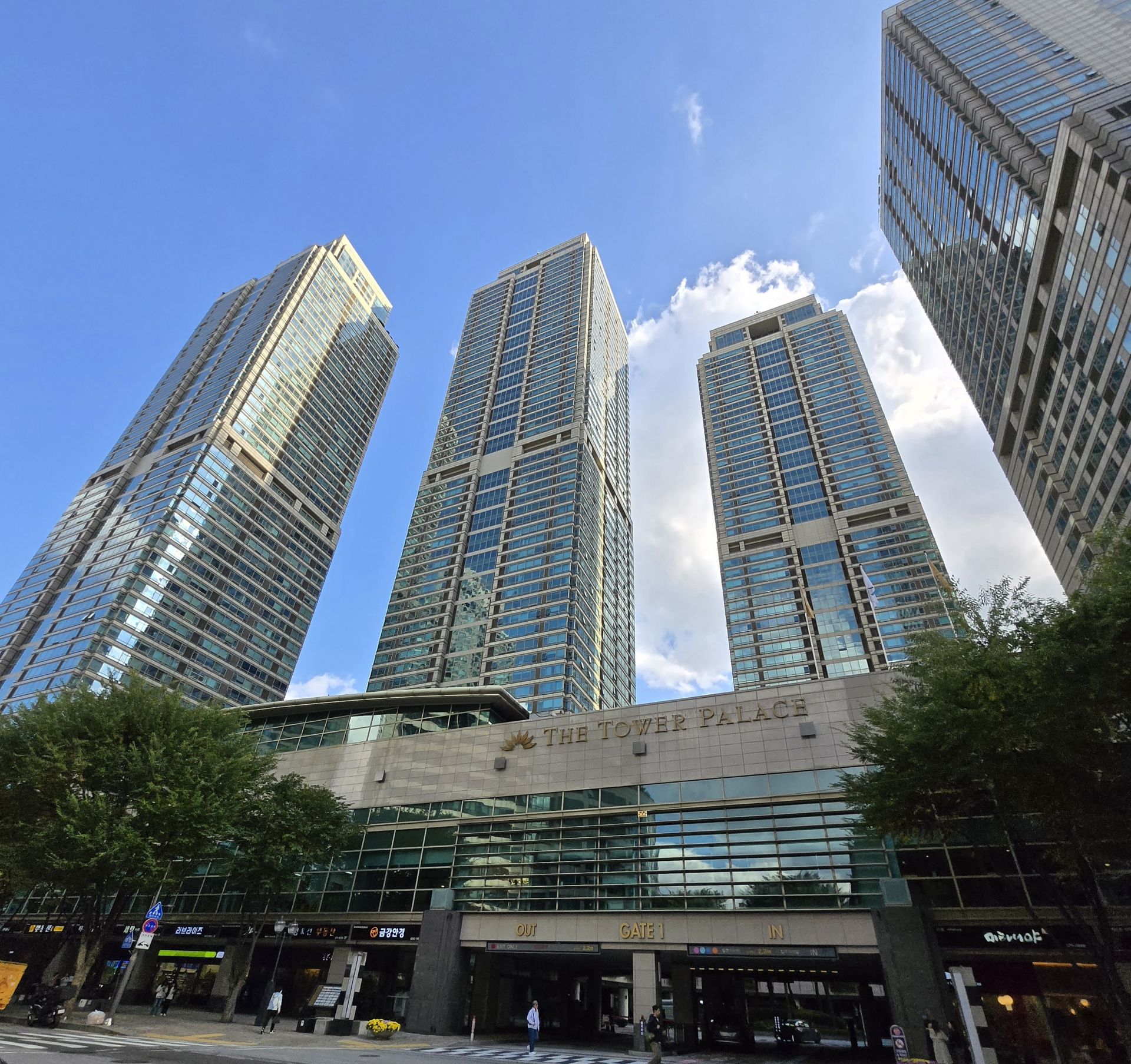
Photo by Choi Seoyoon. The photo shows the Tower Palace Phase 1 in Gangnam-gu, Seoul, on the 25th. The tall buildings in the center are apartments, and the building on the far right is an officetel. The lower floors, connected to the underground shopping area and vehicle entrances, house commercial facilities.
With the implementation of the October 15 measures, all of Seoul and major areas in Gyeonggi Province have been designated as "Type 3 regulated zones," leading demand to flow into high-priced officetels and row houses that have exploited regulatory loopholes.
Even a Tower Palace officetel unsold for a year was sold
According to the certified real estate industry on October 27, only three transactions took place last year for Tower Palace Phase 1 officetels in Gangnam-gu, which are traded at actual prices between 3 billion and 8 billion won. However, several units have been traded since the announcement of the new measures. A real estate agency representative near Dogok-dong Tower Palace said on the 25th, "Even an officetel unit that had not been sold for about a year was traded as soon as the measures were announced."
In Yeouido as well, transactions have begun for high-priced officetels with two to three rooms. A representative at a real estate agency near Daewoo Trump World said, "Officetels were not very attractive for investment, so there were few transactions, but recently, deals have started to occur little by little," adding, "Given the increasing number of inquiries, transactions are likely to continue for the time being."
"When regulations are imposed, prices rise" ... Homeowners raise asking prices due to the Moon Jae-in administration's learning effect
Although Gwangjang Hyundai Hometown 11th Complex in Gwangjin-gu is in a land transaction permit zone, it has escaped regulation, and the asking price for its row houses rose by 100 million won in just one week. A realtor in Gwangjang-dong said, "The homeowner initially listed the property for 2.45 billion won, but raised the price after the new measures were announced."

The same homeowner recently rejected an offer to sign a contract at 2.5 billion won, saying they would only consider selling for more. The agent explained, "All surrounding areas are subject to regulation, but only this complex survived. Scarcity itself is a premium," adding, "From the homeowner's perspective, there is no longer any urgent reason to sell."
As homeowners begin to lock up their listings, the market expects home prices to start rising in earnest as early as next month. A real estate agency representative in Godeok-dong, Gangdong-gu, said, "During the Moon Jae-in administration, we experienced a learning effect where home prices would remain quiet for a short time after new measures were announced, then suddenly surge," adding, "Some homeowners are already raising their asking prices as a result."
They cited the lack of effective supply measures, amid macroeconomic trends of supply shortages and increased liquidity, as the basis for this outlook. A realtor in Dogok-dong questioned, "Home prices are rising due to interest rate cuts and inflation, so is it really effective to just impose more regulations?"

On the 25th, real estate listings were posted in front of a real estate agency near Tower Palace in Gangnam-gu, Seoul. Photo by Choi Seoyoon
원본보기 아이콘There are also doubts about the intent of the new measures. A real estate agency representative in Daechi-dong said, "It looks like the government is making it harder for ordinary people to buy homes and only trying to increase tax revenue."
He added, "If multi-homeowners do not put their properties on the market, the number of jeonse (lump-sum lease) listings will decrease and more properties will be converted to monthly rentals. As a result, more rental income will be reported, increasing tax revenue. In Gangnam, changes in monthly rent have little impact due to declining demand for school districts, but in other areas, monthly rents will rise, increasing the burden on ordinary people."