Supreme Court Remands Chey Tae-won and Noh So-young Divorce Case
Civil law principles reaffirmed: such acts are not legally protected
Potential to serve as precedent for the principle of separate property in the future

Key Issue: Whether 30 Billion Won of Roh Tae-woo's Slush Fund Was "Seed Money"
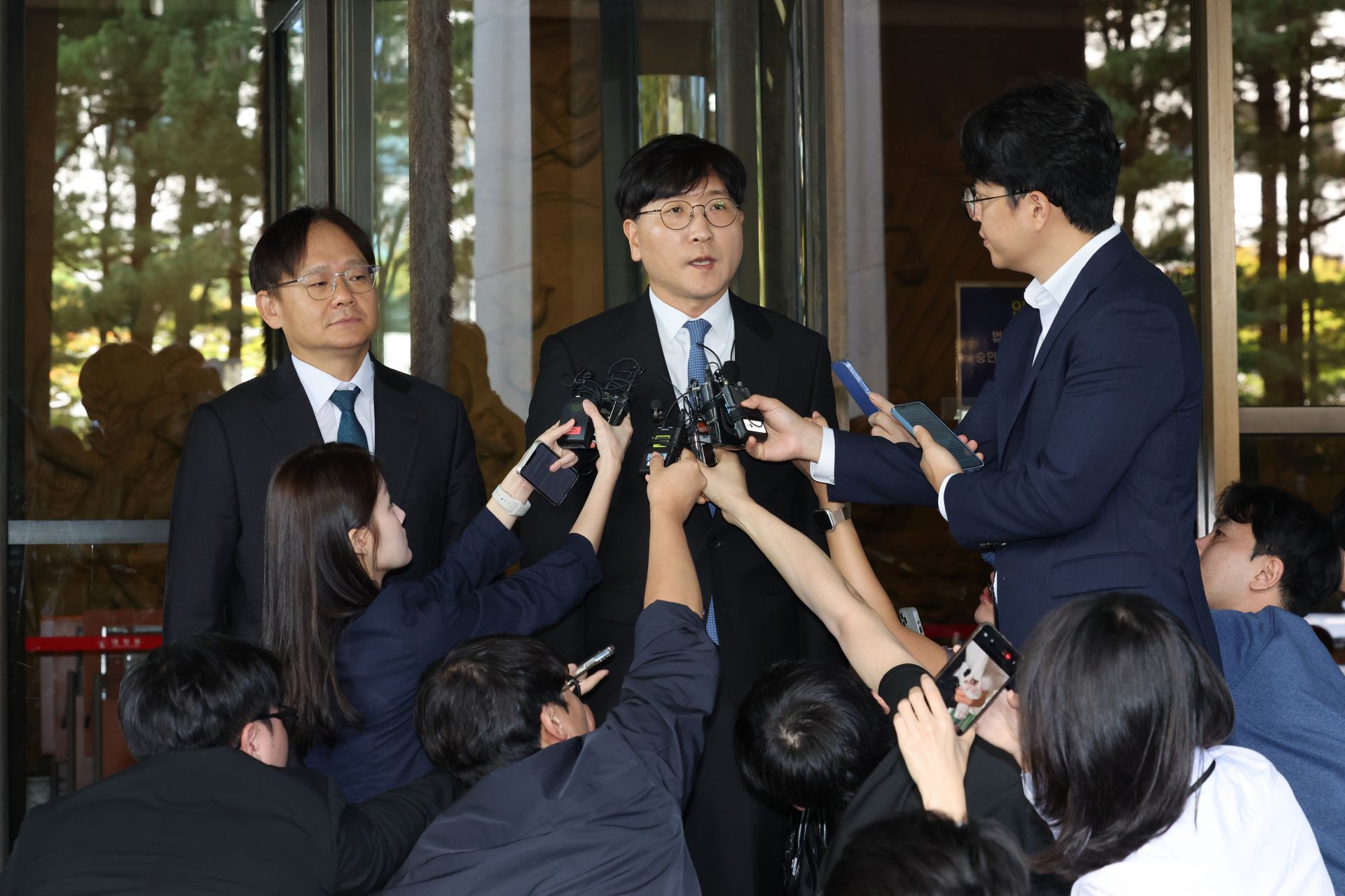
The central issue in the Supreme Court appeal of the "Chey Tae-won and Noh So-young divorce lawsuit" was whether the Supreme Court would accept the appellate court's finding that 30 billion won of slush funds from former President Roh Tae-woo served as "seed money" for the growth of SK Group. The Supreme Court ruled that illegal funds cannot be considered joint contributions made during marriage and have no legal protection, overturning the previous ruling and sending the case back to the Seoul High Court.
On October 16, the legal community assessed this ruling as a clear reaffirmation of the civil law principle that individuals who engage in acts lacking social justification, such as the creation of slush funds, are not protected by law. By pointing out the appellate court's misinterpretation of legal principles and deciding on remand, the Supreme Court has increased the likelihood that, in future divorce lawsuits involving high-net-worth individuals or business executives, the scope of property division for inherited assets will be further narrowed.
The Supreme Court's First Division (Presiding Justice Seo Kyung-hwan) stated that it could not find that the 30 billion won of slush funds from former President Roh, as presented by Director Noh, had made a substantial contribution to the initial capital formation of SK Group. The sources and uses of the funds were not identified, and since their illegality had not been eliminated, the appellate court's recognition of them as "tangible or intangible contributions" was considered a misinterpretation of the law.

Choi Tae-won, Chairman of the Korea Chamber of Commerce and Industry, attended the launch ceremony of the Corporate Growth Forum held at Lotte Hotel in Jung-gu, Seoul, last September and delivered a keynote speech. Photo by Jo Yongjun
원본보기 아이콘Supreme Court: "Illegal Funds Are Not Joint Property Contributions"-Emphasis on Legal Pathways
This ruling once again confirms that, for slush funds or other illegal funds to be considered as contributing to the formation of marital joint property, it must be proven that such funds were used for actual capital formation through legitimate channels. Mere circumstances of fund inflow are insufficient grounds for property division. The illegality of the funds was a key reason for the remand. The Supreme Court stated, "Since Roh Tae-woo's act (providing 30 billion won) lacks legal protection, it should not be considered as a contribution by the defendant (Director Noh) in the division of property."
This can also be interpreted as a reaffirmation of the Supreme Court's longstanding principle that "separate property (assets owned by one spouse prior to marriage or acquired in their own name during marriage) is, in principle, not subject to division." Since the 1990s, the Supreme Court has consistently maintained the legal principle that "assets acquired before marriage or through inheritance or gifts are, in principle, not subject to division."

Noh So-young, director of Art Center Nabi, is attending the second trial hearing of the divorce lawsuit with Chey Tae-won, chairman of SK Group, held at the Seoul High Court in Seocho-gu, Seoul in November 2023. Photo by Kang Jin-hyung aymsdream@
원본보기 아이콘Legal Community: "Scope of Recognizing Intangible Contributions Likely to Narrow After Supreme Court Ruling"
The legal community believes this ruling will somewhat restrict the scope for recognizing "intangible contributions." A lawyer specializing in divorce cases said, "This ruling is seen as an attempt to distinguish between illegal funds and separate property, thereby upholding legal order." Another lawyer, who mainly handles family law cases, commented, "The Supreme Court has effectively reined in the appellate court's approach of recognizing intangible factors such as social reputation or political background as contributions," adding, "Going forward, contributions to property formation will likely be recognized only in cases where specific actions and causal relationships are clearly proven during divorce lawsuits."
Meanwhile, unlike most family law cases brought before the Supreme Court, which are usually dismissed without a full hearing, this case drew out a lengthy trial due to the vast scale of assets and the complexity of legal issues, earning it the label "divorce lawsuit of the century." The case was concluded about one year and three months after being filed with the Supreme Court's First Division on July 8 last year. On September 17, it was decided that the case would not be referred to the full bench, and the verdict was delivered by a panel of four justices.
-

Reporter Ku Chaeeun faktum@asiae.co.kr
-
Reporter Heo Kyungjun kjune@asiae.co.kr
-
Edit Sung Kiho kihoyeyo@asiae.co.kr
© The Asia Business Daily(www.asiae.co.kr). All rights reserved.