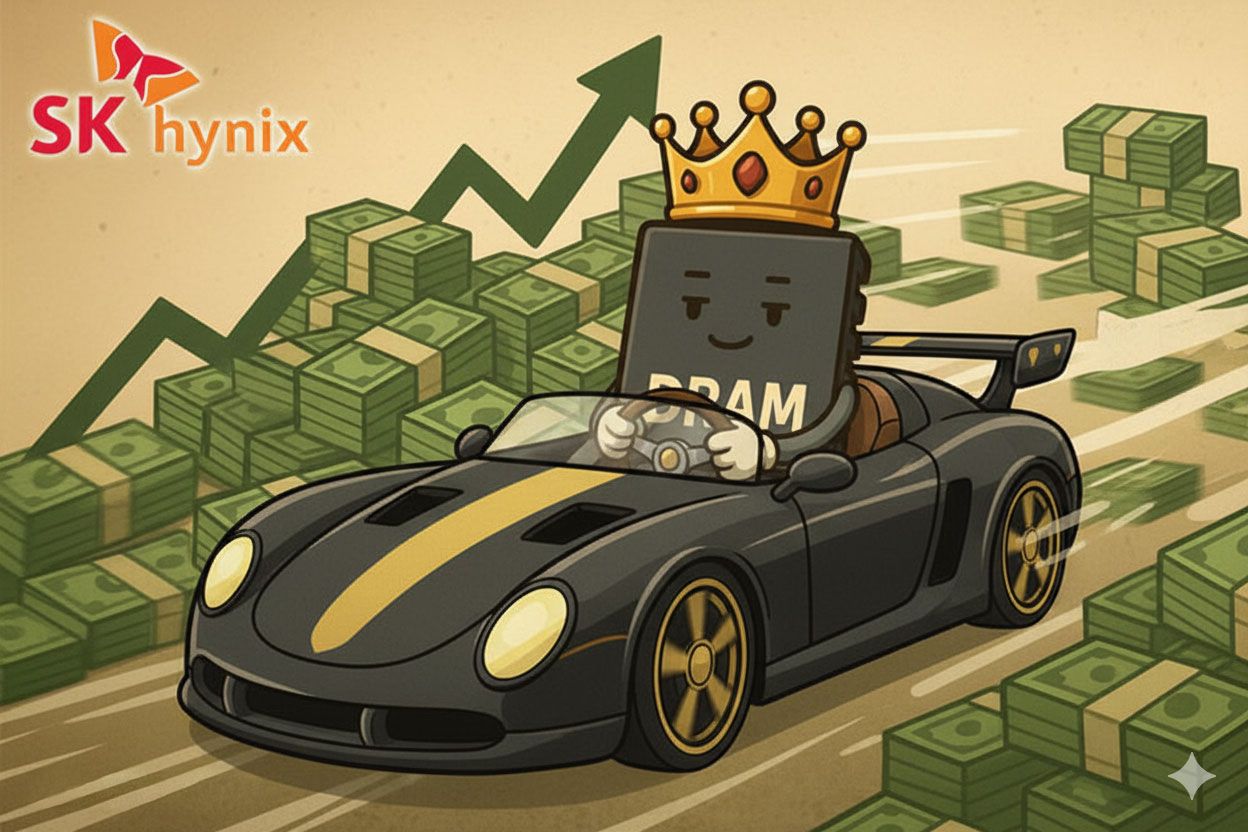
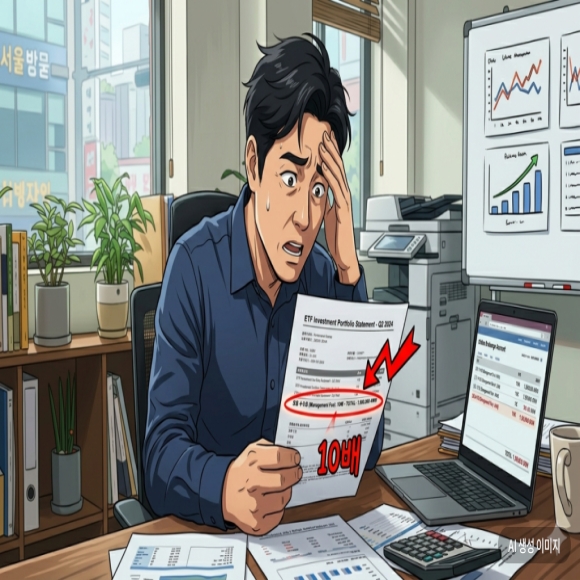
The market's focus on semiconductors is intensifying, as they have emerged as the driving force behind the unprecedented rise of the KOSPI index. The two leading semiconductor companies, Samsung Electronics and SK Hynix, have both set new record highs, propelled by a combination of positive factors, strong earnings, and robust demand. While the securities industry is abuzz with optimistic forecasts of a semiconductor supercycle, there are also significant cautionary voices warning of historical overvaluation. With the renewed escalation of trade tensions between the United States and China, investors are left to consider how best to respond.
KOSPI Rise Led by Semiconductors 90,000 Electronics and 430,000 Nix Expansion of Big Tech Investment · DRAM Price Increase · Foreign Investor Supply and Demand Entry into Supercycle vs Historical Overvaluation · Trade Conflicts
90,000 Electronics and 430,000 Nix: Semiconductors Take the Wheel of KOSPI
The KOSPI, which has been on a steep upward trajectory recently, set a new record by surpassing 3,600 points on October 10. Semiconductors are in the driver’s seat. The 'KRX Semiconductor' index, which tracks 36 major domestic semiconductor stocks, jumped 38.87% since September 2025-the largest increase among all indices announced by the Korea Exchange. During this period, Samsung Electronics and SK Hynix surged by 33.86% and 54.28%, respectively, leading the index higher. Since last month, foreign investors have poured 11.98 trillion won into the main board, purchasing 8 trillion won worth of Samsung Electronics (the top net buy) and 1.82 trillion won worth of SK Hynix (the second-largest net buy), thus moving the charts.
This concentration on semiconductors is closely linked to rising earnings expectations. Since September 2025, DRAM spot prices have soared, prompting upward revisions in profit estimates for both Samsung Electronics and SK Hynix. In the third quarter of this year, Samsung Electronics posted a provisional operating profit of 12.1 trillion won, up 31.81% from the same period last year, marking the highest level in over three years. SK Hynix is also projected to post operating profits in the 12 trillion won range, exceeding market expectations. Experts attribute the price increase to major memory manufacturers focusing on expanding production capacity (CAPA) for high-performance server DRAM, which has reduced the supply of general-purpose DRAM.
Lee Jongwook, a researcher at Samsung Securities, stated, "There is concrete evidence that the upward inflection point in DRAM prices has been surpassed, as demand for high-bandwidth memory (HBM) and general-purpose DRAM rises in tandem." He raised his 2025 operating profit estimate for Samsung Electronics by 6% to 34 trillion won, and for SK Hynix by 12% to 41 trillion won.
The recent rush by big tech companies to secure large-scale data centers and semiconductor contracts, each worth hundreds of trillions of won, is also fueling investor sentiment. Previously, U.S. semiconductor company AMD signed a contract to supply OpenAI with AI accelerators requiring a total of 6GW of power by 2029. On October 9, it was also reported that Nvidia would invest $2 billion (2.8 trillion won) in xAI. This bodes well for SK Hynix and Samsung Electronics, which are HBM supply partners for both Nvidia and AMD.
Rising Expectations for a Semiconductor Supercycle: Are There Bubble Concerns?
With a series of positive developments, the securities industry is overflowing with rosy outlooks for the semiconductor sector. As major U.S. AI companies accelerate investments, the Korean government, now in its second year in office, is also expected to drive policy aggressively by allocating 35.3 trillion won for research and development (R&D) in 2026-a 19% increase over this year. The semiconductor supercycle expectations have also prompted materials, parts, and equipment companies such as CMTX and Green Optical to prepare for listing on the KOSDAQ market.
Above all, expectations for the two semiconductor giants, Samsung Electronics and SK Hynix, are high. Sohn Injun, a researcher at Heungkuk Securities, commented on Samsung Electronics: "The estimated capacity share (based on wafer input) for 2026 is 32% for DRAM and 30% for NAND, making it the biggest beneficiary of the memory supercycle." He raised his target price from 100,000 won to 120,000 won. Jung Minkyu, a researcher at SangSangIn Securities, said of SK Hynix: "While increased competition is expected after the mass production of HBM4 wafers at the end of the year, along with a supply-driven memory price upcycle, SK Hynix is expected to maintain its leadership in technology and yield." He raised his target price from 370,000 won to 500,000 won.
Despite the alignment of positive factors, strong earnings, and robust demand in the semiconductor sector, there are many warnings against chasing the rally. Along with concerns about an AI bubble, the recently rekindled U.S.-China trade conflict could provide grounds for a correction in the semiconductor sector, which is already burdened by high valuations. Currently, the 12-month forward price-to-book ratio (PBR) of the domestic semiconductor sector stands at 1.56, surpassing the 1.44 recorded during the 'big cycle' of 2017-2018.
Kim Seongno, a researcher at BNK Investment & Securities, commented, "Semiconductor valuations are now at historically high levels. Rational investors will inevitably feel burdened by chasing the rally," adding, "Given that the relative strength of semiconductors compared to the KOSPI is now on par with U.S. growth stocks, it will not be easy for semiconductors to continue to outperform the KOSPI."
Kim Kyunghwan, a researcher at Hana Securities, explained, "China's rare earth export controls announced on October 9 are the strongest measures since April and closely mirror the semiconductor restrictions the U.S. has imposed on China. The confrontation between the two countries over semiconductors and rare earths is complicated by their accumulated preparations and justifications, the competition to foster emerging manufacturing industries, and interests with other major countries, making a 'big deal' agreement difficult and exposing the market to repeated uncertainties."