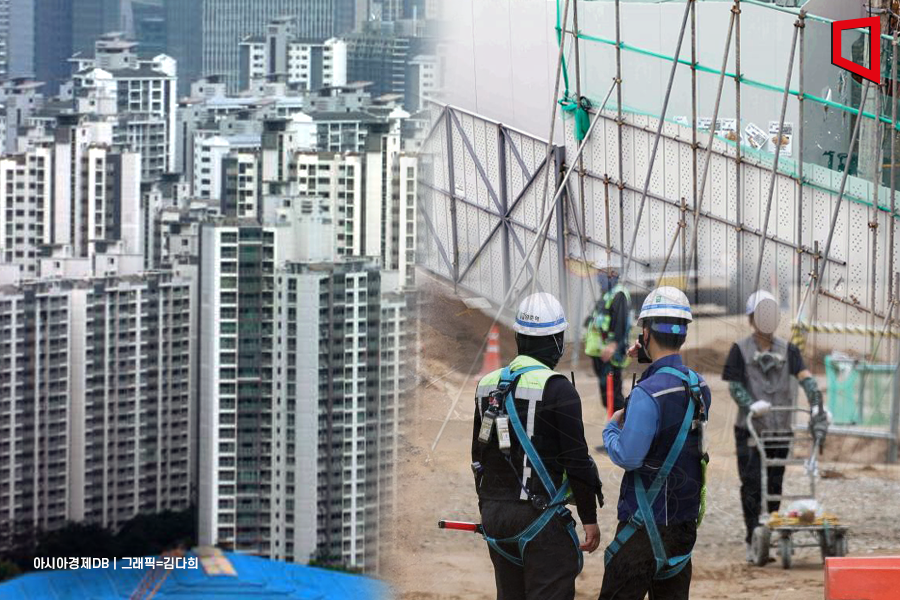

Mayor Oh stated, "We are starting construction on 168,000 housing units in the area south of the Han River, including the Gangnam 3 districts and Songpa. This will constitute an overwhelming portion of the Han River Belt supply, and releasing this volume will significantly contribute to the stabilization of the real estate market." He explained, "The Han River Belt, including the Gangnam 3 districts, has large complexes with more than 2,000 units concentrated, so they account for a large share of the total supply."
Seoul City will supply 198,000 housing units in the Han River Belt and other areas that have been driving up housing prices by 2031.
Across the entire city, including these areas, 310,000 units will begin construction.
The city will streamline permit procedures and promote relocation,
advancing the supply timeline by about six years compared to previous plans.
Seoul Mayor Oh Sehoon stated that quickly supplying housing in areas with high private sector demand is the solution to the city’s housing supply and demand issue.
The city announced its "Rapid Integrated Planning 2.0" initiative on the 29th, which aims to accelerate redevelopment projects. Rapid Integrated Planning is a public support plan designed to speed up redevelopment. The core of version 2.0 is to complete redevelopment projects within 12 years, compared to the usual 18 years and 6 months. The city estimates the redevelopment process will take two years to designate a redevelopment zone, six years to start construction, and four years to complete.
Mayor Oh emphasized, "The key to solving Seoul's housing supply problem is private sector-led redevelopment," adding, "It is especially important to supply sufficient housing in major areas, including the Gangnam 3 districts." He continued, "By fully implementing Rapid Integrated Planning 2.0, we will achieve a tangible stabilization effect in the real estate market across Seoul."
198,000 units in the Han River Belt by 2031... Faster permit processing
Seoul has set a target to start construction on 310,000 units over the next six years. Beginning with 23,000 units next year, the city will increase supply each year: 34,000 units, 22,000 units, 46,000 units, 73,000 units, and 112,000 units by 2031.
The city has designated complexes scheduled for relocation and demolition as part of next year's supply, including Bangbae Sindonga, Bangbae District 13, Hannam District 3, Noryangjin Districts 5 and 7, Geumho District 16, Macheon District 4, and Sindang District 8. Redevelopment projects in the implementation and management approval stages are slated for 2027-2030, while projects currently in the designation stage are counted toward the 2031 supply. According to Seoul City, the supply was secured by calculating two years each for project implementation approval, management approval, and relocation/demolition, starting from the establishment of the association, under the redevelopment project processing deadline system.

Seoul City announced on the 29th the promotion plan for "Rapid Integrated Planning 2.0," which accelerates private redevelopment projects through regulatory innovation in redevelopment project permits and approvals. The goal is to start construction on a total of 310,000 households by 2031, with plans to begin construction on 198,000 households in preferred areas such as the Hangang Belt. Provided by Seoul City
원본보기 아이콘In particular, 198,000 units will be supplied in the Han River Belt alone over six years. The supply target for the Gangnam 3 districts by 2031 is 75,000 units. The annual supply targets for the Han River Belt are as follows: 12,000 units in 2026, 15,000 in 2027, 11,000 in 2028, 30,000 in 2029, 38,000 in 2030, and 92,000 in 2031.
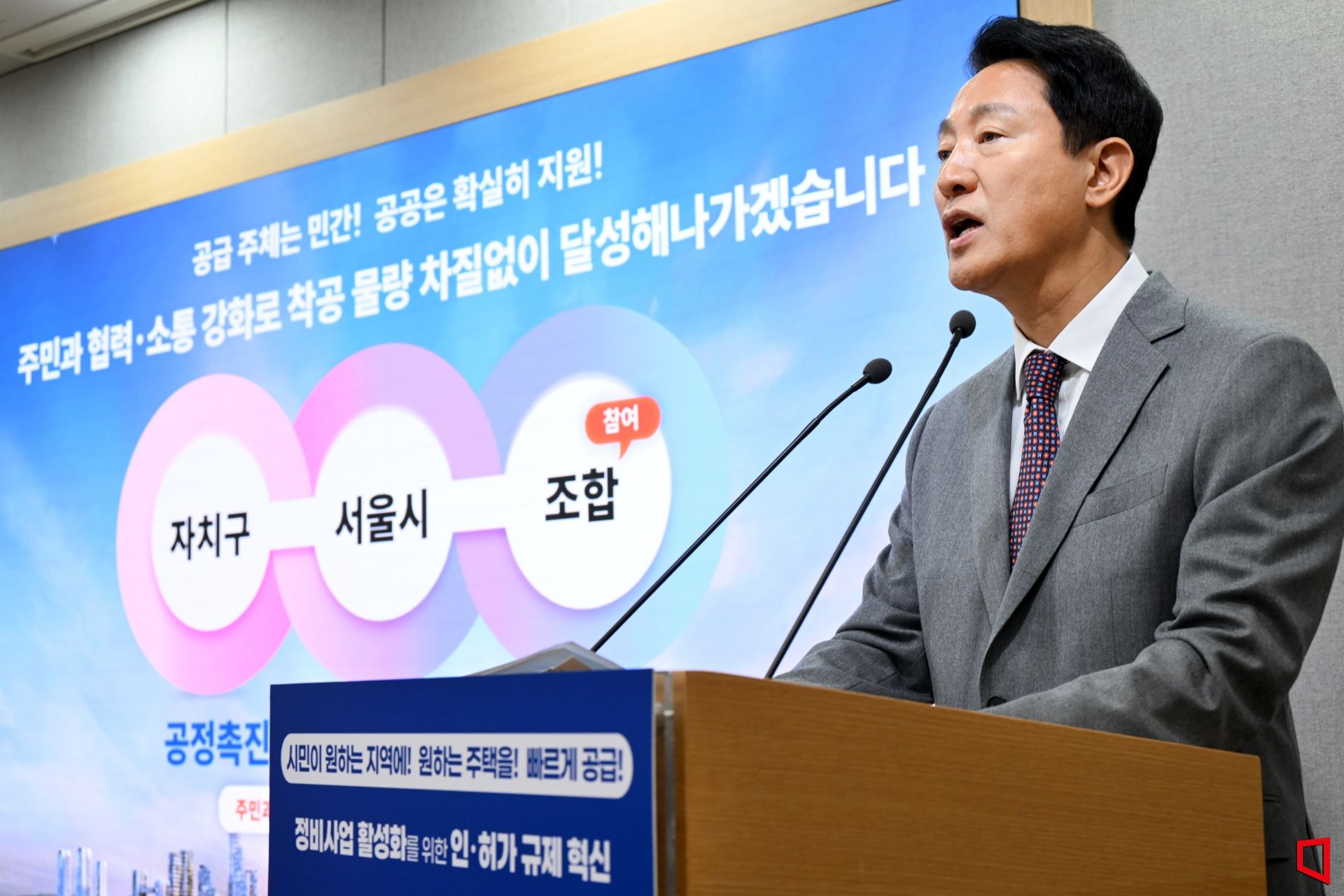
He continued, "Although the supply might decrease if conflicts among residents arise, it is accepted as a given that the faster the project progresses, the lower the cost burden becomes." He added, "We will establish a task force to resolve conflicts, which will operate at the district and city offices. If these efforts are reflected, I believe it will be possible to achieve the goals I just mentioned."
The city will abolish or streamline various procedures to accelerate supply from the middle stages of the project onward. The "preliminary environmental impact assessment review meeting," previously held before integrated review, will be omitted and instead reviewed collectively during the integrated review, reducing the project period by about two months. The redevelopment process proceeds in the following order: zone designation, promotion committee and association establishment, project implementation approval, management approval, relocation and demolition, and construction start.
The "qualification check for redevelopment rental housing tenants," previously conducted twice at the project approval and management approval stages, will now be conducted only once (at management approval). The "estimated contribution verification process," previously conducted four times before the association member sales announcement, will be reduced to three times, eliminating the redundant verification at the management approval stage.
Seoul City will also coordinate interdepartmental adjustments, a task previously handled by the project implementer (association), which is expected to shorten the project period by about two months. From the first half of next year, Seoul Housing and Communities Corporation (SH) will also participate in the "management approval plan feasibility verification," a process currently handled exclusively by the Korea Real Estate Board that takes about nine months, potentially reducing the verification period by two months.
Establishing tenant support standards to promote relocation
To speed up redevelopment, the city has also introduced measures to promote relocation. Additional compensation standards will be created so that associations can compensate tenants in redevelopment zones who were previously excluded from compensation. Under current rules, the project implementer is required to compensate tenants, but if tenants change, they are excluded from compensation, causing conflicts during relocation. The city will relax the floor area ratio by about 4% if additional compensation is paid.
The comprehensive demolition plan will now only be required for zones where demolition is actually necessary. By reducing the extensive work previously required for all buildings, the city expects to shorten the project period by about two months.
Authority for minor changes, such as floor area ratio or redevelopment zone area, has been significantly expanded to allow district mayors to handle them. Currently, district mayors can only approve changes of less than 5% in zone area, infrastructure size, floor area ratio, or building coverage ratio, but this will be expanded to changes of less than 10%. This is expected to shorten the project period by about one month.
Meanwhile, Mayor Oh dismissed plans to further designate land transaction permit zones (LTPZ) in areas such as Mapo, Seongdong, and Gangdong districts. He stated, "There are no plans to designate more LTPZs beyond those previously designated." However, he added, "In the recent government measures, the Ministry of Land, Infrastructure and Transport announced it would jointly hold the authority to expand LTPZ designation with Seoul City. We will continue to closely monitor the situation and hold ongoing discussions as needed."