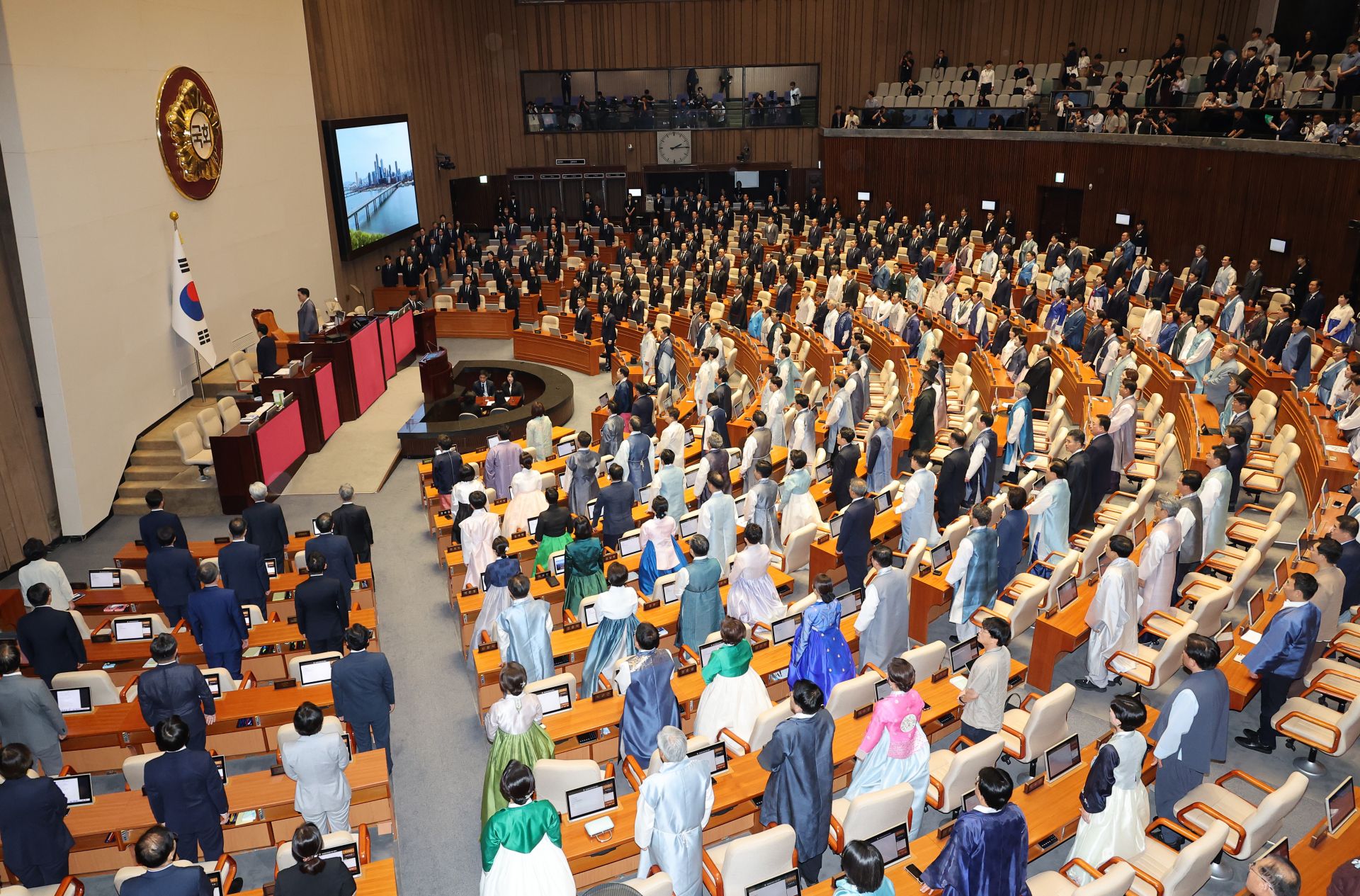
On the 1st, at the regular National Assembly opening ceremony held at the National Assembly in Yeouido, Seoul, ruling and opposition party members wearing hanbok and mourning clothes are singing the national anthem.
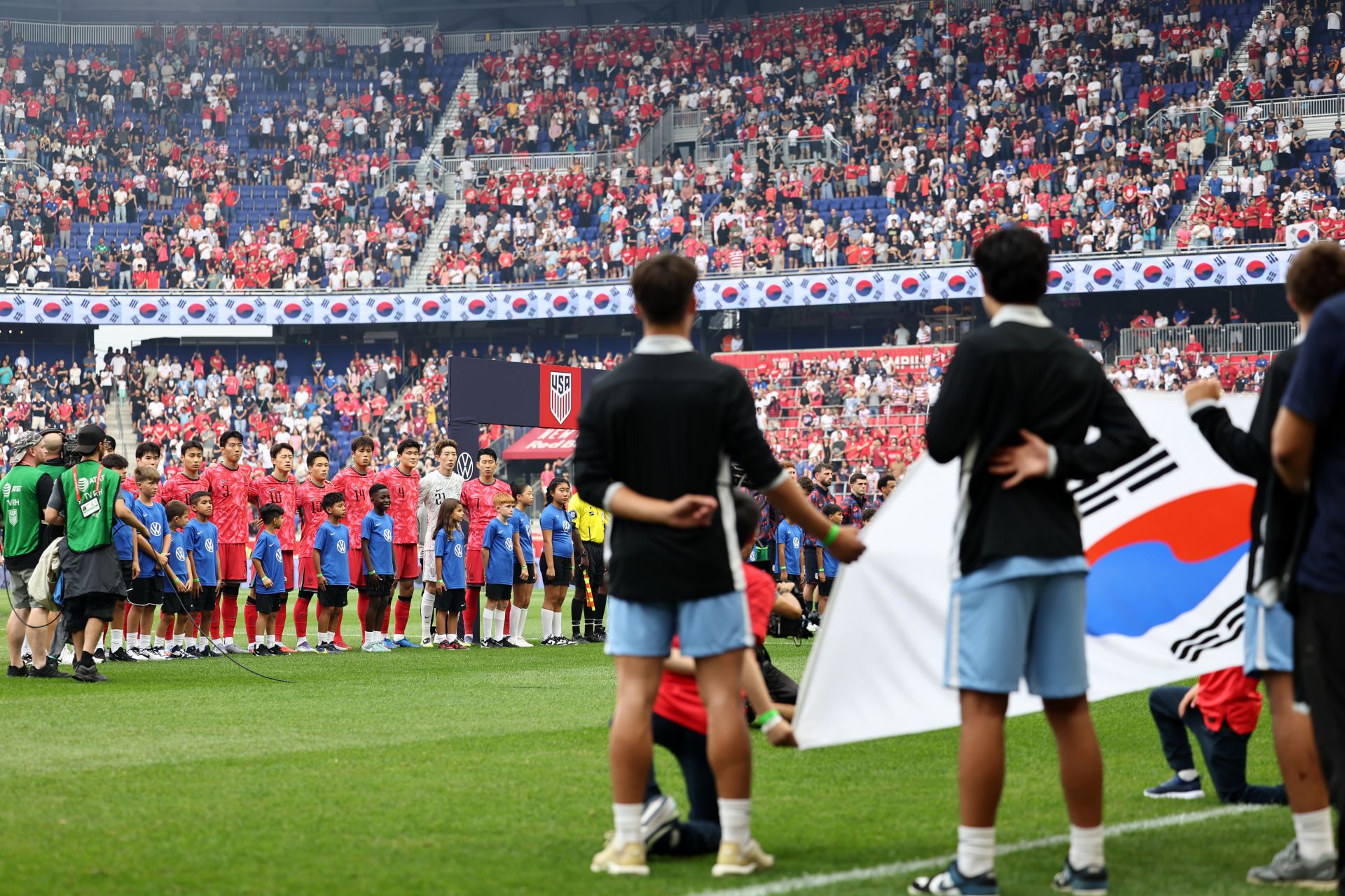
On the 6th (local time), at the Harrison Sports Illustrated Stadium in New Jersey, USA, Korean players are singing the national anthem during the friendly match between Korea and the United States.
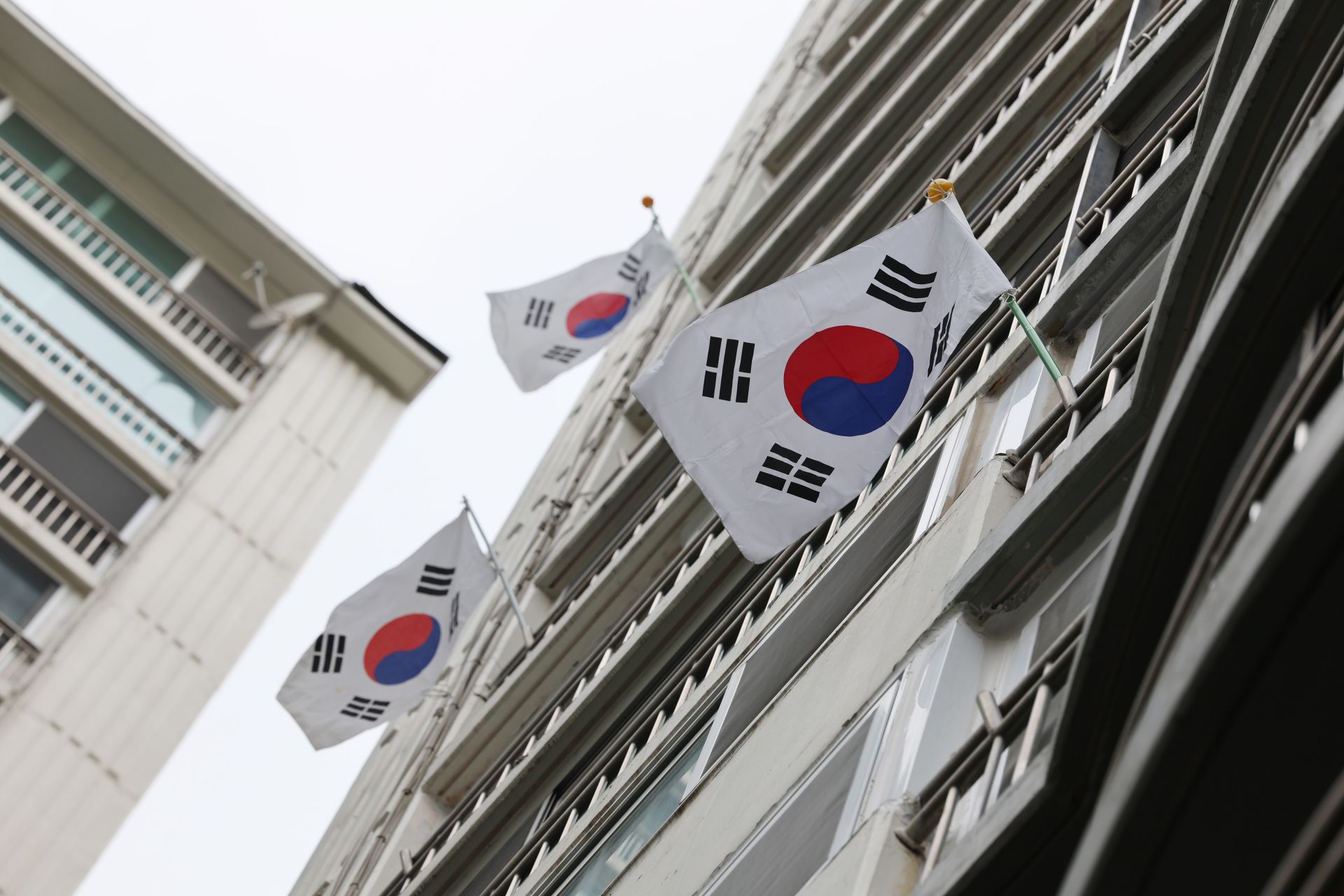
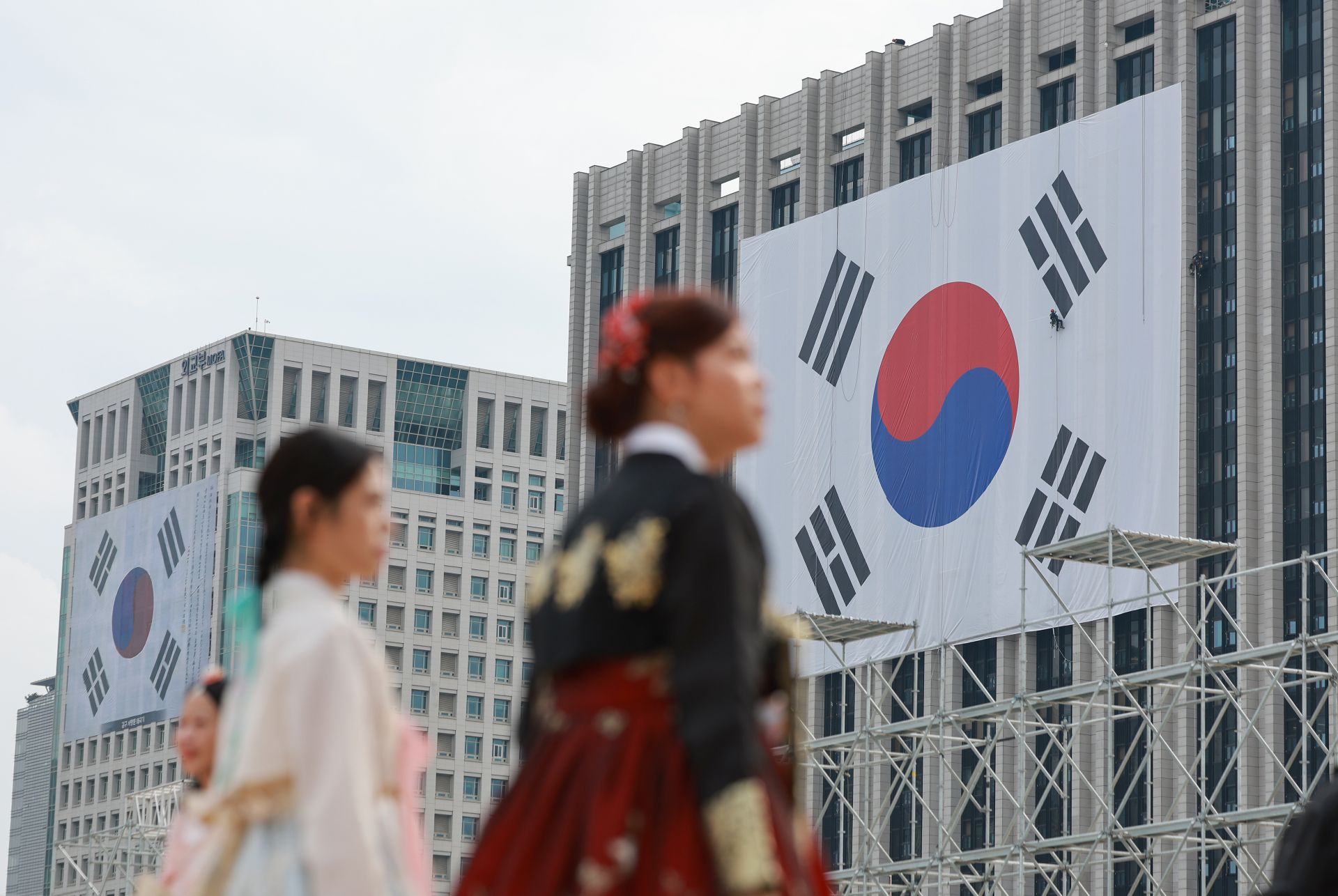
A Taegeukgi flag is hoisted at an apartment in Seoul to commemorate the 80th anniversary of Liberation Day.
The Complex Taegeukgi: Can Our Children Draw It?

The scene around Hyochang Park in Yongsan-gu, Seoul, on the recent March 1st Independence Movement Day. Photo by Kang Jinhyung
원본보기 아이콘A survey on the awareness of the Taegeukgi flag and the national anthem will be conducted among some elementary, middle, and high school students currently enrolled in Seoul. The aim is to assess whether students can draw the Taegeukgi and recite all four verses of the national anthem. However, there are criticisms that this is an outdated measure of patriotism. Resistance is also expected from some educational institutions and parents.
According to the Seoul Metropolitan Council on September 23, the office of Assemblywoman Koo Mikyung from the People Power Party has recently launched a "Survey on Taegeukgi Awareness and National Anthem Memorization" targeting 1,000 students enrolled in elementary, middle, and high schools in Seoul.
Not a Single Student Could Sing It Ten Years Ago... What About Now?

The scope of the survey is quite specific. It will not only check whether students can draw the Taegeukgi, but also assess their understanding of the meanings and colors of its components-Geon, Gon, Gam, and Ri. The same applies to the national anthem: the survey will examine whether students can sing all four verses, as well as their experiences singing and learning the anthem at school or at home.
The assemblywoman's office explained the background of the survey, stating, "There is growing social concern over the declining awareness of national symbols and indifference to national ceremonies among the younger generation." They added, "The results will serve as foundational data for educational and policy responses, and we plan to develop measures to foster patriotism and strengthen related education among students."
It is widely known that students' awareness of the Taegeukgi and the national anthem is very low. About ten years ago, a media outlet randomly selected 100 elementary school students for a survey, and at that time, not a single student could sing all four verses of the national anthem.
Some argue that even if not as a test of patriotism, having an accurate understanding of the Taegeukgi and the national anthem is a basic civic competency for citizens with Korean nationality receiving compulsory education. There are concerns that indifference to national identity during adolescence can lead to various negative consequences.
Does Memorizing the National Anthem Make a Student Patriotic?

To commemorate the 80th anniversary of Liberation Day, flags of the Taegukgi from different eras related to the independence movement are displayed on Nodeul Island in Yongsan-gu, Seoul. Photo by Yonhap News
원본보기 아이콘However, there are also many opinions that this is a forced and outdated approach to instilling patriotism. An official from an education office stated, "While knowing the national anthem and being able to draw the Taegeukgi may be considered basic civic knowledge for Korean citizens, using this as a measure of patriotism is an excessively narrow interpretation of what patriotism means."
Although the survey will be conducted by phone and online rather than through school visits, pushback from educational institutions and parents is still expected. Another education office official commented, "The results of this survey could lead to criticism of students and may also impact the school curriculum."
The Taegeukgi and National Anthem at the Center of Controversy

The way the Taegeukgi and the national anthem are treated has long been a source of controversy in political circles. In the 2011 Seoul mayoral election, then-Grand National Party candidate Na Kyungwon questioned opposition candidate Park Wonsoon's patriotism, claiming he held an event without the Taegeukgi or the national anthem. Park responded, "There are many ways to express patriotism." Since then, memorization of "all four verses of the national anthem" and the "Pledge of Allegiance to the Flag" has appeared in civil service exams, sparking further debate. In 2015, then-Prime Minister nominee Hwang Kyoahn reportedly admonished prosecutors at an appointment ceremony for failing to sing all four verses of the national anthem, saying, "Upholding the values of the Constitution begins with the national anthem."
More recently, the Seoul Metropolitan Government faced criticism after announcing plans to install a 100-meter-high Taegeukgi flagpole in the middle of Gwanghwamun. At the time, some civic groups denounced the plan as "nationalism," and amid ongoing controversy, Mayor Oh Sehoon revised the plan to create a space honoring the sacrifices of the countries that participated in the Korean War, after collecting public opinion.