Industry Players Continue Acquiring Waste Management Companies... Already Surpassing Last Year’s Total Investment
The private equity fund (PEF) sector is continuing aggressive investments to acquire waste management companies. Last year, 3.3 trillion won was injected into the related market, but this year’s investment is expected to far exceed that amount.
According to the investment banking (IB) industry on September 16, domestic and foreign PEFs have already invested about 3.6 trillion won this year in acquiring waste and water treatment companies, surpassing last year’s total investment. Considering the numerous ongoing deals behind the scenes, more than 4 trillion won is expected to flow into the market this year.

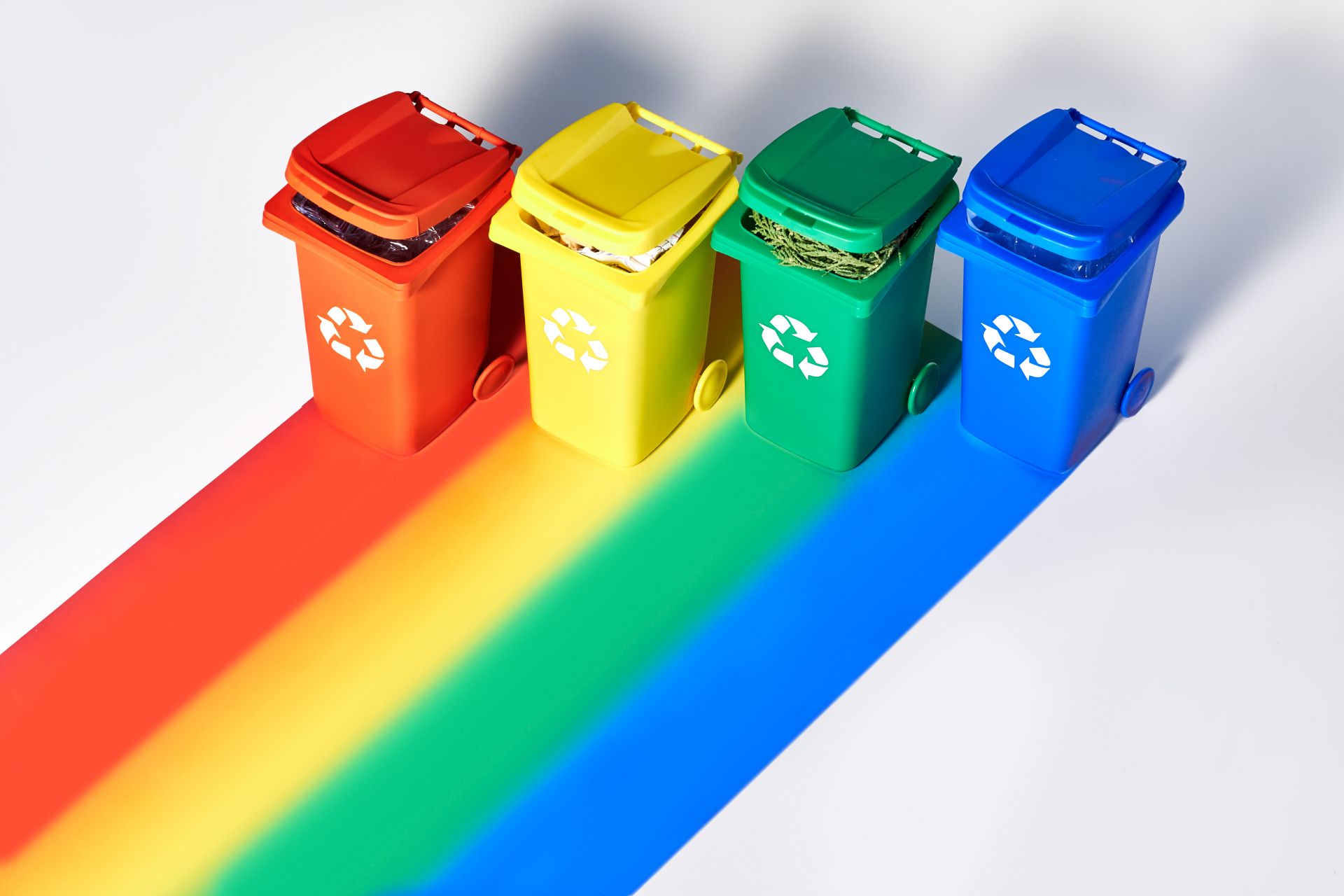
Recyclable waste such as plastics discharged from each household is being sorted at a recycling sorting center in Busan. Yonhap News
원본보기 아이콘This year, several large-scale mergers and acquisitions (M&A) have taken place in the waste management market. The largest single transaction was Glenwood Private Equity’s acquisition of LG Chem’s Water Solutions division. In June, Glenwood Private Equity signed an agreement to acquire the business for 1.4 trillion won through a business transfer. The LG Chem Water Solutions division develops and supplies RO membranes (reverse osmosis membranes) and is the world’s second-largest company in the seawater desalination sector.
Another transaction exceeding 1 trillion won followed. Last month, Kohlberg Kravis Roberts (KKR), one of the world’s top three PEFs, acquired three environmental subsidiaries of SK Ecoplant-Renewus, Renewon, and Renew Energy Chungbuk-for 1.78 trillion won. Renewus is the top company in public sewage and wastewater treatment operations, while Renewon and Renew Energy Chungbuk primarily focus on waste collection and disposal.
In June, Affirma Capital acquired all waste management-related companies owned by Singapore-based infrastructure investment firm Equis Development, including CEK (formerly KC Environmental Service), for 400 billion won. CEK, previously known as KC Environmental Service, is the third-largest waste management company in Korea. Last year, Affirma Capital formed a consortium with Theham Partners to acquire JNTech, a designated waste final disposal company in Dangjin, South Chungcheong Province.
As a result, approximately 3.6 trillion won has already been invested in waste management company M&A deals this year. According to the Financial Supervisory Service’s data on PEF investment execution, 3.3 trillion won was invested last year in sewage, waste treatment, and recycling businesses. This represented a 450% surge from the previous year’s 600 billion won, and this year’s investment has already surpassed that amount.
Considering ongoing deals, it is expected that more than 4 trillion won will be invested in the waste management market this year. Recently, the main bidding process for waste management company Koentec took place. The main shareholders, E&F Private Equity, IS Dongseo, and the sale managers UBS and EY Hanyoung, conducted the main bidding, with Affirma Capital, Geo Capital, and IMM Private Equity participating. The sale involves 100% of Koentec’s shares, and the sellers are hoping for a price of around 800 billion won.
Acquiring Licensed Companies Immediately Secures Market Share... Stable Returns Expected Due to Consistent Growth
The main reason PEF capital is pouring into the waste management market is the high entry barrier, as it is a “licensed industry.” As the importance of ESG (environmental, social, and governance) rises, large corporations are also entering the waste management market, which is expected to drive up company valuations further. In addition, since the market continues to grow steadily, it is considered an ideal investment area for PEFs, which aim to recover their investment after a certain period following an acquisition.

Sam-il PwC stated in a report, “Due to the domestic economic downturn, the environmental waste management market, which has the characteristics of infrastructure and is less affected by economic fluctuations and can generate stable cash flows, is once again attracting attention over consumer goods, which are more vulnerable to economic volatility.”
The report added, “As of the end of last year, the dry powder (unexecuted commitments) of domestic PEFs reached 37.5 trillion won, and it is expected to grow further due to high interest rates that have prevented execution. Investments in large-scale waste management assets, which can quickly absorb capital, are drawing particular attention.”
-

Reporter Lee Seungjin promotion2@asiae.co.kr
-
Edit Yang Hyejin adoretj@asiae.co.kr
© The Asia Business Daily(www.asiae.co.kr). All rights reserved.


!['WHO Declares International Public Health Emergency' Why the Untreatable 'Variant Ebola' Is More Deadly Than COVID-19 [Reading Science]](https://cwcontent.asiae.co.kr/asiaresize/323/2026052110164072055_1779326201.png)