

"The share of the service sector in the Korean economy is increasing"
ㅡ
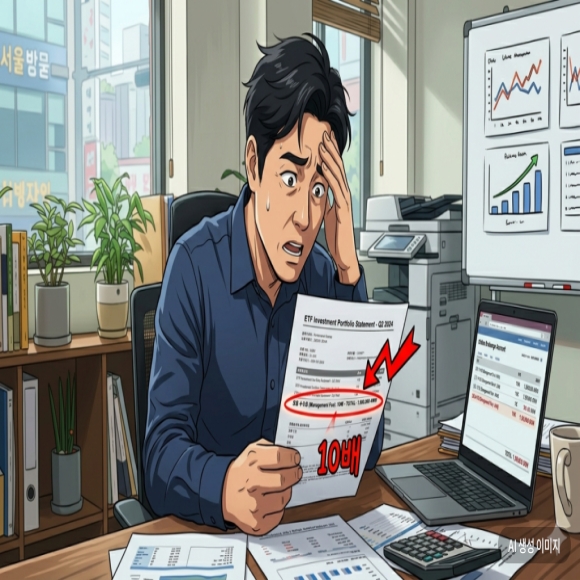
"Right now, I am simply grateful to have a stable income."
Mr. Lee (34), who lives in Gimpo, Gyeonggi Province, found a new job after a year and six months.
He is now a heavy equipment operator at a small logistics center run by a mid-sized company. He said that he had been struggling to make ends meet for the next month,
but now feels relieved, saying, "Right now, I am simply grateful to have a stable income."
Lee is versatile. He trained for three years at a sushi restaurant and became a skilled chef,
and after learning carpentry, he worked at construction sites.
He was confident that, no matter what hardships came his way, he would always be able to make a living.
However, when the construction industry suddenly slumped, all his work dried up.
Lee said, "I barely managed to get by doing food deliveries at night, but even that became too competitive,"
"I was lucky there was a logistics center near where I live," he added.
ㅡ
"Waiting endlessly for work... Financial hardship eventually drives us to delivery or logistics centers."
Mr. Kim (27), an equipment installation engineer who frequently travels to regional industrial complexes such as Yeosu,
has also noticed a marked change in recent years.
Kim explained, "As petrochemical plants have withdrawn or suspended operations, companies that used to take on secondary subcontracting work have been struggling,"
"In the past, freelancers could pick and choose jobs and travel for work,
but now, it's common to wait for over a month just hoping for work to come in."
He added, "I've seen many friends who, after running out of living expenses, have turned to delivery jobs or work at logistics centers."
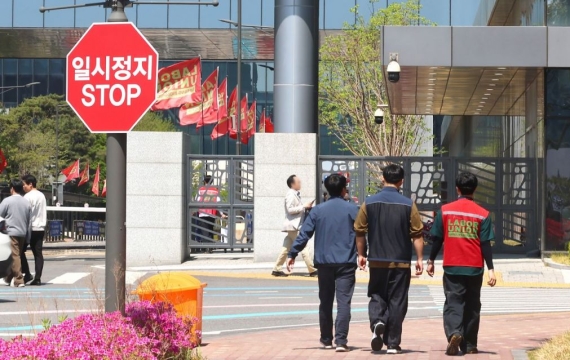
As the manufacturing and construction sectors suffer downturns and jobs at factories and construction sites disappear,
new employment opportunities are emerging in areas like care work, parcel delivery, and logistics centers, which tend to offer lower pay and less job stability.
As of last month, the number of people enrolled in employment insurance in the manufacturing sector dropped by 5,000 compared to the same month last year, marking a decline for two consecutive months.
The number of enrollees in the construction sector has also been falling for 24 consecutive months.
In contrast, the number of people enrolled in the service sector increased by 203,000 from a year earlier, with 134,000 of those in the health and welfare, and transportation and warehousing sectors.
The number of platform workers, such as delivery app riders, e-commerce logistics center workers, and care workers-classified as special employment types-has also surged from an estimated 470,000 in 2018 to 880,000 in 2023.
(According to employment administration statistics released by the Ministry of Employment and Labor)
The number of enrollees in the construction sector has also been falling for 24 consecutive months.
In contrast, the number of people enrolled in the service sector increased by 203,000 from a year earlier, with 134,000 of those in the health and welfare, and transportation and warehousing sectors.
The number of platform workers, such as delivery app riders, e-commerce logistics center workers, and care workers-classified as special employment types-has also surged from an estimated 470,000 in 2018 to 880,000 in 2023.
(According to employment administration statistics released by the Ministry of Employment and Labor)
The problem is that jobs in care work, parcel delivery, and logistics centers are of significantly lower quality than those in manufacturing or construction.
The average wage for manufacturing workers in Korea is 4.69 million won (2023, Statistics Korea), which is higher than the overall average wage for all workers (3.12 million won).
In contrast, jobs in care work, parcel delivery, and logistics centers often lack job security or are low-paying.
Regarding this, Lee said, "Most logistics center hourly wages are just barely above the minimum wage,"
"Of course, my monthly pay has dropped significantly compared to my previous work, but since I can't find any other job right now, I have no choice," he lamented.
"Accordingly, the contribution of employment creation in the health and welfare, and logistics sectors will further increase"
"While changes in the labor landscape due to shifts in the economic structure are inevitable, it is time to establish systems to prevent the overall decline in employment quality" - Sunghee Kim, Professor at Korea University Graduate School of Labor Studies -
-

Reporter Lim Juhyeong skepped@asiae.co.kr
-
Edit Oh Hyunyoung hyun05@asiae.co.kr
© The Asia Business Daily(www.asiae.co.kr). All rights reserved.