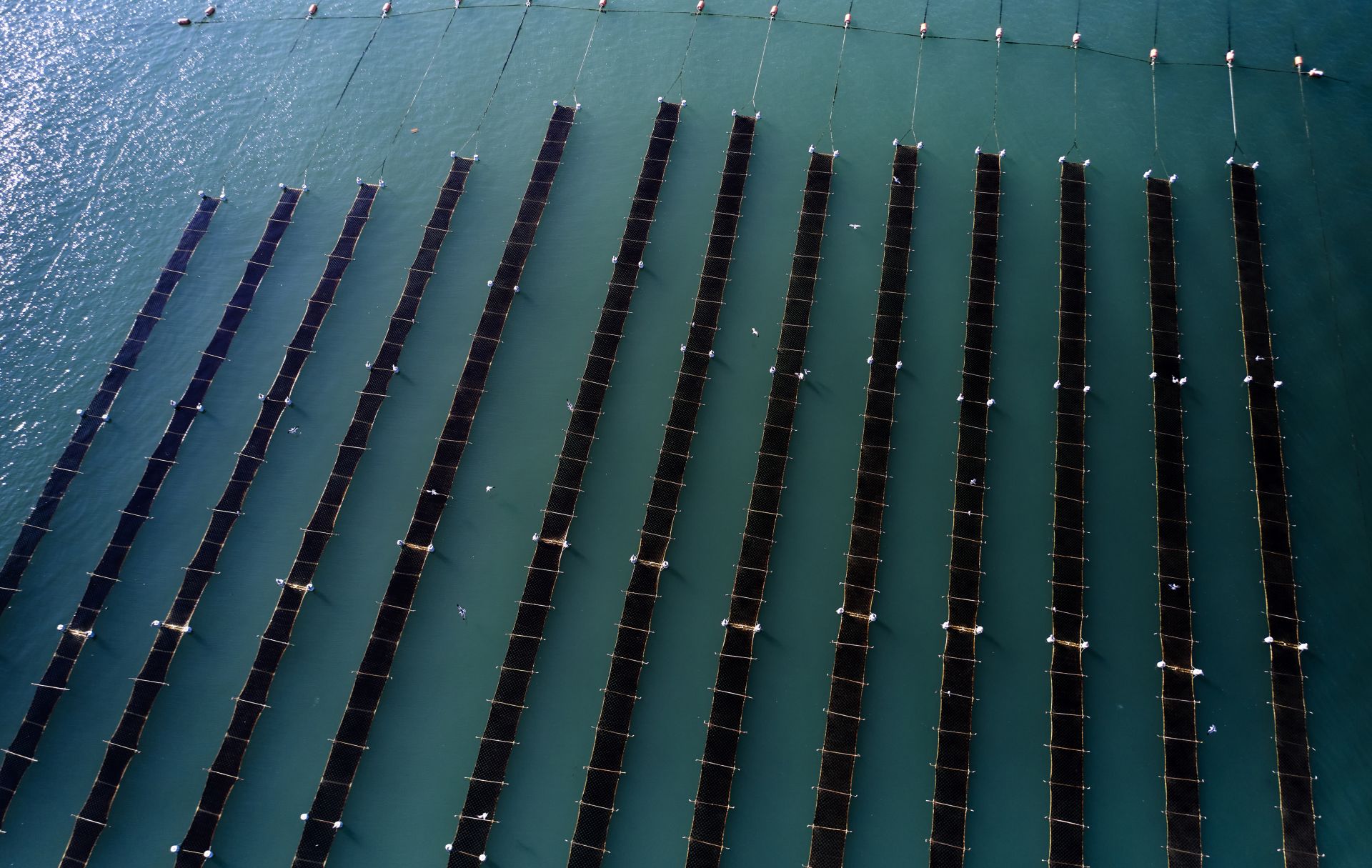

The Ministry of Oceans and Fisheries explained, "Due to climate change increasing the volatility of fishery production and a sharp rise in export volumes, domestic supply may become insufficient, raising the need to stockpile Gim." Last year, poor Gim production in China and Japan, combined with the K-Food craze, caused a surge in South Korea's Gim exports, leading to soaring prices of dried Gim domestically and consequently an increase in seasoned Gim prices. The Ministry plans to stockpile Gim at the consumer distribution logistics center being expanded in Naju, Jeollanam-do.
As Gim prices continue to soar, the Ministry of Oceans and Fisheries is planning to stabilize prices by adjusting supply and demand.
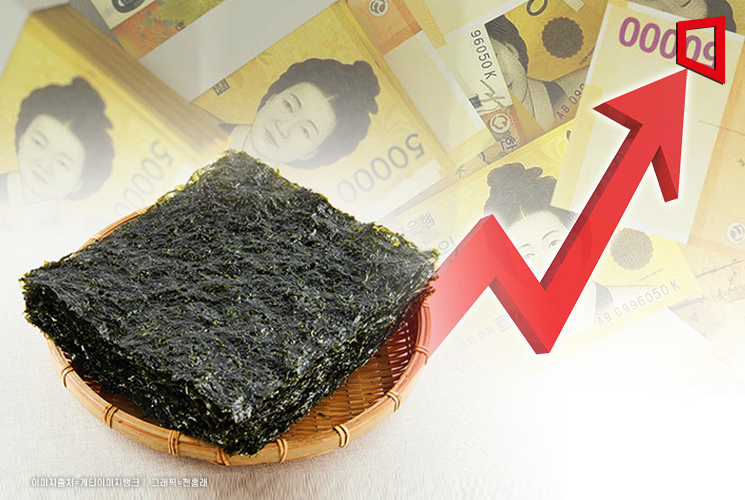
On August 10, the Ministry announced that it is in discussions with the Ministry of Economy and Finance to introduce a stockpiling system in which the government purchases Gim when prices are low, stores it, and then releases it to the market when prices rise significantly. Stockpiling of dried Gim was previously implemented from 1979 to 2006, but was discontinued due to reasons such as price crashes and declining quality. Now, with Gim prices soaring 40% above average, the government is seeking to resume dried Gim stockpiling for the first time in 20 years.
This year’s budget for seafood stockpiling is 175.1 billion won. However, farmed seafood such as Gim is not currently included among the stockpiled items. The Ministry currently stockpiles only six popular fish species?Alaska pollock, mackerel, squid, hairtail, yellow croaker, and dried anchovies?as well as solar salt. Although there were calls last year to stockpile Gim as its price was described as being "as expensive as gold," the Ministry stated at the time that it was not considering such a measure. However, as the high Gim prices that surged last year have continued into this year, the Ministry has shifted its stance and is now moving to introduce a stockpiling system. The Ministry is currently in talks with the Ministry of Economy and Finance to increase the budget.
In addition, the Ministry is considering expanding the list of farmed seafood eligible for stockpiling. To stockpile farmed seafood other than dried Gim, freezing technology will be necessary, so the Ministry also plans to conduct research and development (R&D) on freezing technology.
Meanwhile, according to data from the Korea Agro-Fisheries & Food Trade Corporation, as of August 8, the average retail price for a pack of 10 sheets of dried Gim (medium grade) was 1,347 won, which is 41.5% higher than the average price of 952 won. Dried Gim prices have been surging since the spring of last year and have remained high for a year and a half. The average annual price for a pack of 10 sheets of dried Gim was 1,019 won in 2023, 1,271 won last year, and has risen to 1,384 won this year.
-

Reporter Koo Nari forsythia26@asiae.co.kr
-
Edit Kim Hyunhee faith100@asiae.co.kr
© The Asia Business Daily(www.asiae.co.kr). All rights reserved.



![[Reportage]"It Only Leads to Arguments"... Chungnam's True Sentiments Hide Deeper After Martial Law](https://cwcontent.asiae.co.kr/asiaresize/304/2026051223490460082_1778597344.jpg)