The number of accounts suspected of being used for financial fraud continues to rise. As various types of financial fraud increase, the scope for requesting payment suspension, which was previously limited to telephone financial fraud (voice phishing), has been expanded to enable more immediate responses.
Payment Suspensions on Fraudulent Accounts Reach 49,000, Up 47%... April This Year Surpasses Half of Last Year's Total
According to data obtained by Democratic Party lawmaker Lee Jungmoon’s office from the Financial Supervisory Service on July 16, the number of payment suspensions on fraudulent accounts at the five major banks (KB Kookmin, Shinhan, Hana, Woori, NH Nonghyup) and the three internet banks (KakaoBank, K Bank, Toss Bank) reached 49,012 cases last year. This represents an increase of about 47% compared to 2021. The number has steadily increased from 33,395 cases in 2021, to 40,525 in 2022, and 42,764 in 2023. In particular, the number of payment suspensions is likely to be even higher this year, as 25,502 cases were recorded by April, already surpassing half of last year's total.

The payment suspension system for fraudulent accounts was established to counter voice phishing crimes under the current Special Act on Prevention of Damage from Telecommunications-based Financial Fraud and Refund of Damages (Telecommunications Financial Fraud Damage Refund Act). Under this system, if an account is recognized as having been used for voice phishing, the financial institution can suspend payments on that account. A payment suspension can be initiated if a consumer requests it, if investigative agencies or the Financial Supervisory Service provide information that the account is suspected of being used for fraud, or if identity verification measures on a suspicious transaction account indicate it is likely a fraudulent account. As financial fraud schemes diversify, regulatory authorities are expanding the scope of the payment suspension system. Recently, the Financial Supervisory Service issued guidelines to financial institutions to allow victims of investment scams?where fraudsters solicit investments in so-called "investment leading rooms" and then disappear with the funds?to apply for payment suspension as well.
Types of Fraudulent Accounts Diversify, Including Group Accounts and Virtual Accounts... Payment Suspension Scope Expands
The types of accounts used for fraud are also diversifying. For example, the number of payment suspensions on group accounts surged from 279 cases in 2021 to 1,560 in 2022, then reached 2,131 in 2023 and 2,022 last year, maintaining a level above 2,000 cases. As of April this year, there have been 335 cases. On average, 92% of these payment suspensions occurred at KakaoBank. However, as other banks have launched group account products, KakaoBank’s share has gradually decreased, accounting for only 74% this year. A KakaoBank representative stated, "The number of group account customers is about 12 million, overwhelmingly more than other banks," and added, "We are working to prevent voice phishing damage by changing group account usage policies and other measures."
Payment suspensions on virtual accounts (based on parent accounts) have also increased over the past five years. The five major banks, three internet banks, and the National Credit Union Federation of Korea recorded 124 payment suspensions on virtual accounts in 2021, 162 in 2022, 227 in 2023, and 176 last year. As of April this year, there have been 121 cases. A virtual account refers to a temporary deposit-only account number linked to a parent account at an electronic payment gateway (PG) company, used for utility bill payments or online shopping.

Last Year KakaoBank Led in Payment Suspensions... This Year Nonghyup Bank Tops the List
By bank, KakaoBank recorded the highest number of payment suspensions last year with 8,479 cases. This year, Nonghyup Bank has recorded the most, with 4,919 cases. The bank with the fastest growth last year was Toss Bank, with an increase rate of 91.6%. Toss Bank explained, "The increase in the user base due to a surge in users was inevitable, but according to the public notices for bond extinguishment procedures, the number of payment suspensions is now rapidly declining." From 2021 to April 2025, KB Kookmin Bank had the highest total and annual average number of payment suspensions, with 35,909 cases in total and an average of 7,182 cases per year.

Banks explained that the increase in numbers is largely due to their diligent response to financial consumers’ requests for payment suspension, but also acknowledged the rise in various types of financial fraud. KB Kookmin Bank noted that, as it has more customers and accounts than other banks, it also has a relatively higher number of payment suspensions. In addition, a recent analysis of payment suspension cases revealed that many victims were young male customers in their 20s and 30s. There has been a notable increase in cases where fraud proceeds are transferred through accounts under the victim's own name. Many victims were lured under the pretense of trade payment remittance, simple transfer part-time jobs, or to secure transaction records for low-interest loans. Furthermore, the sharp increase in investment fraud crimes, which are not typical voice phishing cases, was also cited as a reason for the rise in payment suspensions.
Increase in Fraud Proceeds Transferred Through Accounts Under Victims’ Own Names... Youth and Vulnerable Groups Are Main Targets
The surge in payment suspensions has also been attributed to the use of virtual assets as a primary channel for laundering voice phishing proceeds. Nonghyup Bank, which was partnered with Bithumb until March this year, explained that payment suspensions increased after Bithumb abolished its withdrawal delay system in September last year. The virtual asset withdrawal delay system was designed to prevent voice phishing proceeds from being converted into virtual assets, by restricting the withdrawal of newly purchased virtual assets by new users for a certain period.
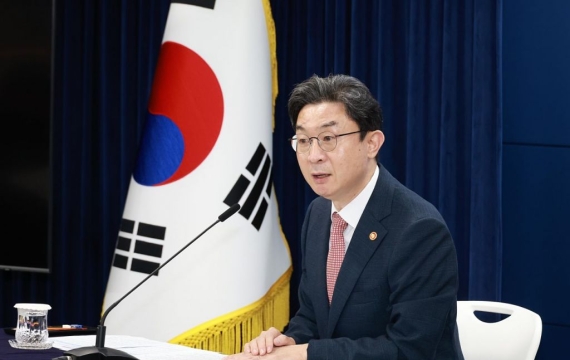
Lee Jungmoon, a Democratic Party lawmaker, stated, "Recently, the types of crimes abusing accounts have become increasingly diverse and sophisticated, leading to a sharp rise in the number of payment suspensions on fraudulent accounts. Since young people and vulnerable groups are the main targets, it is necessary for the government and financial institutions to work closely together to establish a comprehensive response system to minimize their damage."
-

Reporter Oh Kuemin moh011@asiae.co.kr
-
Edit Kim Yumi ymkim91@asiae.co.kr
© The Asia Business Daily(www.asiae.co.kr). All rights reserved.