Definition of Moderate-to-Vigorous Physical Activity Rate It refers to the percentage of adults who engage in vigorous physical activity for at least 20 minutes a day, 3 or more days a week, or moderate physical activity for at least 30 minutes a day, 5 or more days a week.
It has been found that only one in four adults in South Korea engages in moderate-to-vigorous physical activity. In contrast, the rate of insufficient physical activity among Korean adults is nearly twice as high as the global average.
According to the Korea Disease Control and Prevention Agency (KDCA) on July 10, the 'moderate-to-vigorous physical activity rate' among Korean adults last year was 26.6%, returning to pre-COVID-19 levels.



What is high-intensity physical activity
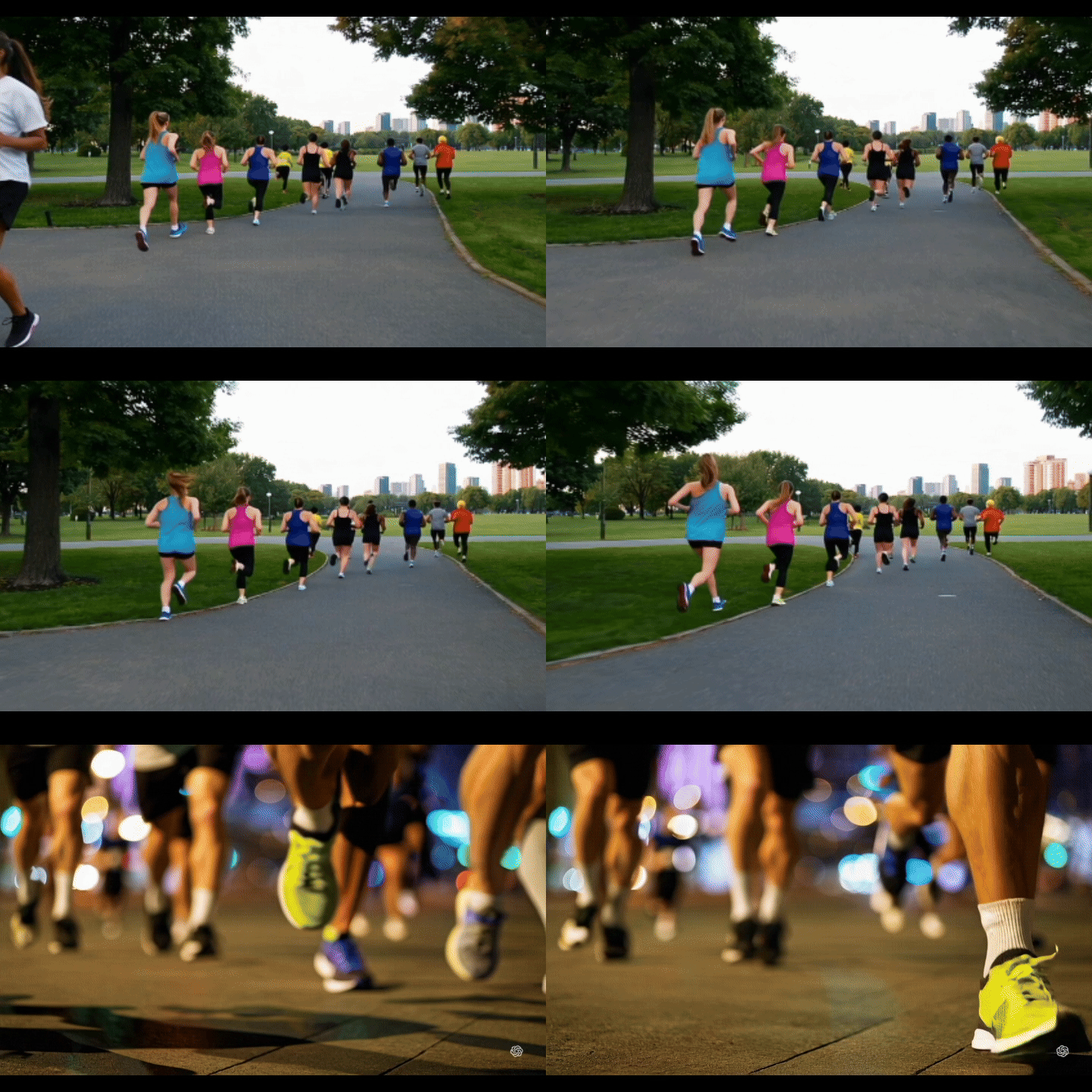
Running (jogging), hiking, cycling, swimming, soccer, basketball, jump rope, squash, singles tennis, carrying heavy objects, etc., that make your body feel very tired and breathe heavily compared to usual
What is Moderate Intensity Physical Activity
Activities such as slow swimming, doubles tennis, volleyball, badminton, table tennis, and carrying light objects that make the body slightly tired and cause mild shortness of breath compared to usual fall into this category.
The moderate-to-vigorous physical activity rate among Korean adults rose slightly from 22.3% in 2017 to 24.7% in 2019, but dropped sharply to 19.8% in 2020 due to the impact of the pandemic. In 2021, it reached a record low of 19.7% since statistics were first compiled, but has been on the rise again since 2022 as daily life began to return to normal. This analysis is based on a detailed review of data from the 'Community Health Survey,' which the KDCA conducts annually with 17 metropolitan governments, 258 public health centers, and 33 local universities.
However, as of 2022, the rate of insufficient physical activity among Korean adults (the percentage who did not engage in at least 150 minutes of moderate-intensity or 75 minutes of vigorous-intensity physical activity per week) was 58.1%. This is 1.9 times higher than the global average of 31.3% reported by the World Health Organization (WHO).
A look at the regional (by city and province) trends over the past four years, from the record low in 2021, shows that the rate of moderate-to-vigorous physical activity has steadily increased in 12 out of 17 metropolitan governments, indicating a recovery trend. Sejong saw the largest increase, with the rate rising from 17.5% in 2021 to 29.1% in 2024, an increase of 11.6 percentage points. Ulsan (18.1% to 29.2%) and North Chungcheong Province (19.7% to 29.8%) followed.
In addition, rural areas showed higher rates of moderate-to-vigorous physical activity compared to urban areas. This is interpreted as the result of a combination of factors, including a living environment centered around cars and public transportation, a high proportion of sedentary occupations such as office jobs, and a lack of time for exercise. Conversely, in rural and fishing communities, the relatively high rate of physical activity is estimated to be influenced by labor-intensive occupational structures such as agriculture, forestry, and fisheries.

By gender, the rate of moderate-to-vigorous physical activity was 30.2% for men and 19.5% for women, a difference of 10.7 percentage points. By age group, those in their 20s had the highest rate at 32.3%, while those aged 70 and older had the lowest at 13.8%. The trend of decreasing physical activity with age was more pronounced among men: 42.2% of men in their 20s engaged in moderate-to-vigorous physical activity, the highest rate, while only 18.3% of men aged 70 and older did so, the lowest rate. In contrast, among women, there was no clear trend of decreasing participation in moderate-to-vigorous physical activity with age. In fact, middle-aged women in their 40s (22.9%) and 50s (21.8%) showed higher rates of physical activity.
Additionally, adults who had never been diagnosed with hypertension or diabetes had a participation rate of 26.8%, which was 7.2 percentage points higher than those who had been diagnosed (19.6%). Adults without symptoms of depression had a participation rate of 25.1%, which was 7.8 percentage points higher than those with symptoms of depression (17.3%).
The KDCA emphasized that, in addition to light movement in daily life, it is important to regularly engage in moderate-to-vigorous physical activity that makes you breathless and sweat, not only for the prevention of chronic diseases but also for the promotion of mental health. Activities such as hiking, running, and cycling are particularly effective in preventing and improving major chronic diseases, and are also known to contribute to improved mental health by reducing feelings of depression, relieving stress, and alleviating anxiety disorders.
Ji Youngmi, Commissioner of the KDCA, stated, "Moderate-to-vigorous physical activity is an essential factor not only for disease prevention but also for healthy aging and improved quality of life. Neglecting it can negatively impact health, increasing the risk of chronic diseases and deteriorating mental health. It is important to continue small movements in daily life, starting with light exercise and progressing to activities that make you breathless."