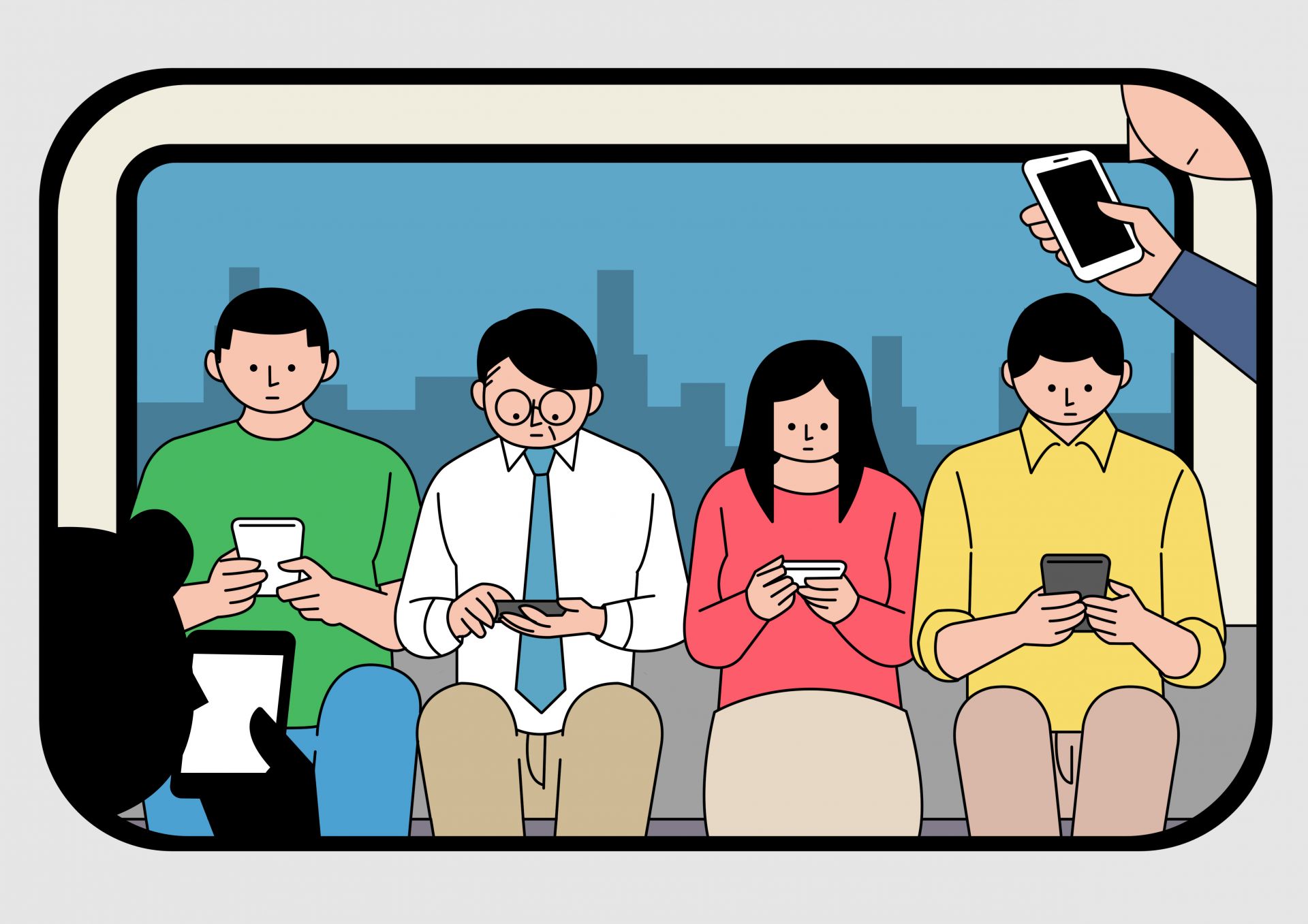
On average, severe overcrowding occurs every 3 to 4 trains, followed by 2 to 3 trains that are relatively less crowded.
A Foolproof Method Devised by a Japanese Physicist 100 Years Ago
Overcrowded trains are a source of misery for everyone. It is only natural to want to sit down as soon as a seat becomes available. Is there a way to secure a seat on a packed train? A renowned Japanese physicist pondered this very question a century ago, conducted field research, and developed his own set of rules.
On July 7, the Mainichi Shimbun reported in its "Science in Everyday Life" column on a story titled, "Can You Get a Seat Even on a Crowded Train? A Physicist’s Foolproof Method." According to the article, Terada Torahiko (1878?1935), famous for the saying, "Disasters strike when they are forgotten," is well known for his many essays that connect daily life with physics. In his 1922 essay "On the Congestion of Streetcars," he wrote, "On a packed train, holding onto the strap, being pushed, poked, and shoved, it is an ordeal that is almost unbearable."
It is more convenient for yourself and others to give up overcrowded trains to others, step back, and take less crowded trains, which is seen as an 'efficient' behavior.
The key is to accurately identify the passengers who are getting off.
Identify the disembarking stations of high school students in uniforms and office workers.
Check transfer trains that connect to other lines or express trains.
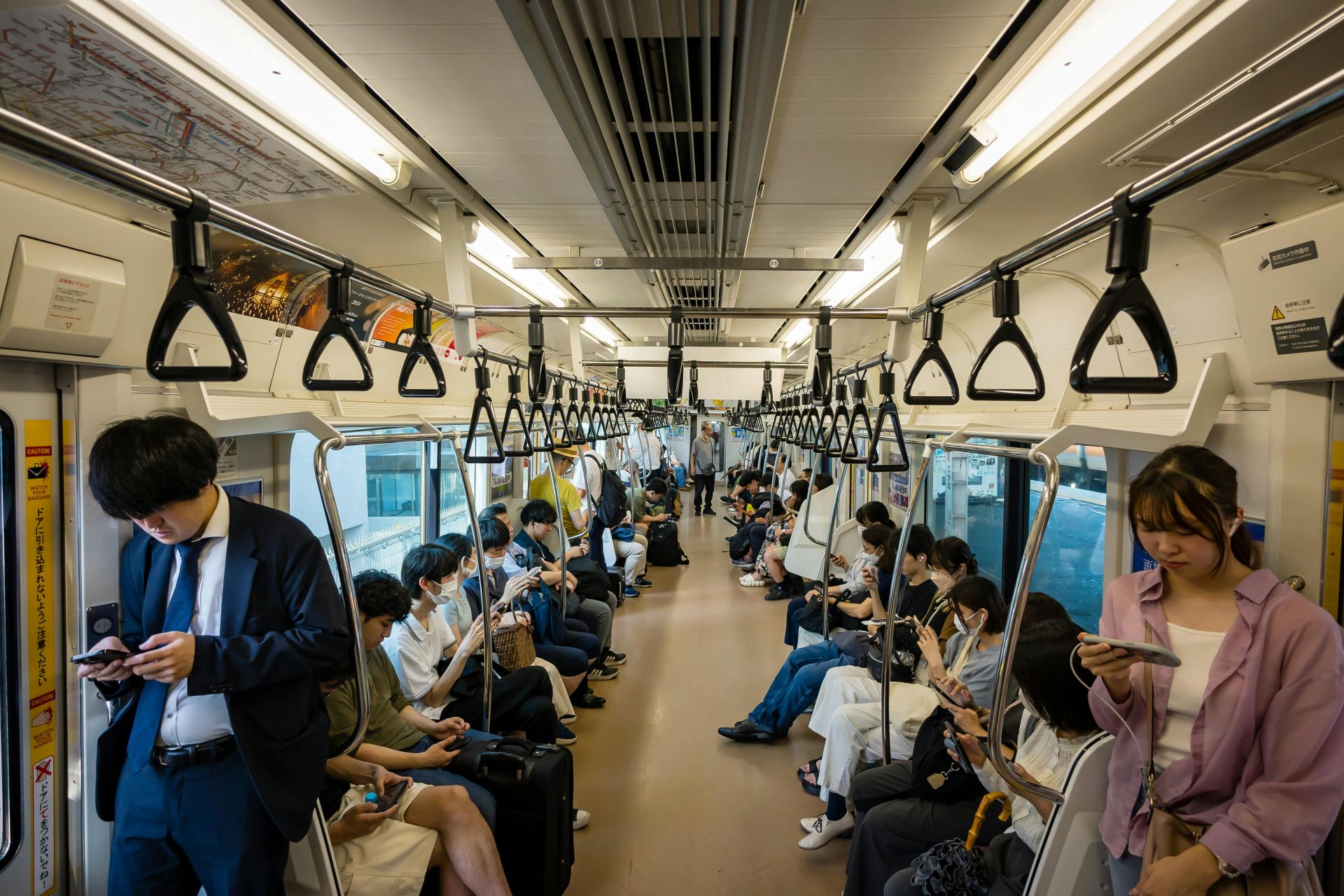
Through this information, it was possible to predict empty seats. Tokyo subway scene. Photo by Pexels
Terada realized that congestion on streetcars followed a periodic pattern, alternating between high and low levels of crowding. As a streetcar departs from its starting station, delays gradually begin to accumulate. The later the train arrives at each station, the more passengers board, which in turn increases the departure time and intensifies the congestion. Using mathematical formulas, Terada hypothesized that, on average, severe overcrowding occurs every 3 to 4 trains, followed by 2 to 3 trains that are relatively less crowded. He then investigated the congestion and arrival intervals of streetcars at Jinbocho Station in Tokyo and confirmed that his hypothesis was fairly accurate. He concluded, "It is more convenient for both yourself and others to give up overcrowded trains to others, step back, and take a less crowded train. This is seen as an 'efficient' behavior."
Modern physicists are also seeking ways to get a seat on packed trains. Koji Hashimoto, a professor at Kyoto University who once endured a four-hour round-trip commute on overcrowded trains, shared his own tips: "The key is to accurately identify the passengers who are getting off." Professor Hashimoto would stand at the end of the platform and carefully observe each train as it entered the station from start to finish. If he spotted a crowded car, he would board from the first station to the last to find out why it was so packed. Through this process, he was able to predict empty seats using the following methods:
- Identify the disembarking stations of high school students in uniforms and office workers
- Check transfer trains that connect to other lines or express trains
By gathering such information, he was able to predict empty seats.
Professor Hashimoto stated, "Physics may seem disconnected from everyday life, but as Terada’s essays show, clearly defining the rules of human movement and applying them to benefit oneself is what makes it so fascinating."


![[Reportage]"It Only Leads to Arguments"... Chungnam's True Sentiments Hide Deeper After Martial Law](https://cwcontent.asiae.co.kr/asiaresize/304/2026051223490460082_1778597344.jpg)