Newness Within Familiarity... MZ Generation Stimulated by Emotional Consumption
Around 6 p.m., the typical after-work hour for office workers, an alley in Euljiro 3-ga, Jung-gu, Seoul is packed with people, leaving hardly any room to walk amid the dense web of power lines and shop signs. Hwang Seoyeon (24), whom we met in front of a bar, was waiting to enter. Hwang said, "My school is nearby, so I often come here with friends. The colorful signs and unique shops create an exotic atmosphere."

The area around Euljiro 3-ga featuring both printing shop signs and restaurant signs. Photo by Lee Eunseo.
원본보기 아이콘The popularity of 'newtro' (new + retro) commercial districts continues among the MZ generation (Millennials and Generation Z). This is because old commercial areas are being newly renovated, offering 'newness within familiarity' to young people who consume the atmosphere and emotional vibe of these spaces.
The area around Euljiro 3-ga, often called 'Hipjiro,' is a prime example. In fact, foot traffic to the Euljiro commercial district has remained steady. According to Seoul Metropolitan Government’s commercial district analysis service, the number of stores in Euljiro-dong, Jung-gu, reached 2,985 in the first quarter of 2025, an increase of 53 stores compared to the same period last year. The number of visitors to Euljiro-dong in May 2025 also rose to 1,727,642, up from 1,710,408 in May last year. More than half of the food and beverage sales in the first quarter of this year came from people in their 20s and 30s.
The Rise and Fall of Urban Commercial Districts... Newtro Gains Popularity
The secret to this popularity is newtro. The narrow alleys are lined with shops remodeled from old print shop buildings. At a store with a sign reading 'Comprehensive Printing, Digital Master,' they serve iron plate dishes, while a craft beer pub has 'UV Special Printing' written on its window. Among the restaurant signs filling the alleys, it is easy to spot power lines, printing shops, and equipment shop signs. There are also teahouses selling Ssanghwa-cha and old-style pubs that preserve a retro vibe. Passersby, exclaiming that it doesn't feel like Korea, walk single file through the narrow alleys.
Newtro is closely tied to the rise and fall of urban commercial districts. In the 1990s, Euljiro’s print shop alleys thrived, and nearby alleys specializing in golbaengi (sea snails) and nogari (dried fish snacks) emerged. In the 2000s, as the printing industry declined, cafes and bars moved into the vacant spaces.
Other newtro districts like Seongsu and Yongridan-gil also developed as various shops opened in old buildings. Seongsu, an industrial area in the 1990s, established its identity as the 'Brooklyn of Korea' as cafes and restaurants moved into abandoned factories. In September last year, a fashion select shop opened in Daelim Warehouse, and earlier this year, the first overseas fashion brand store in Korea opened in Seongsu. Pop-up stores open and close next to repair shops and industrial businesses. Yongridan-gil’s commercial area formed around Samgak Mansion, built in the 1970s and now a subject of redevelopment discussions. Exotic restaurants have opened on the first floors of remodeled houses and villas.

People walking through the alleys of Yongridan-gil, searching for cozy cafes and delicious restaurants. Photo by Lee Eunseo.
원본보기 아이콘These revitalized old commercial districts align with the consumption characteristics of the MZ generation, who value the emotional vibe and atmosphere of spaces. Lee Minje (23), a university student, said, "Euljiro is fun because you can discover cafes and bars as you wander through the narrow alleys. Every visit offers a new experience." Han Dawon (26) added, "There is a mix of old establishments like traditional pubs, teahouses, and Sewoon Shopping Center with modern cafes, so you can experience various atmospheres in one place."
The abundance of unique independent stores, rather than commonly found franchises, also matches the young generation's emphasis on individuality. As of the first quarter of 2025, 92.6% (1,180 out of 1,274) of the stores around Euljiro 3-ga were independent shops, with only about 90 franchise stores. In Hangangno-dong, where Yongridan-gil is located, 93.5% (4,916 out of 5,255) of the stores were independent. Citizen Heo Yunkyung (24) said, "It's fun to wander through the alleys looking for charming, cozy cafes." Office worker Chae Mo (28) also commented, "The buildings have been rebuilt or remodeled, creating a tranquil atmosphere. When I leave work, I see many young people coming here for dates."
Lee Eunhee, a professor of consumer studies at Inha University, explained, "Young people feel psychologically more comfortable in places like Euljiro's old establishments than in the polished buildings of Gangnam. The retro vibe, which they don't encounter in everyday life, evokes feelings of home and a grandmother's embrace, providing psychological comfort and drawing them in."
The Harmony of Old and Modern Sensibilities... Ikseon-dong and Seosunra-gil
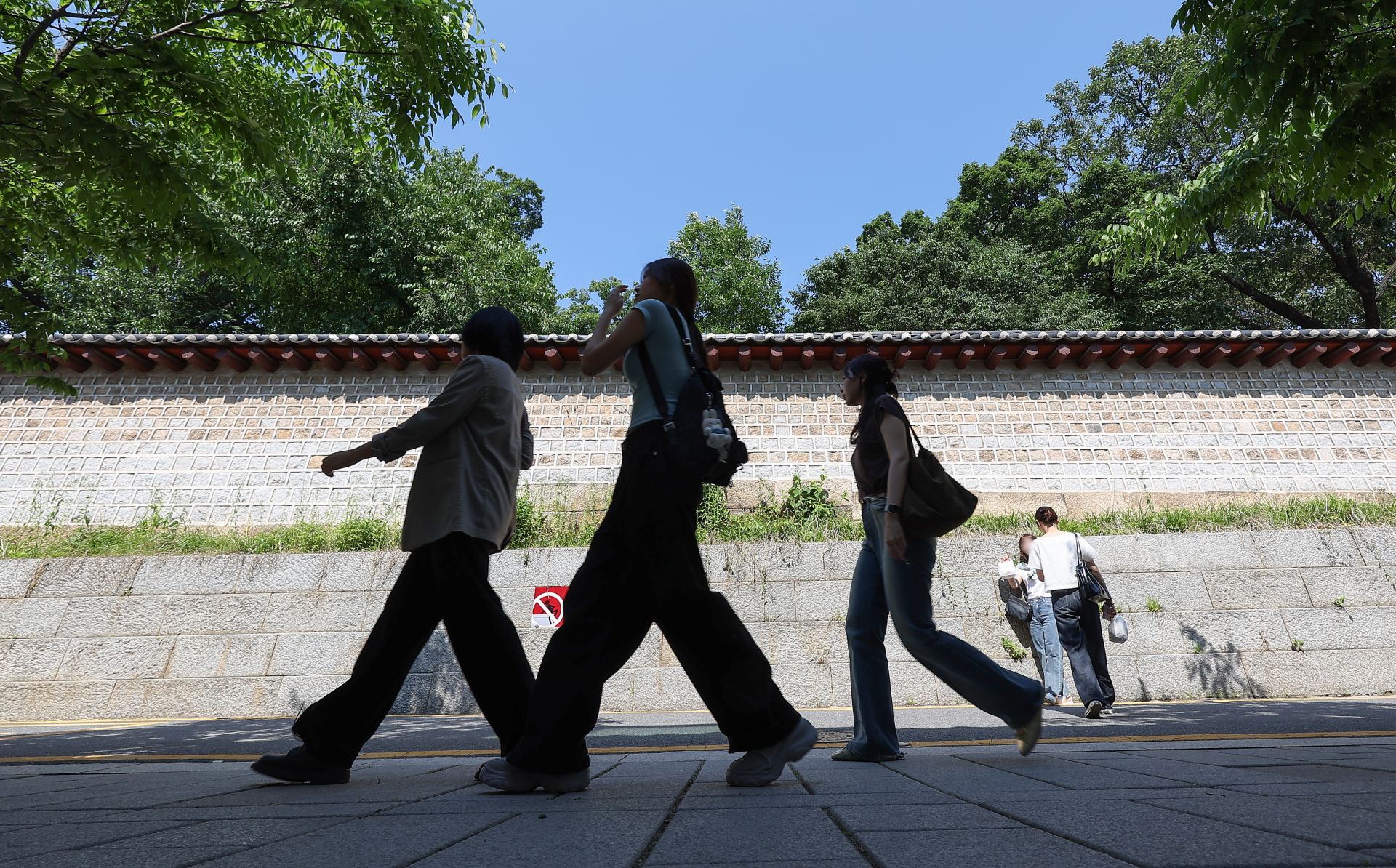
Seosunra-gil, located west of Sunracheong, which patrolled Jongmyo Shrine during the Joseon Dynasty, is an 800-meter street formed along the western stone wall from Jongmyo's main gate. It is emerging as a new hotspot for the MZ generation, who value 'emotional' experiences.
Last weekend, despite the drizzling rain, the outdoor seating at restaurants along Seosunra-gil in Jongno-gu, Seoul, was packed, with many people waiting in line under umbrellas. Seosunra-gil is lined with various restaurants and cafes, most of which have outdoor seating facing the fortress wall.
In front of a popular restaurant on Seosunra-gil, people gathered to register for the waiting list as opening time approached. Kim Yunjun (27), waiting with friends, said, "I come here because I like the vibe of the fortress wall. The photos turn out well, and since many others come here, I wanted to visit too." Visitors to Seosunra-gil were all taking pictures with the fortress wall as a backdrop. It was hard to find anyone not taking photos.

Passengers are gathering to register for the waiting list at a popular restaurant on Seosunragil. Photo by Youngchan Choi
원본보기 아이콘The popularity of Seosunra-gil is also evident in the numbers. According to Seoul Metropolitan Government’s commercial district analysis service, about 59% of food and beverage sales on Seosunra-gil in the first quarter of this year came from people in their 20s and 30s. In other words, a significant proportion of Seosunra-gil visitors are in their 20s and 30s. Furthermore, the average monthly sales in the alley commercial district near Seosunra-gil surged by 152%, from an average of 1.72 million won in 2020 to 4.34 million won in the first quarter of this year. Lee Hani (29), who came on a date with her boyfriend, said, "I used to come here often, but it seems even more crowded these days. I like the tranquil feeling of being right next to the fortress wall."
Ikseon-dong, known as the 'original hanok vibe' and located a 10-minute walk from Seosunra-gil, remains a hotspot for the MZ generation. However, the desire to experience places less frequented by others has contributed to the rising popularity of nearby Seosunra-gil. Seo Jeongryeol, a professor of real estate at Youngsan University, said, "The appeal for the MZ generation is that they can enjoy both the atmosphere of the Joseon Dynasty and the modern side of Seoul at the same time. While there are traditional hotspots centered around hanok, such as Bukchon, Seochon, and Ikseon-dong, their popularity has led people to seek out newer places."
![Garosugil, Once Home to Kang Hodong's Building, Now Full of Vacancies... Nearby Neighborhoods Bustle with Tourists [Hot Place Road] ①](https://cwcontent.asiae.co.kr/asiaresize/251/2025062616264023822_1750922801.png)
IndexHot Upload
- Garosugil Is Empty, but Just 20 Minutes Away, It's Packed with People
- When the MZ Generation Walks, a Newtro Path Emerges
-
Reporter Choi Youngchan elach1@asiae.co.kr
-

Reporter Lee Eunseo libro@asiae.co.kr
-
Edit Yang Hyejin adoretj@asiae.co.kr
© The Asia Business Daily(www.asiae.co.kr). All rights reserved.