
On the 27th, apartment prices in Mapo and Seongdong districts of Seoul rose at the largest rate since related statistics began to be published in 2013. The expectation that Seoul apartment prices will continue to rise is forecasted to sustain the upward trend for the time being. The photo shows a panoramic view of apartment complexes in downtown Seoul as seen from Namsan, Seoul. 2025.06.27 Photo by Dongju Yoon
원본보기 아이콘Government Holds Emergency Household Debt Review Meeting
As Seoul housing prices surge and household debt rises sharply, the government has decided to significantly reduce the total amount of household loans available across all financial sectors. To prevent excessive bank lending for the purchase of high-priced homes in Seoul, the maximum limit for mortgage loans for home purchase purposes in regulated areas will also be capped at 600 million won. Multiple home owners will be completely prohibited from taking out mortgage loans. The government will also strengthen lending regulations such as the loan-to-value (LTV) ratio and the debt-to-income (DTI) ratio, which had been somewhat relaxed under the previous administration, in order to stabilize the real estate market.
Household Lending Target Slashed to 50%, Mortgage Loans Restricted
On the morning of the 27th, the government held an 'Emergency Household Debt Review Meeting' at the Government Complex Seoul, with the Financial Services Commission, the Ministry of Economy and Finance, the Ministry of Land, Infrastructure and Transport, the Bank of Korea, and other relevant agencies in attendance. At the meeting, they decided to reduce the total household lending target for all financial sectors to 50% of the original plan starting from the second half of this year. Policy loans such as Didimdol and Bogeumjari loans will also be cut by 25% compared to the annual supply plan. If the government's plan is implemented as intended, the annual increase in household loans will be reduced by up to 20 trillion won.
The government had previously stated that it would manage the annual growth rate of household loans across all financial sectors within the range of Korea's projected nominal growth rate for this year, which is 3.8%. However, with the recent sharp rise in Seoul housing prices and the increasing likelihood that the nominal growth rate will fall below expectations, the government has drastically lowered its household lending growth target. As a result, the amount of household loans available from banks and other financial institutions is expected to decrease in the second half of this year, making it more difficult for individuals to obtain loans.

Housing rights network and related housing civic groups held a press conference presenting proposals on housing and real estate policies in front of the National Policy Planning Committee in Jongno-gu, Seoul on June 17, 2025. Photo by Jo Yongjun
원본보기 아이콘The government will especially restrict the maximum limit for mortgage loans for home purchase purposes in the Seoul metropolitan area and other regulated regions to 600 million won, in order to curb excessive borrowing for high-priced home purchases. This regulation will take effect immediately from the 28th. The government expects that, since LTV and DTI regulations will also apply within the 600 million won limit, the actual loan amounts will be even lower.
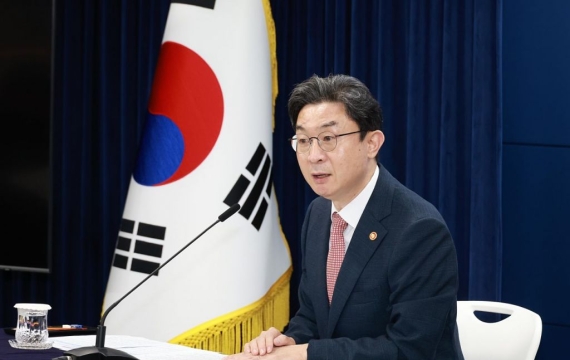
Shin Jinchang, Director General of Financial Policy at the Financial Services Commission, stated, "Financial authorities have focused on restricting non-essential loans in order to strengthen management of mortgage loans in the Seoul metropolitan area and regulated regions." He added, "If necessary, we will actively consider additional market stabilization measures, such as designating more regulated areas." Shin also explained, "This is the first time that the government has imposed an individual mortgage loan limit. The 600 million won cap was determined by comprehensively considering the housing price level in the Seoul metropolitan area, the extent of financial sector lending, and what level of debt is appropriate relative to income."

The voluntary management system implemented by financial institutions to curb the growth of household loans will also be expanded from its current focus on banks to include all financial sectors starting in the second half of the year. Currently, banks set monthly and quarterly lending growth targets and manage household loan growth through voluntary management. From the second half, this voluntary management will be extended to the secondary financial sector, including mutual finance and savings banks, in an effort to further restrain the growth of household loans.
Until last week, when the government reported to the National Policy Planning Committee, the plan was to observe the effects of the third phase of the stress-based debt service ratio (DSR) regulation, which is set to take effect next month, before preparing additional measures. However, as the upward trend in housing prices has accelerated, the government has moved up the timeline for new measures. According to the Korea Real Estate Board, Seoul apartment sale prices rose by 0.43% this week compared to the previous week, marking the largest increase in six years and nine months.

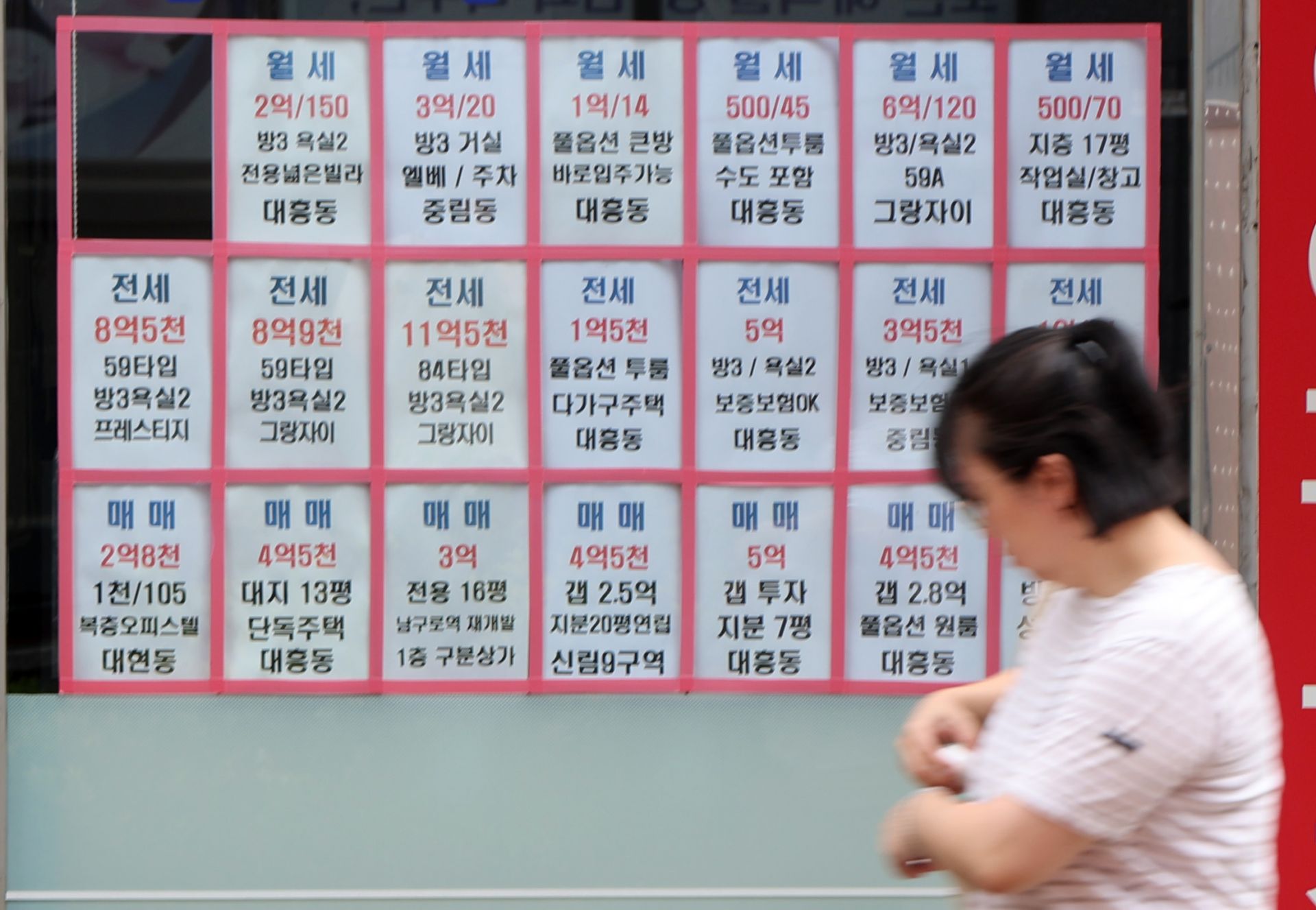
Amid the recent sharp rise in Seoul housing prices, the average jeonse price ratio in Seoul (the ratio of jeonse price to sale price) has hit its lowest point in over eight years. On the 23rd, a citizen passes by a jeonse listing notice posted at a real estate office in Seoul. Photo by Yonhap News
원본보기 아이콘As housing prices rise, household debt has also increased significantly. According to the Financial Services Commission, household loans across all financial sectors increased by about 6 trillion won last month compared to the previous month, the largest increase in seven months since October last year. With the Seoul real estate market heating up, the market expects the increase in household loans this month to surpass last month's figure.
Mortgage Loans Completely Prohibited for Owners of Two or More Homes
With warning signs emerging from various quarters, the government continues to announce additional measures. Real estate regulations, which were somewhat eased under the previous administration, will also be further strengthened. First, in the Seoul metropolitan area and other regulated regions, individuals who already own two or more homes will be prohibited from taking out additional mortgage loans for home purchases. Likewise, single-home owners who purchase an additional home without disposing of their existing property will also be banned from taking out mortgage loans for the additional purchase (LTV=0%), effectively blocking non-essential demand for multiple home purchases. However, if a single-home owner sells their existing property within six months (conditional single-home owner), the same LTV rules as for non-homeowners will apply: 70% for non-regulated areas and 50% for regulated areas.

On the 25th, Jung Taeksu, Head of the Real Estate National Policy Project Team (right), is speaking at a press conference announcing the analysis results of Seoul apartment prices by administration from February 2003 to May 2025, held at the Citizens' Coalition for Economic Justice (CCEJ) in Jongno-gu, Seoul. / Photo by Yonhap News
원본보기 아이콘Kwon Daeyoung, Secretary General of the Financial Services Commission, emphasized, "People should not rush to buy homes by taking out loans they cannot afford to repay." He added, "The cycle of overheating and stagnation in the housing market has been repeatedly driven by excessive borrowing beyond repayment capacity, using leverage to buy homes. Now is the time to break this vicious cycle."
The LTV for first-time home buyers in the Seoul metropolitan area and regulated regions will be tightened from 80% to 70%, and a move-in obligation (within six months) will be imposed. This measure will also apply to policy loans such as Didimdol and Bogeumjari loans. The maximum limit for mortgage loans for living stabilization purposes (using owned homes in the Seoul metropolitan area and regulated regions as collateral for living expenses, etc.) will also be capped at 100 million won.

On the 27th, apartment prices in Mapo and Seongdong districts of Seoul rose at the largest rate since related statistics began to be published in 2013. The expectation that Seoul apartment prices will continue to rise is forecasted to sustain the upward trend for the time being. The photo shows a panoramic view of apartment complexes in downtown Seoul as seen from Namsan, Seoul. 2025.06.27 Photo by Dongju Yoon
원본보기 아이콘The Financial Services Commission will proceed as planned with the implementation of the third phase of the stress-based DSR regulation, scheduled for next month. When the third phase DSR regulation is implemented, the amount that can be borrowed will decrease. The maturity of mortgage loans in the Seoul metropolitan area and regulated regions will also be limited to within 30 years to prevent circumvention of DSR regulations.
Kwon emphasized, "Now is the time for financial authorities, relevant agencies, and the financial sector to proactively manage household debt with a sense of urgency. All financial sectors must swiftly and thoroughly implement household debt management measures, including reducing total lending targets, expanding voluntary management, and restricting mortgage loan limits."
-

Reporter Lee Changhwan goldfish@asiae.co.kr
-
Edit Sung Kiho kihoyeyo@asiae.co.kr
© The Asia Business Daily(www.asiae.co.kr). All rights reserved.