

How do car salespeople make a profit?
Editor's Note[Hyundai Motor, Over the Mobility] is a series that summarizes the secrets of innovation that enabled Hyundai Motor Group to rise to the third spot globally. Historically, the country that led the automotive industry has dominated the global economy. As the crown jewel of manufacturing, the automotive industry exerts a comprehensive influence in terms of technological advancement, exports, and employment. While Hyundai Motor was once a fast follower, it has now emerged as a first mover leading the industry. We deliver the past, present, and future of Hyundai Motor as experienced on the global reporting frontlines. After 40 episodes, this series will be published as a book.
'KRW 450 trillion vs KRW 5.8 trillion'.
This figure compares the size of the global and domestic online car purchase markets. According to market research firm Coherent Insights, the size of the global online car purchase market last year was estimated at $328.9 billion (about KRW 450 trillion). The online sales market is expected to grow at an average annual rate of 12.5%, reaching $751.8 billion (about KRW 1,029 trillion) by 2031.
Let’s look at the current state of online car sales in Korea. According to Statistics Korea, the size of Korea’s online transactions for cars (including car accessories) in 2024 was tallied at KRW 5.8 trillion. Compared to the KRW 450 trillion global market, this is only 1.2%. In terms of total online commerce, Korea ranks fifth in the world in 2024 (KRW 240 trillion), following China, the United States, the United Kingdom, and Japan. However, when narrowing the scope to car transactions, the size of Korea’s online car market is still negligible. Why is it that, in Korea?a powerhouse in online commerce?the online car sales market alone is growing so slowly?
Why Casper Succeeds but Palisade Does Not
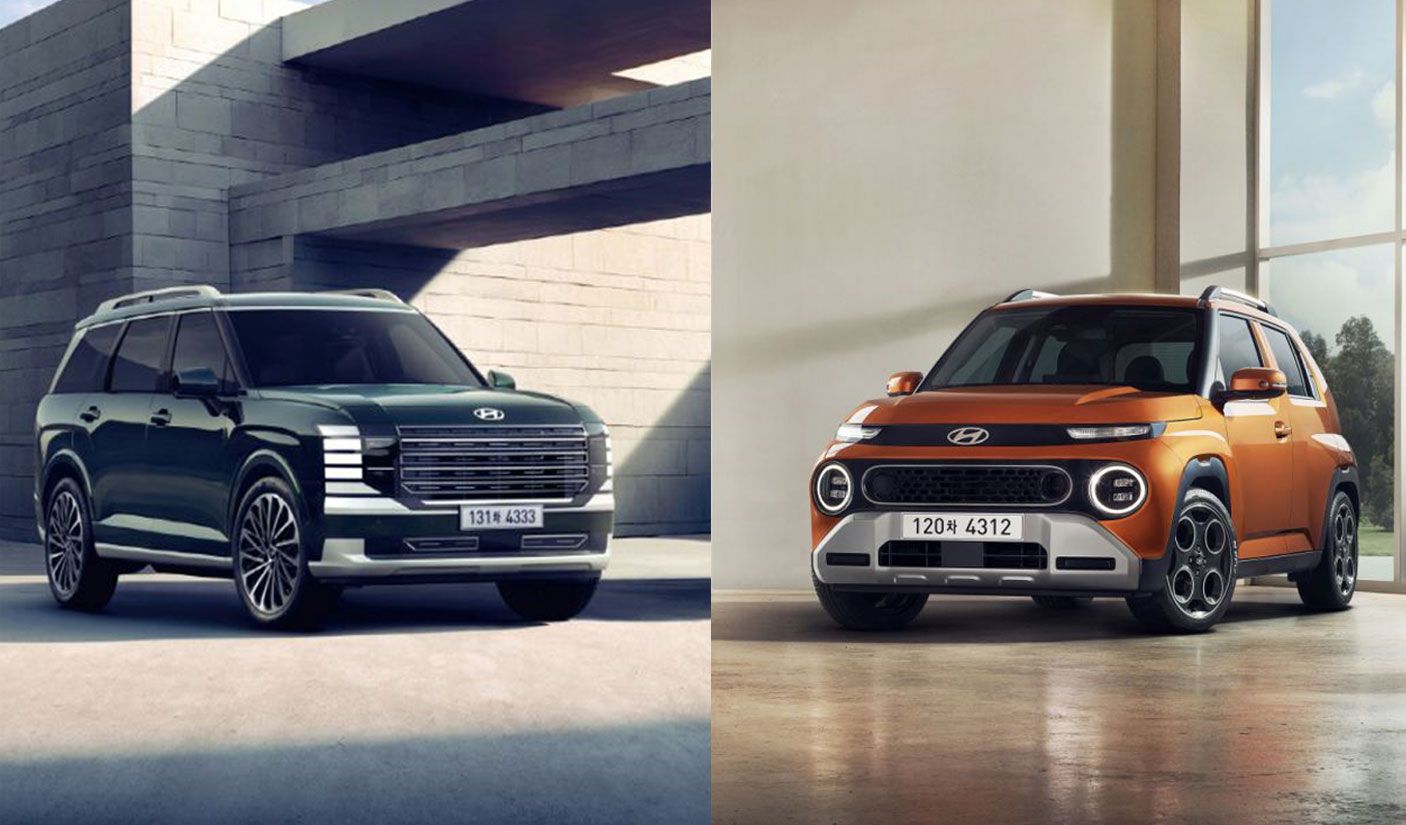
The first reason to examine lies with Hyundai Motor, and specifically with its labor union. The Hyundai Motor labor union strongly opposes online sales. This is because as online sales?where manufacturers sell directly to consumers without going through dealerships?increase, the roles and jobs of on-site sales staff may decrease. Hyundai Motor’s car sales methods must be negotiated with the union according to labor-management agreements. Without the union’s consent, it is difficult to push forward with online sales. The only exception is the small SUV Casper, which is produced under contract by Gwangju Global Motors (GGM), allowing Hyundai to push ahead with 100% online sales despite union opposition.
As of 2024, Hyundai Motor and Kia hold a 76% share of the domestic market. In terms of domestic brands alone, their share exceeds 90%, making them a de facto monopoly. It is no exaggeration to say that the sales policies of Hyundai Motor and Kia have an absolute impact on transaction trends and practices in Korea’s auto market. Industry experts believe that unless Hyundai Motor and Kia actively embrace online sales, rapid growth in Korea’s online car market will be difficult to achieve.
Another reason is the limitations in consumer trust and purchasing experience with online car transactions. For most households, cars are the most expensive purchase after a home. Consumers tend to make careful decisions only after physically inspecting the car, taking a test drive, and building sufficient trust through face-to-face consultations with sales staff. Reflecting these market characteristics, the United States?the world’s largest online car market?has developed a hybrid online ecosystem involving manufacturers, dealers, and online platforms. For example, consumers can access an online platform, compare inventory, prices, and services from various dealers, and then be matched with a dealer that meets their criteria for one-on-one consultation. The market is evolving to enhance the digital experience in the purchasing process while maintaining the role of the dealer.
The Trade Secrets of Car Sales


Based on existing domestic car dealerships, there are mainly three ways.
△Sales commission △Insurance brokerage financial company fees △Additional fees.
In direct stores, the base salary is higher, but the sales commission per unit is lower, whereas in dealerships, the base salary is lower and the sales commission per unit is set higher.
There are financial fees earned from arranging car insurance and other services, as well as brokerage fees obtained by encouraging customers to use designated companies for additional installation options such as tinting or black boxes.
In direct stores, the base salary is higher, but the sales commission per unit is lower, whereas in dealerships, the base salary is lower and the sales commission per unit is set higher.
Additionally, there may be a certain level of brokerage profit earned as compensation for mediating the sale of used cars that customers previously owned.
In other words, if sales commissions received by salespeople throughout this process were reduced, those savings could be passed on to consumers as benefits. Of course, sales staff provide significant value by handling offline registration procedures such as car registration and tax payments, and by helping customers navigate the complex options available in domestic cars to provide customized services. However, for consumers willing to accept a bit of inconvenience to save on intermediary fees, online sales are much more advantageous.

Hyundai Motor Group has recognized this demand and is partially introducing online platforms for additional services. Genesis offers a variety of services through its online select shop, 'Genesis Boutique,' such as new car tinting, premium coating and washing, and tire replacement. Consumers can compare brands and service providers online and make their own selections. Services like tinting, which used to be arranged through sales staff, have now been moved into the online platform space. Industry insiders interpret Hyundai Motor Group’s small-scale online sales structure through Genesis as a way to test the stability of the system and gauge consumer response.
Casper on the Online Sales Testbed

Hyundai Motor opened a new chapter in online sales with the small SUV Casper. Across Hyundai Motor and Kia, Casper is currently the only model sold 100% online. Although the union has consistently opposed Casper’s online sales, it was excluded from labor-management negotiations since it is not produced at the Ulsan plant. From the manufacturer’s perspective, small SUVs are less profitable, making a high-volume, low-margin strategy that minimizes distribution fees necessary. Casper’s low price and relatively simple options also make it more accessible for online consumers. With digital-savvy consumers in their 20s and 30s as the target demographic, Casper is the optimal model for online purchase.
The experiment with Casper, launched in September 2021, was a huge success. At the time, the COVID-19 pandemic was at its peak, making contactless service a major trend across all industries. Hyundai Motor enabled the entire process?from providing vehicle information and 3D model configuration to real-time quotes, contracts, payments, and vehicle registration?to be completed online without face-to-face interaction. Simple authentication methods such as KakaoTalk and joint certificates were introduced for contracts, and one-stop services are provided for contract changes or cancellations, installment limit checks, and issuing exclusive cards.
The convenience of being able to contract a car with just one click became a major selling point, resulting in over 18,000 pre-orders on the first day alone. This was the highest first-day pre-order volume for any Hyundai internal combustion model at the time. Within two weeks, the annual planned production of 45,000 units was easily reached. Since then, Casper has continued its success, selling over 40,000 units annually for three consecutive years.

Another key to Casper’s success is its “fandom-building marketing.” When a product or brand lacks a clear identity, support from sales staff is essential?someone must thoroughly explain the car’s strengths and advantages over competitors. However, if the brand or model itself forms a fandom, consumers will seek it out even without sales staff intervention. Tesla is a prime example. Tesla created a unique fandom by combining brand philosophy, technological leadership, and CEO storytelling. From its earliest models, Tesla has sold all of its cars 100% online. Tesla’s pioneering role was a major factor in the United States becoming the global leader in online car purchases.

Hyundai Motor also wanted to create a Tesla-like fandom for Casper. It needed to devise an aggressive strategy to attract customers solely through online marketing, without sales staff promotion. To overcome the limitations of the online model, Hyundai set up pop-up stores in various locations, including Seoul, the metropolitan area, Busan, and Jeju. However, there are no sales staff at these locations, and all customer consultations are conducted remotely. Customers can physically inspect or test-drive the car and then place their orders online. Hyundai also launched “Casper TV,” a dedicated broadcasting channel for live online streaming. During broadcasts, viewers can ask questions and get answers in real time via chatbot. Active online advertising is also ongoing. Recent advertisements on Hyundai’s official Instagram and YouTube accounts highlight the significant focus on Casper.
Another Innovation Experiment: Selling on Amazon in the US

Hyundai Motor online purchase page posted on Amazon homepage. Screenshot of Amazon homepage.
원본보기 아이콘Hyundai Motor is conducting another innovation experiment in the United States, the largest market for online car sales. Hyundai became the first automaker to enable the entire process?from search and purchase to payment and delivery?on Amazon, the world’s largest e-commerce platform. By entering their zip code and searching for their desired model and specifications on Amazon, consumers can view available inventory at the nearest dealerships. They can then compare prices, options, installment terms, and dealer fees, and make a purchase directly. After completing payment and registration, customers can pick up their car at the nearest dealership or have it delivered to their doorstep if desired.
This gives Hyundai access to Amazon’s massive customer base of over 300 million. It allows the company to broaden its reach to potential customers and increase brand awareness online. The transparent pricing, real-time inventory checks, and convenience of contactless transactions offered on the Amazon platform also enhance the reliability of the consumer purchasing experience. This collaborative model was made possible by finding a win-win solution with dealers. Hyundai established an online sales model that operates through dealerships, rather than direct sales by the manufacturer. Dealers list their inventory on the online platform, which then matches them with consumers. For dealers, this increases inventory turnover by exposing their stock to more customers, while consumers can compare the conditions of their desired models more broadly.
Of course, in the case of Hyundai’s domestic distribution network, direct sales by the manufacturer are the norm, without dealerships, so the situation may differ from the US. However, there is consensus that ultimately, a win-win solution for manufacturers, salespeople, and consumers must be sought through online platforms. If Korea gradually expands online sales based on realistic compromises, it is only a matter of time before the country emerges as the world’s largest market for online car sales.
-

Reporter Woo Sooyoun yesim@asiae.co.kr
-
Edit Bae Byoungmin wuhaha@asiae.co.kr
© The Asia Business Daily(www.asiae.co.kr). All rights reserved.