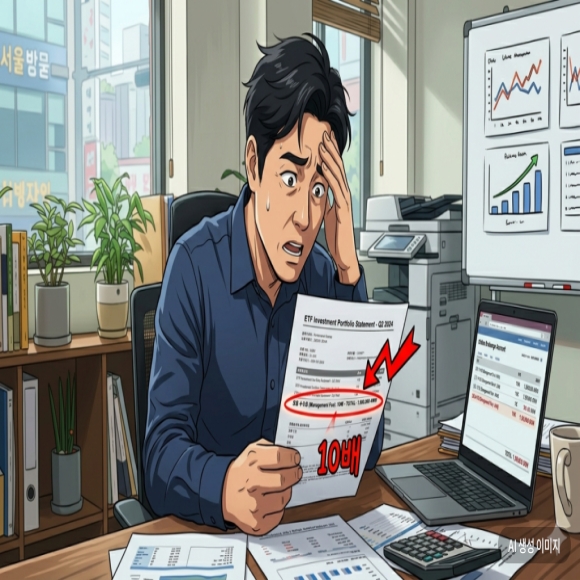
According to the Consumer Price Index compiled by Statistics Korea, the price increase rate of ramen showed a stable trend, recording negative growth for six months from June last year (-5.0%) to November before martial law (-0.6%) compared to the same months of the previous year.
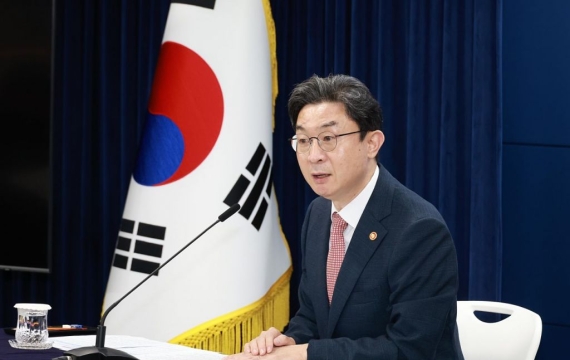
On June 9, President Lee Jaemyung's remark, "Is it true that one pack of ramen now costs 2,000 won?" during the second meeting of the Emergency Economic Task Force (TF) is being interpreted as having political and policy implications beyond a simple comment on prices. As ramen, a staple food for ordinary people, has recently seen a sharp price increase, observers interpret his statement as a symbolic gesture equating 'ramen prices' with the 'people's economy,' emphasizing the administration's commitment to stabilizing food prices that the public directly feels.
The reason the new administration focused its policy efforts on price stabilization immediately after taking office is that, following the declaration of martial law in December last year, the prices of major daily necessities began to rebound noticeably. According to Statistics Korea, out of 73 processed food items, 52 items?accounting for 71.2% of the total?recorded price increases last month compared to November last year, right before the martial law situation.
However, immediately after martial law in December last year, ramen prices shifted to a 0.2% increase compared to the same month of the previous year, and the rate of increase became more pronounced in 2025.
In particular, ramen prices rose by 5.1% last April and a remarkable 6.2% last month, exceeding three times the overall consumer price increase rate of 1.9% during the same period.
Unlike the overall price stability, ramen prices are accelerating and rising instead.
Why Did President Lee Jaemyung Choose 'Ramen'?

Ramen is a highly symbolic item as a staple food for ordinary people, and it is also a representative processed food. The government has long viewed that lowering ramen prices can drive actual price reductions for other processed foods. The prices of processed foods are closely linked to fluctuations in international raw material prices such as grains, crude oil, and palm oil. When the prices of these key raw materials rise, the consumer prices of products typically increase with a lag of one to two quarters. According to the United Nations (UN) Food and Agriculture Organization (FAO), the World Food Price Index for May was recorded at 127.7 points, down 0.8% from the previous month.
After switching to an upward trend in February, the index continued to rise for three consecutive months before turning downward. The international wheat price declined slightly due to weakened demand and improved crop conditions in the Northern Hemisphere. However, there is a high likelihood that processed food prices will continue to rise for the time being. Once processed food prices go up, they rarely come down easily, causing a prolonged impact on overall inflation.
!["Is One Pack Really 2,000 Won?" President Lee's Reason for Focusing on Ramen Prices [Why&Next]](http://www.asiae.co.kr/news/img_view.htm?img=2025061014183492420_1749532714.jpg)
Observers note that President Lee's comment on ramen prices points out that statistical price stability is meaningless if the public does not feel it in their daily lives. Kim Bumseok, First Vice Minister of Economy and Finance (acting minister), also stated, "Due to political uncertainty, some prices had been suppressed, but there have been significant increases in the prices of processed foods, especially beer and ramen."
The Structure That Makes It Difficult to Lower Ramen Prices... "Need to Identify Why Prices Are Rising Beyond Just the Final Price"
The food industry argues that the reason it is difficult to lower ramen prices once they have risen is the burden of supply unit costs caused by high fixed costs such as marketing expenses, logistics, and labor costs. Considering these factors, even if international grain prices temporarily fall, it is not easy to lower ramen prices in the market.

Efforts to control ramen prices were also made under the previous administration. A notable example is the direct criticism from former Deputy Prime Minister and Minister of Economy and Finance Choo Kyungho in 2023. At the time, Choo specifically targeted the ramen industry, mentioning the decline in international wheat prices and emphasizing, "I hope manufacturers will respond appropriately by lowering prices that were raised due to wheat flour costs." It was considered highly unusual for a deputy prime minister to directly mention a specific industry in the market and pressure for price reductions.
However, there are also criticisms that excessive government intervention in perceived price increases has its limitations. Kang Sungjin, professor of economics at Korea University, stressed, "Perceived prices are those that rise in the market, and it is quite difficult for the government to forcibly bring them down. It is not enough to simply point to the final consumer price increases as the problem. It is more important to understand why prices are rising overall, including factors such as exchange rates, oil prices, and labor costs."
-

Reporter Lee Dongwoo dwlee@asiae.co.kr
-
Edit Bae Byoungmin wuhaha@asiae.co.kr
© The Asia Business Daily(www.asiae.co.kr). All rights reserved.