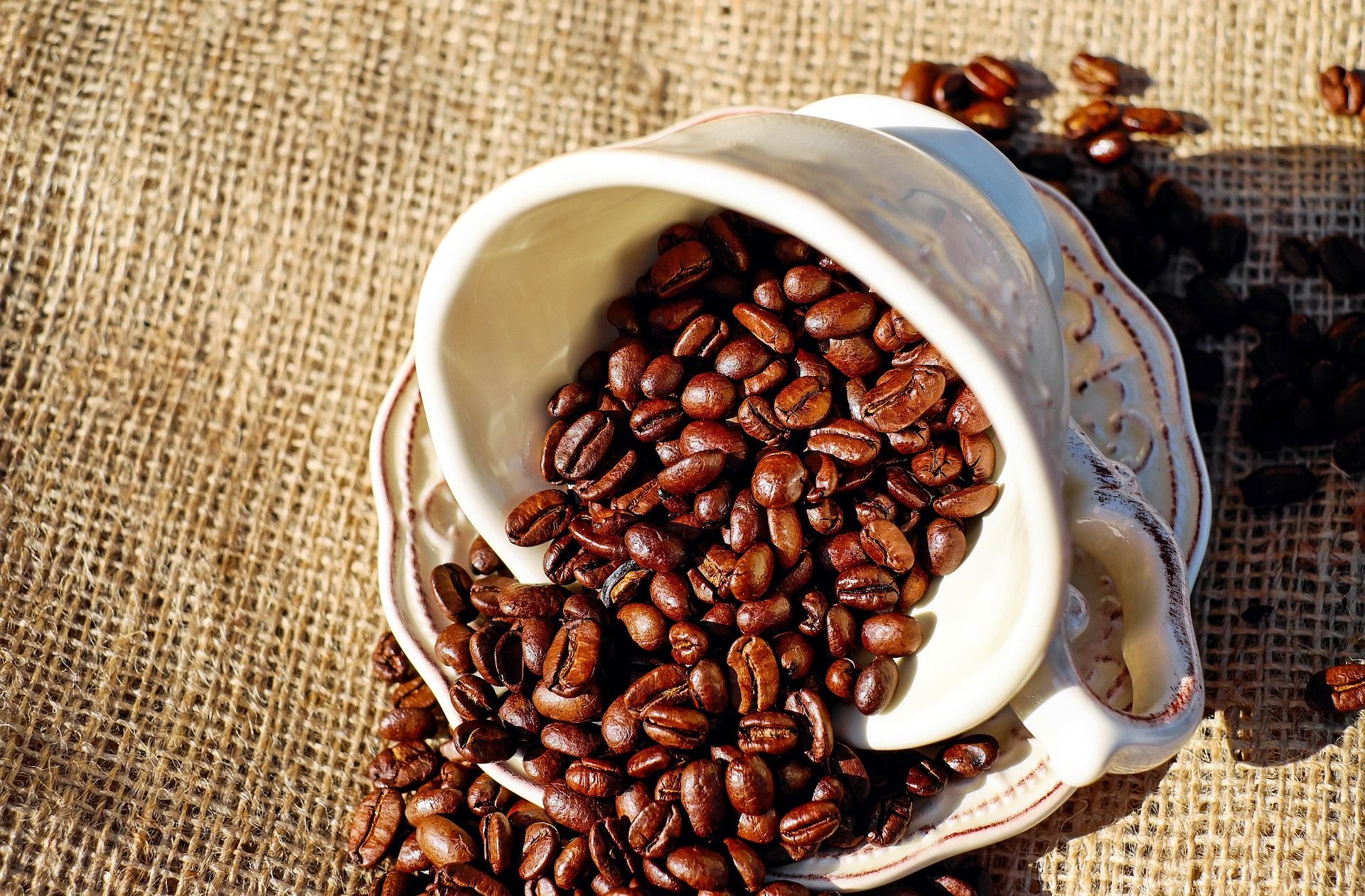
Brazil, the world's largest Arabica coffee bean producer, saw its production decrease by 20% last year due to the worst drought and wildfires in 70 years. Photo by AP Yonhap News
The global climate crisis is now changing the very landscape of our dining tables. Unpredictable weather in major agricultural regions is leading to poor harvests, and companies are scrambling to reorganize their supply chains. As a result, "climate management" has emerged as a key concept in the food industry, as the burden of rising costs and even the survival of businesses now depend on how they respond to climate risk.
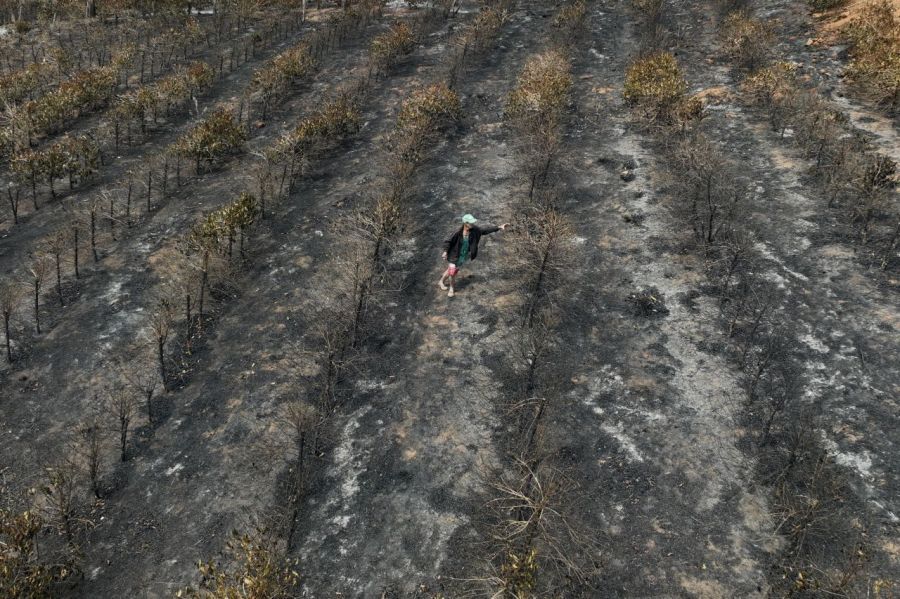
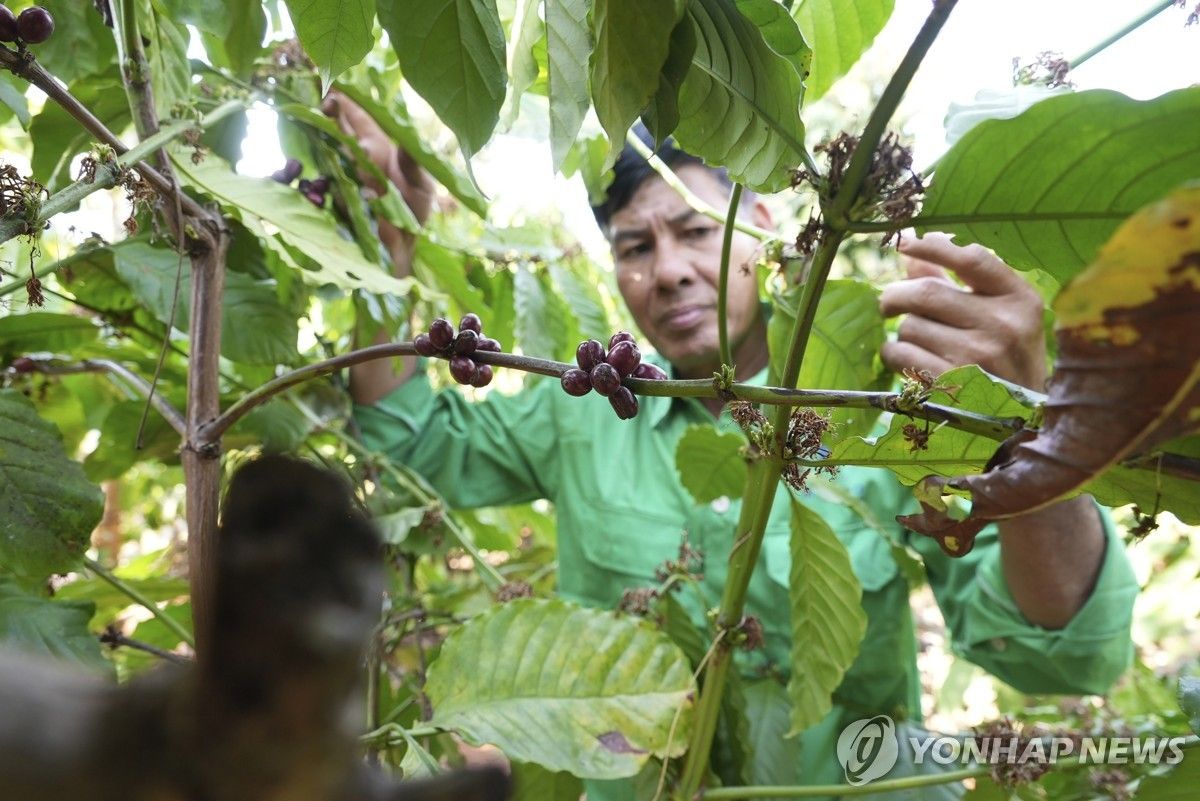
Vietnam, a major producer of Robusta coffee beans, also experienced a more than 40% decrease in harvest due to ongoing drought, heatwaves, and typhoon damage. Photo by AP Yonhap News
As a result, the price of Arabica coffee beans on the New York ICE Futures Exchange jumped by 83.7% in just one year, while the price of Robusta beans on the London exchange rose by 36.5%. The increase in coffee bean costs led domestic companies to raise their prices as well.
Korean companies are also taking action. One leading domestic company, faced with soaring prices for Brazilian coffee beans, searched extensively for new sourcing options. They chose Ethiopia as an alternative sourcing country and are currently conducting their first transaction with a local supplier. Ethiopian beans are priced at $5?6 per kilogram, offering a price advantage over Brazilian beans, which cost $8?9 per kilogram.

Cocoa is also affected by climate change. As production in Cote d'Ivoire and Ghana declined, companies turned to Ecuador. Thanks to sustainable farming practices and quality management, Ecuador's cocoa exports increased by 11.7% last year.
Large-scale food service companies are also accelerating supply chain restructuring. Samsung Welstory diversified its olive oil import sources from Italy to Spain and Turkiye, and replaced Philippine pineapples, which faced production disruptions due to El Nino, with Thai pineapples. The company is also considering importing bananas from Vietnam in addition to the Philippines. A Samsung Welstory representative emphasized, "Climate risk is not just a matter of cost, but a question of supply chain sustainability."
Trout Instead of Flatfish, Strawberries from Chungju Instead of Cheongdo... Even Production Regions Are Changing

Supply chain restructuring is not limited to imported food ingredients. Changes are also taking place in domestic food distribution. When high water temperatures damaged flatfish and rockfish farms, Emart began sourcing trout raised in inland, low-temperature fish farms in Geumsan, South Chungcheong Province. Trout, which grow in cold water of 10?15 degrees Celsius, are less affected by climate change. As domestic hairtail catches declined, Emart also increased imports of hairtail from Senegal. Changes are also being seen in peach varieties. Emart is expanding its supply of "crunchy peaches" (Asaki), which are more resistant to summer heat and monsoon rains, as an alternative to the traditional yellow and white peach varieties.
Lotte Mart moved its strawberry sourcing from Cheongdo in North Gyeongsang Province to Chungju in North Chungcheong Province, as strawberries are vulnerable to high temperatures. The company is taking advantage of the large temperature differences near Mount Woraksan, which has a high elevation. In preparation for early heat, Lotte Mart also secured 100,000 watermelons two months in advance.
Rising sea temperatures are also threatening seaweed farming. In response, Daesang has established a land-based seaweed farm in Goheung, South Jeolla Province, and begun test production. Unlike traditional winter sea farming, land-based aquaculture allows for year-round production. Daesang has also identified cultivated meat as a future growth engine. Cultivated meat is attracting attention as an eco-friendly technology because it dramatically reduces greenhouse gas emissions, land use, and water consumption compared to conventional meat.
Turning Crisis into Opportunity with Data
Weather forecasting has become more than just a reference; it is now a source of competitive advantage for companies. To adapt to climate change, companies need not only weather forecasts, but also procurement strategies based on data.

The agricultural food supply chain platform "Tridge" is a leading startup with a corporate value of 3.6 trillion won. Tridge uses AI to analyze price, weather, and trade flow data for more than 6,500 items worldwide, providing supply chain information. Over 590,000 companies in more than 200 countries use the platform, and the cumulative number of transactions has reached 12.8 billion. Local employees stationed in more than 40 countries support everything from farm inspections and supplier verification to logistics and customs clearance, making "data-driven trade" a reality.
Shin Hosik, CEO of Tridge, said, "Weather changes are no longer just temporary volatility, but a structural risk that shakes the entire global supply chain," and emphasized, "The food and beverage industry is directly exposed to climate change, making adaptation strategies essential." He also pointed out, "Currently, more than 90% of global climate finance is focused on carbon reduction, but there is still a lack of technological solutions to the procurement crises that companies face," adding, "In an era where supply chain crises are the norm rather than the exception, procurement strategies must be solved with data."
Smart Agriculture Is the Key; National Strategies Must Also Change
The solution is being sought from the very methods of production at the farm level. According to a recent report by the Korea Rural Economic Institute (KREI), smart farms in Korea recorded an increase in profits of about 127.6 billion won in 2023, and the total production inducement effect, including related industries, reached 710.4 billion won. Smart farms, which ensure stable productivity and quality control, are gaining attention as climate-resilient agriculture that is less vulnerable to abnormal weather events such as heatwaves and heavy rainfall. However, since the initial investment is high and it takes a long time to become profitable, experts point out that farm-level consulting, diversification of crop types, and training of specialized personnel must be carried out in parallel.
If smart agriculture is leading the transformation of production methods, food security is the national strategy to protect that foundation. According to the Korea Rural Economic Institute, Korea's grain self-sufficiency rate is only 20.2%, and for legumes, just 8.8%. In contrast, Japan's grain self-sufficiency rate is 31.1%, the United States is 72.9%, and their legume self-sufficiency rates are 10.4% and 52.0%, respectively. Research fellow Kim Sanghyo emphasized, "In the era of climate crisis, a trade crisis is directly linked to a food crisis," adding, "Major countries such as the United States, China, and Japan have already begun strategic shifts, including restricting grain exports, expanding reserves, and strengthening protection of domestic agriculture."
-
Reporter Lim Hyeseon lhsro@asiae.co.kr
-

Reporter ming@asiae.co.kr
-
Edit Bae Byoungmin wuhaha@asiae.co.kr
© The Asia Business Daily(www.asiae.co.kr). All rights reserved.