
With the enforcement of the 'Act on the Governance of Financial Companies' last year to strengthen internal controls in the financial sector, the introduction of accountability structures has also begun. If a major financial accident occurs, the responsible executives may be held legally accountable, so it is sometimes referred to as the Financial Sector Serious Accident Punishment Act.
With the introduction of the 'Responsibilities Map' in the financial sector this year, a sense of tension is rising throughout the industry. The Responsibilities Map is a system in which each executive at a financial company clearly defines the scope and details of their internal control responsibilities. The government introduced this system as a preemptive measure in response to recurring financial accidents, but on the ground, concerns are mounting over increased accountability and the risk of disciplinary action. There is also significant fear that even a minor mistake could cost someone their position. In this special feature, we examine the background and current status of the Responsibilities Map, and explore ways to improve the system for more efficient and reasonable adoption.
#Senior executive A at a major commercial bank has been receiving daily reports on various issues, both large and small, coming in from branches nationwide since the beginning of this year. With the introduction of the Responsibilities Map, even minor calculation errors involving just a few thousand won at small, remote branches far from Seoul could now be his responsibility, so the number of matters requiring his attention has doubled.
#Senior government official B has recently been hearing more complaints from financial company CEOs about the Responsibilities Map. Most of the grievances are about the increased workload and growing anxiety over the possibility of being sued or dismissed at any time due to the new system. Not only CEOs, but also C-level executives such as Chief Risk Officers (CROs) and Chief Financial Officers (CFOs), are voicing their concerns.
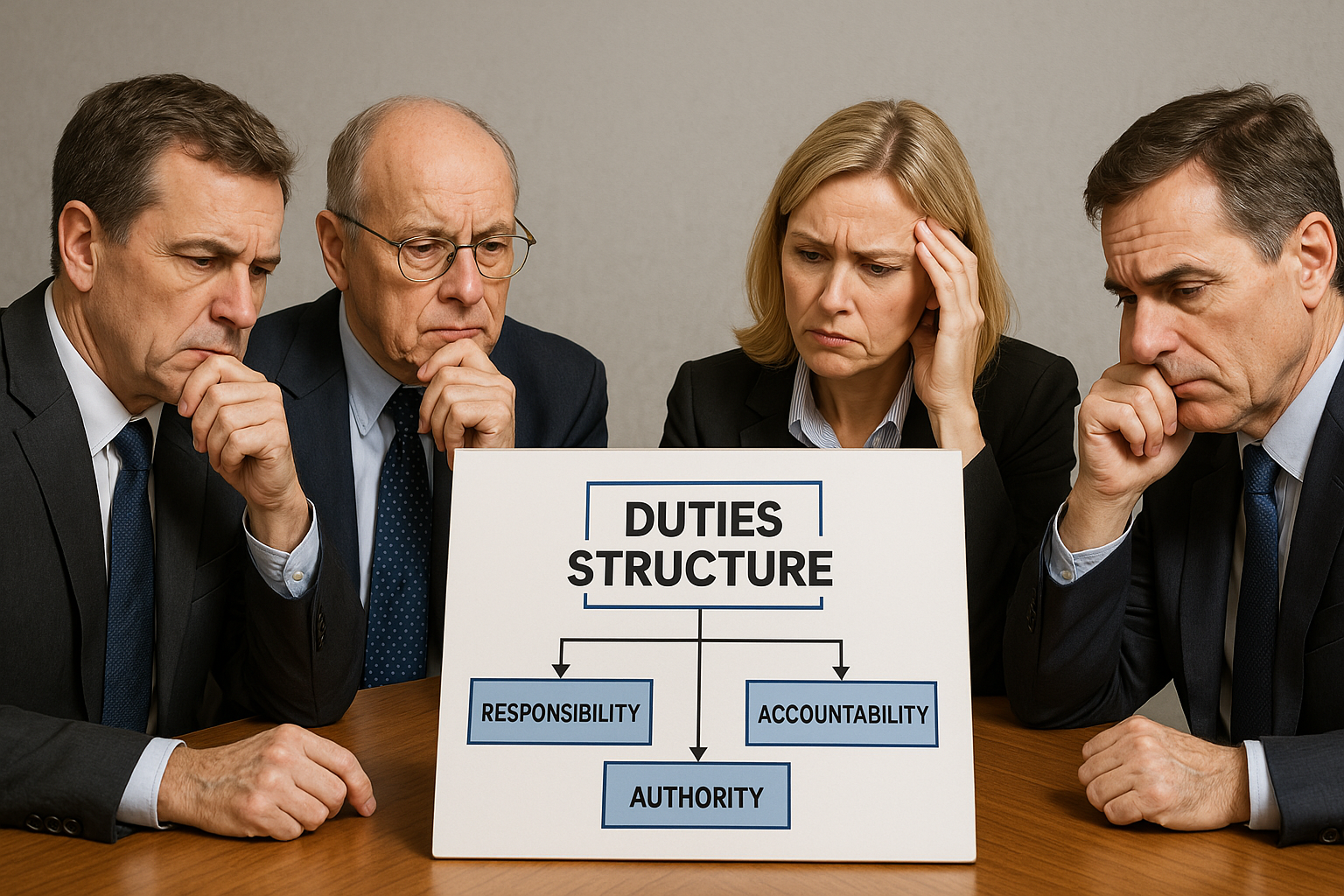
As the Responsibilities Map is fully implemented in the financial sector this year, anxiety within the industry is growing. With yet another regulation added to an already heavily regulated sector, there are concerns that the system may be ineffective and only increase management burdens. On the other hand, some believe that the Responsibilities Map will help prevent major financial accidents and, in the long run, strengthen the core competitiveness of financial companies.
The Top Priority for Financial Companies This Year: "Strengthening Internal Control"
According to an analysis of this year's management strategies in the financial sector as of the 8th, the top concern for CEOs is strengthening internal control. With the full-scale introduction of the Responsibilities Map in financial holding companies and banks this year, stricter standards for internal control are being established. The Responsibilities Map is a document that details the allocation of responsibilities by position for each executive at a financial company. Each executive must clearly define the scope and content of their internal control responsibilities in advance, taking into account the specific characteristics of their company. The 'Act on Corporate Governance of Financial Companies' aimed at strengthening internal control in the financial sector, was implemented last year, leading to the introduction of the Responsibilities Map. If a major financial accident occurs, the responsible executives may face legal liability, and the system is sometimes referred to as the 'Financial Sector Serious Accident Punishment Act.'
With the introduction of the Responsibilities Map, the heads of major financial holding companies have repeatedly called for strengthened internal control from their employees this year. Jin Okdong, Chairman of Shinhan Financial Group, emphasized at the shareholders' meeting on the 26th of last month, "We will improve management, supervision, and monitoring systems so that the internal control system at Shinhan can operate more effectively." Chairman Jin reiterated the importance of internal control at the shareholders' meeting, having already stressed it in his New Year's address. Lim Jongryong, Chairman of Woori Financial Group, also pledged at the shareholders' meeting on the same day, "We will innovate the entire system, including improving internal control-related systems and processes, so that internal control is efficiently integrated and functions smoothly in all business operations," adding, "We will ensure that Woori Financial Group is a trusted institution." Yang Jonghee, Chairman of KB Financial Group, Ham Youngjoo, Chairman of Hana Financial Group, and Lee Chanwoo, Chairman of NH Nonghyup Financial Group, also set strengthening internal control as a key management goal for the year.

With the introduction of the accountability structure, major financial holding company chairmen have strongly urged employees to strengthen internal controls whenever possible this year.
Despite the resolve of financial holding company leaders to strengthen internal control, anxiety and dissatisfaction among the executives and staff actually responsible for internal control remain high. Increased workload, the burden of disciplinary action, and doubts about the effectiveness of the policy are common complaints.
Executive C at a commercial bank said, "Since we started preparing for the introduction of the Responsibilities Map last year, the workload related to internal control has more than doubled," adding, "Even if I do my best with internal controls, there is still fear about how much responsibility I will have to bear if issues like improper loans or embezzlement occur." C also pointed out, "Large financial companies have enough personnel and resources, but smaller institutions lack the capacity, making it realistically difficult to strengthen internal control systems."
There is also debate over how effective stricter penalties for responsible parties will be in actually preventing financial accidents. In reality, the Responsibilities Map could end up as just a "document for audits," without any real distinction of responsibilities or improvements being made. Since actual work is often integrated and fluid, there are concerns about whether a simple Responsibilities Map can clearly divide responsibilities. There may even be cases of people avoiding responsibility by claiming, "My role isn't listed on the Responsibilities Map."

Oh Taerok, research fellow at the Korea Institute of Finance, said, "For the Responsibilities Map to be effective, both financial companies and authorities must continue to engage in practical discussions," adding, "In particular, the CEO must remind the entire organization of the importance of internal control, identify risk factors in detail, and invest the necessary resources for the system to have an impact."
"There Will Be Initial Confusion, But It Will Prevent Financial Accidents in the Long Run"
Since the system is still in its early stages, some confusion is expected at first, but there is also strong hope that it will help prevent major financial accidents and protect consumers in the long term. With the Responsibilities Map, accountability will become clearer and internal control systems will naturally be strengthened. In particular, as CEOs and other executives become more involved, it is expected to be effective in reducing risks such as high-risk financial product sales and mis-selling.
The government expects that the Responsibilities Map will clearly define internal control responsibilities for executives, fundamentally changing internal control practices in the financial sector so that all executives recognize internal control as part of their duties. This is expected to strengthen not only consumer protection but also the core competitiveness of financial companies in all areas, including soundness management.

Starting this year, the financial sector's 'Accountability Structure' is fully implemented
Senior executives' anxiety surrounding the system grows
Senior executives' anxiety surrounding the system grows
“Effectiveness is low, but management burden increases” vs
“Prevention of financial accidents... Strengthening long-term core business competitiveness”
“Prevention of financial accidents... Strengthening long-term core business competitiveness”
Research fellow Oh explained, "With the introduction of the Responsibilities Map, responsibility for internal control now extends to the CEO, and the principle of designating a final person in charge for each major task prevents delegation of internal control responsibility to subordinates," adding, "This will clarify accountability for financial accidents and allow management to be held directly responsible for failures to fulfill their obligations, making it harder for executives to evade responsibility."
It is also worth noting that executives can avoid sanctions or disciplinary action if they have properly fulfilled their internal control obligations. A financial regulatory official said, "Even if a financial accident occurs, if internal control obligations have been met, there will be no sanctions for violations of such obligations," adding, "Since the Responsibilities Map clarifies your responsibilities, if you have performed your duties well, you may actually avoid harm, which is another advantage."
-

Reporter Lee Changhwan goldfish@asiae.co.kr
-
Edit Kang Dongwon kangdw76@asiae.co.kr
© The Asia Business Daily(www.asiae.co.kr). All rights reserved.