'Resting Youth' Population Surpasses 500,000 for the First Time
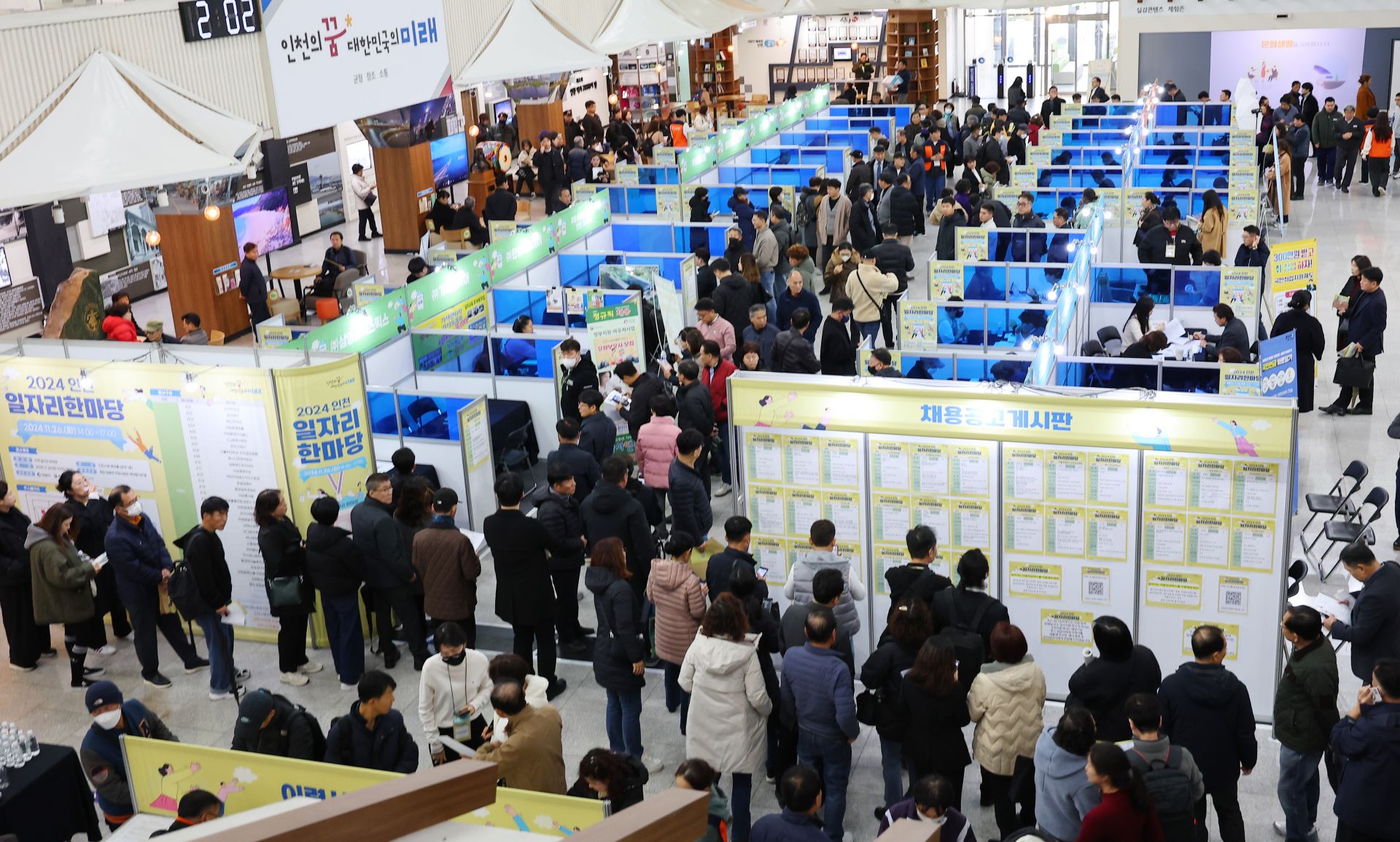
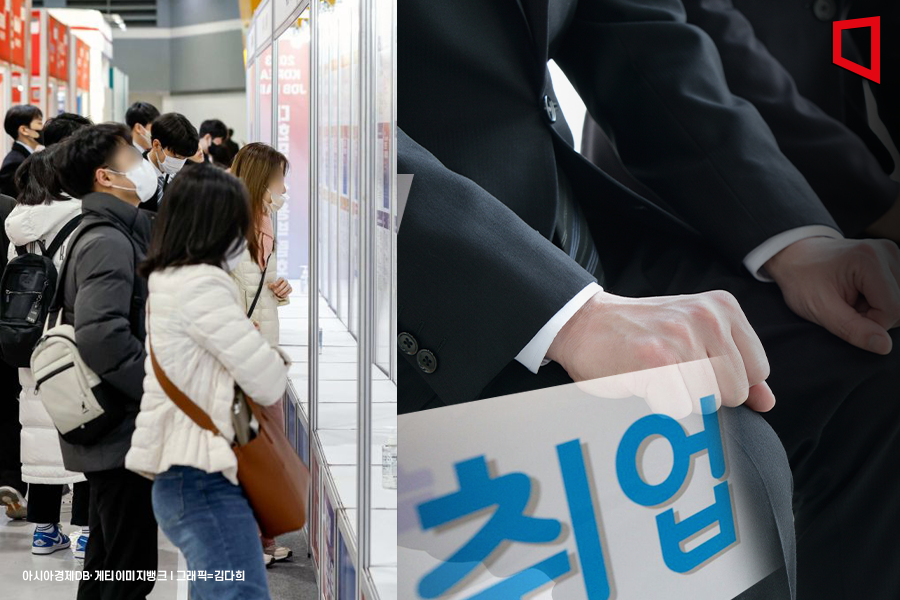
As the economy remains sluggish and the job market shifts toward career-based and rolling recruitment, more young people are finding themselves frustrated at the narrowing doors to employment. The number of 'resting youth'?young people who have nowhere to go after failing to secure their desired jobs?has surpassed 500,000 for the first time since related statistics began in 2003. With the number of employed youth declining, the youth employment rate fell to 44.3%, the lowest since the COVID-19 pandemic period.
First time surpassing 500,000 since 2003 statistics compilation Employment rate at 44.3%, lowest since COVID-19 Employment among people in their 20s decreased by 205,000 last month Employment for those aged 15 to 29 decreased by 235,000 Declines in construction, manufacturing, and professional scientific sectors Increase in preference for experienced workers and more frequent hiring also influential
According to the 'Employment Trends for February 2025' released by Statistics Korea on the 12th, the number of employed people aged 15 and over last month was 28,179,000, an increase of 136,000 (0.5%) compared to the same month last year. Although the number of employed people decreased by 52,000 in December last year due to the temporary end of job programs, the growth trend has continued since January (135,000).
By age group, employment increased among those aged 60 and over (342,000) due to aging, and among those in their 30s (116,000) due to the influence of the second baby boomers. In contrast, employment decreased among those in their 20s (-228,000), 40s (-78,000), and 50s (-8,000). In particular, the number of employed people in their 20s continued a negative trend of over 200,000 for two consecutive months, following January (-205,000).
Youth employment indicators are deteriorating rapidly. The number of employed people aged 15 to 29 was 3,557,000, a decrease of 235,000. This is the largest drop since January 2021 (-314,000) during the COVID-19 pandemic. The youth employment rate also fell to 44.3%, the lowest since February 2021 (42.0%). This contrasts with the employment rate for those aged 15 and over (61.7%) and the OECD comparison standard for those aged 15 to 64 (68.9%), which rose by 0.1 and 0.2 percentage points, respectively.
Gong Misuk, Director of the Social Statistics Bureau at Statistics Korea, said, "Employment among the youth has decreased in manufacturing, construction, and professional science sectors," adding, "Wholesale and retail, and manufacturing, where youth employment is high, are seeing declines." She continued, "The increasing preference for experienced candidates in new hires and the rise in rolling recruitment are acting unfavorably for young people."
In fact, employment decreased in construction (-167,000), manufacturing (-74,000), and wholesale and retail trade (-65,000). The negative trend in construction and manufacturing has continued for 10 and 8 months, respectively. On the other hand, employment increased in health and social welfare services (192,000), professional, scientific and technical services (80,000), and information and communications (65,000).
Last month, the economically inactive population was 16,575,000, an increase of 7,000 (0.0%) compared to the same month last year, showing a stable trend. However, among the economically inactive, the number of people who are not working or looking for work?the 'resting' population?rose by 123,000 (4.8%) to 2,697,000, raising concerns.
In particular, the number of resting youth increased by 61,000 (13.8%) to 504,000. This is the first time since statistics began in January 2003 that the number of resting youth has exceeded 500,000. Among those in their 20s, who should be starting economic activity, the resting population surged by 71,000 (18.1%) to 460,000.
Director Gong explained, "The main reason cited by resting youth was 'difficulty finding desired jobs,' followed by 'taking a break for the next step.'" In fact, in a survey released the previous day by the Korea Employment Information Service on youth who have been resting for more than a year, the most common reason for resting was 'lack of suitable jobs' (38.1%).
Jang Joosung, Director of Human Resources Policy at the Ministry of Economy and Finance, said, "In the past, it took about 8-9 months on average to find a job after graduating from university or beginning to seek employment, but now the job search period has increased to nearly a year," adding, "As a result, the number of resting youth is increasing."
The government plans to expand tailored support measures as the number of resting youth rises. Director Jang said, "We are preparing and implementing various measures for youth," adding, "With the Youth Employment All Care Platform officially launched this month, we expect it to help improve youth employment conditions if it becomes established this year."
The proportion of resting youth was higher among those with no work experience, those with longer periods of unemployment, and those whose previous jobs were low-wage, low-skilled, or unstable. With many youth choosing to rest due to a lack of desired jobs, a significant number reported difficulties such as burnout or psychological and mental health issues. Seven out of ten felt anxious during their resting period.
The biggest reason is "It is difficult to find the desired job" The younger the age, the longer the unemployment period, and the lower the past wage Higher proportion of youth who 'took a break' and 70% feel anxiety 84.6% of survey respondents say "Work is important in life" Average break duration is 22.7 months... 11% took a break for more than 4 years
The Korea Employment Information Service announced these findings at the first meeting of the 2025 Youth Employment Forum held at the Vocational Competency Evaluation Institute in Jung-gu, Seoul. The meeting was organized by the Ministry of Employment and Labor to examine youth employment issues from various perspectives with academics and field experts and to discuss policy improvements.
The Employment Information Service conducted a survey of 3,189 unemployed youth who had been out of work for more than one year but less than three years, from December last year to January this year. The results showed that the proportion of resting youth was higher among those with no work experience, longer periods of unemployment, and previous jobs that were low-wage, low-skilled, or unstable.
The average resting period among respondents was 22.7 months, with about 11% having rested for more than four years. The majority (87.7%) had work income experience, with an average tenure of 17.8 months. Regarding the wage level of their last job, 48.8% answered between 2 million and 3 million won.
The main reasons for choosing to rest were lack of suitable jobs (38.1%) and education/self-development (35.0%). However, burnout (35.0%), the need for recharging (27.7%), and psychological/mental health issues (25.0%) were also significant factors. Even considering multiple responses, these figures indicate considerable difficulties among young people.
77.2% said they felt anxious during their resting period. The longer the resting period, the less it was perceived as time for recharging, and the more it was seen as 'a difficult time that led to loss of motivation for job seeking.' More than half (58.2%) described their resting period as 'a time of economic and psychological hardship.'
When asked about activities during the resting period (multiple responses allowed), the majority cited education/self-development (55.5%) and rest/recharging (52.1%). However, 20.3% said they did not engage in any particular activity, which is also a significant proportion.
Their positive outlook on the future is a hopeful sign. 84.6% of respondents said work is important in life. 57.3% believed they could move to a better job in the future. For government support needed for employment, more respondents emphasized vocational education/training (59.3%) and job placement/information (54.7%) over living expenses (50.6%).
"Youth Frustration and Wandering Manifest as Resting"
The Korea Labor Institute raised the issue that the gap in youth employment between the capital region and other regions is leading to an increase in resting youth. Since 2018, the concentration of young workers in the capital region has intensified, likely due to the decline of manufacturing in non-capital regions such as the shipbuilding industry in Gyeongnam and the rise of knowledge-based industries in the capital area. As a result, more youth who had been employed in knowledge-based and face-to-face service industries in the capital region are now among the resting youth.
Committee members attending the meeting pointed out that psychological issues experienced by young people while working can lead to resting, and the anxiety experienced during the resting process can result in isolation and seclusion. They agreed that to address this, psychological counseling support for youth should be expanded, and early intervention in the initial stages of resting is needed to prevent long-term inactivity.
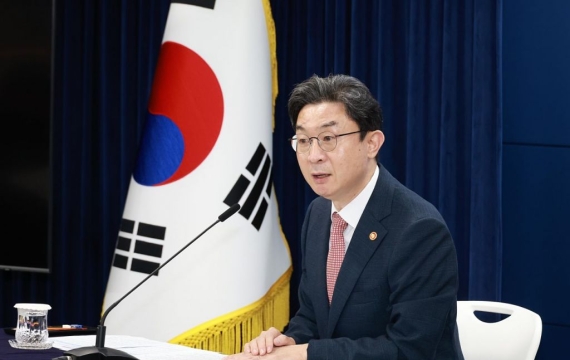
Lee Junghan, Director of Employment Policy at the Ministry of Employment and Labor, said, "The situation where young people are frustrated at the narrow doors to employment or wander after finding that the job they obtained is not what they wanted is manifesting as resting." He added, "Based on the findings about resting youth identified through the forum, we will refine policies so that young people can stay in the labor market longer."
Again, the proportion of resting youth was higher among those with no work experience, those with longer periods of unemployment, and those whose previous jobs were low-wage, low-skilled, or unstable. With many youth choosing to rest due to a lack of desired jobs, a significant number reported difficulties such as burnout or psychological and mental health issues. Seven out of ten felt anxious during their resting period.
The Korea Employment Information Service announced these findings at the first meeting of the 2025 Youth Employment Forum held at the Vocational Competency Evaluation Institute in Jung-gu, Seoul. The meeting was organized by the Ministry of Employment and Labor to examine youth employment issues from various perspectives with academics and field experts and to discuss policy improvements.
The Employment Information Service conducted a survey of 3,189 unemployed youth who had been out of work for more than one year but less than three years, from December last year to January this year. The results showed that the proportion of resting youth was higher among those with no work experience, longer periods of unemployment, and previous jobs that were low-wage, low-skilled, or unstable.
The average resting period among respondents was 22.7 months, with about 11% having rested for more than four years. The majority (87.7%) had work income experience, with an average tenure of 17.8 months. Regarding the wage level of their last job, 48.8% answered between 2 million and 3 million won.
The main reasons for choosing to rest were lack of suitable jobs (38.1%) and education/self-development (35.0%). However, burnout (35.0%), the need for recharging (27.7%), and psychological/mental health issues (25.0%) were also significant factors. Even considering multiple responses, these figures indicate considerable difficulties among young people.
77.2% said they felt anxious during their resting period. The longer the resting period, the less it was perceived as time for recharging, and the more it was seen as 'a difficult time that led to loss of motivation for job seeking.' More than half (58.2%) described their resting period as 'a time of economic and psychological hardship.'
When asked about activities during the resting period (multiple responses allowed), the majority cited education/self-development (55.5%) and rest/recharging (52.1%). However, 20.3% said they did not engage in any particular activity, which is also a significant proportion.
Their positive outlook on the future is a hopeful sign. 84.6% of respondents said work is important in life. 57.3% believed they could move to a better job in the future. For government support needed for employment, more respondents emphasized vocational education/training (59.3%) and job placement/information (54.7%) over living expenses (50.6%).
"Youth frustration and wandering manifest as resting"
The Korea Labor Institute raised the issue that the gap in youth employment between the capital region and other regions is leading to an increase in resting youth. Since 2018, the concentration of young workers in the capital region has intensified, likely due to the decline of manufacturing in non-capital regions such as the shipbuilding industry in Gyeongnam and the rise of knowledge-based industries in the capital area. As a result, more youth who had been employed in knowledge-based and face-to-face service industries in the capital region are now among the resting youth.
Committee members attending the meeting pointed out that psychological issues experienced by young people while working can lead to resting, and the anxiety experienced during the resting process can result in isolation and seclusion. They agreed that to address this, psychological counseling support for youth should be expanded, and early intervention in the initial stages of resting is needed to prevent long-term inactivity.
Lee Junghan, Director of Employment Policy at the Ministry of Employment and Labor, said, "The situation where young people are frustrated at the narrow doors to employment or wander after finding that the job they obtained is not what they wanted is manifesting as resting." He added, "Based on the findings about resting youth identified through the forum, we will refine policies so that young people can stay in the labor market longer."