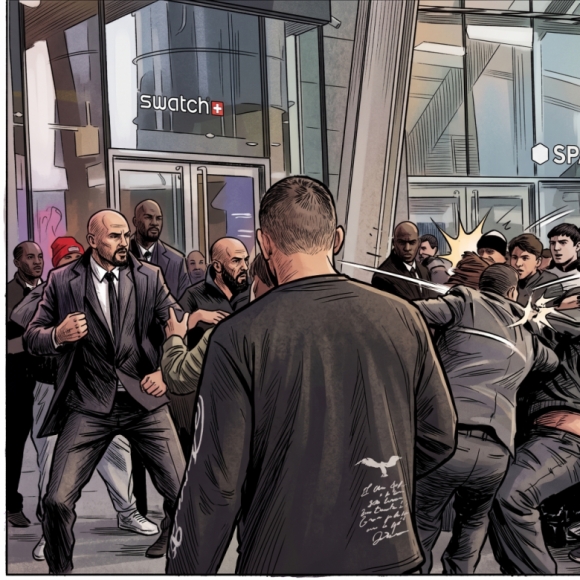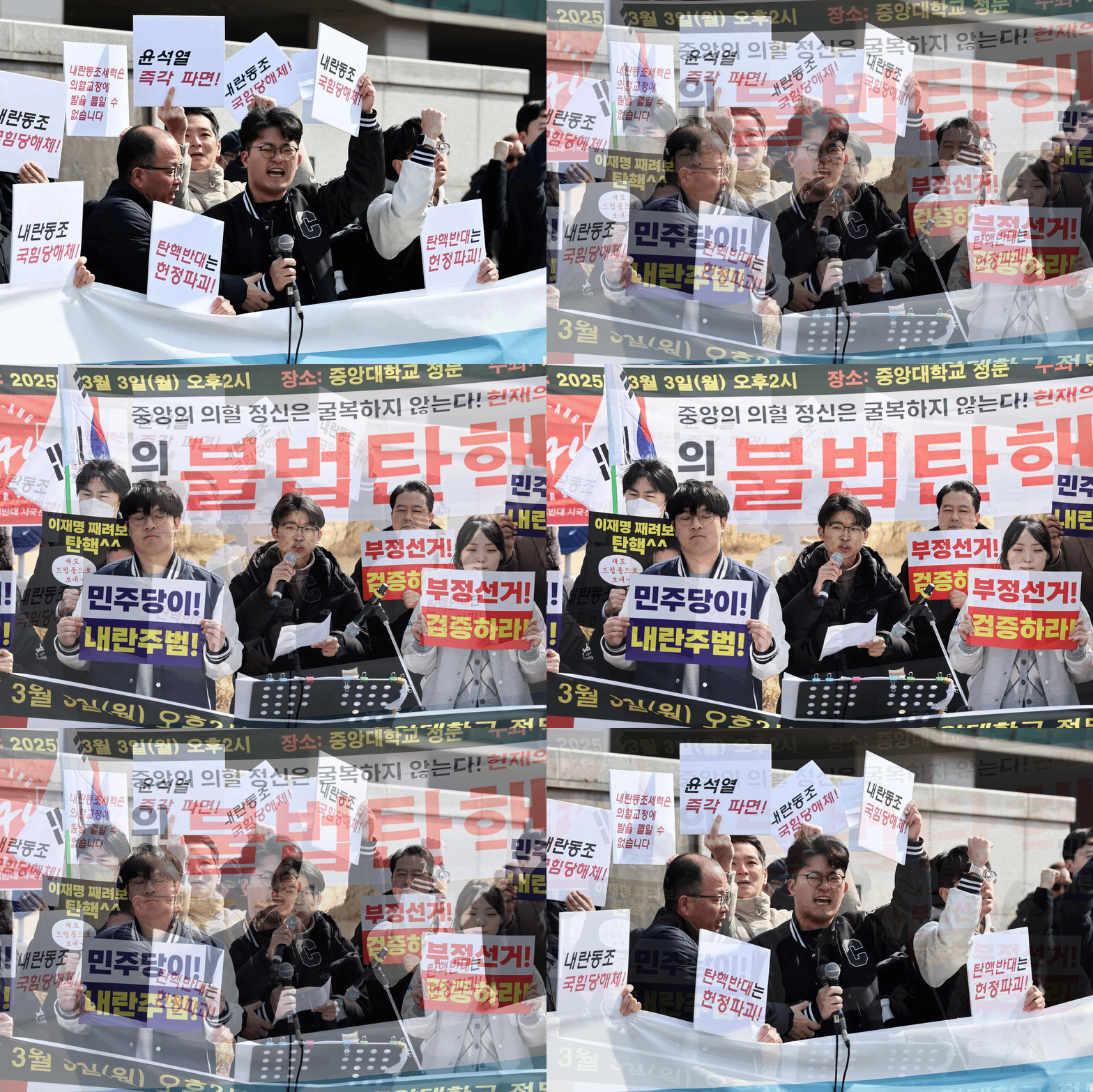
Conflicts between the two camps intensified as outsiders, including YouTubers, participated in university rallies. On the 28th of last month, at a rally at Hankuk University of Foreign Studies, a man who supported impeachment was arrested for assaulting a police officer who was maintaining order. Then, on the 26th of last month at Ewha Womans University, a male YouTuber who opposed impeachment grabbed the collar of a current student participating in the rally. Since the number of people on campus is expected to increase after the semester begins, universities are struggling with the escalating rally atmosphere. Until now, even if a rally application was submitted on campus, it was managed by not granting permission due to safety concerns, but alternative measures are being considered. Seoul National University is also reviewing a plan to require rally organizers to submit a prior report detailing the number of participants, location, and whether sound equipment will be used.
Conflict Intensifies as Yoon Supporters and YouTubers Join In
Universities Struggle to Find Campus Safety Solutions
Yoon's Martial Law, Negative Impact on National Risk Survey
From 25th to 34th Place, Fourth Largest Drop
Downgraded to 'Flawed Democracy' Group

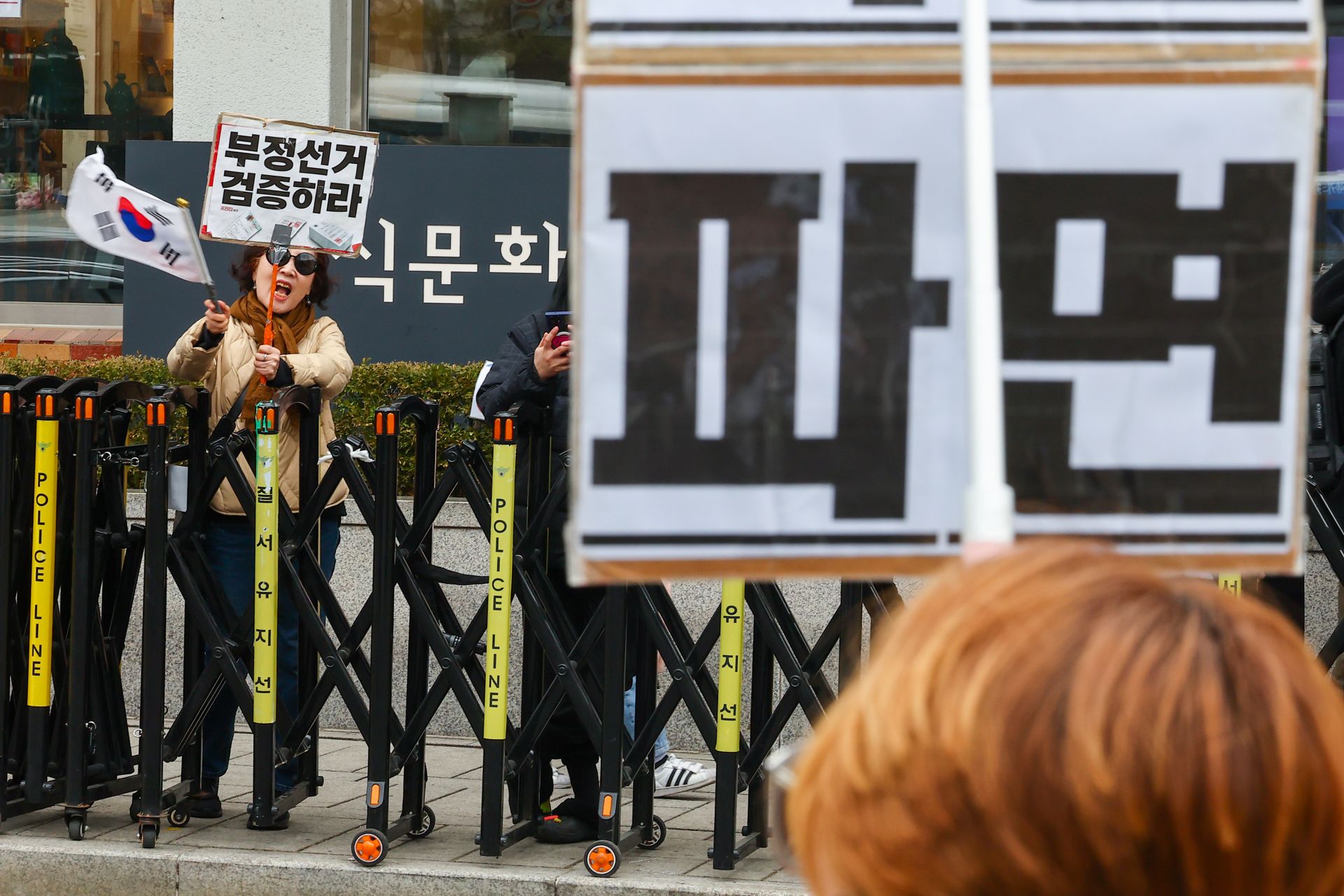
On the 26th of last month, pro-impeachment and anti-impeachment rallies for President Yoon Seokyeol were held at Ewha Womans University in Seodaemun-gu, Seoul. Photo by Yonhap News
원본보기 아이콘As the Constitutional Court ruling on President Yoon Suk-yeol's impeachment draws near, both camps are sharply divided during the March 1st holiday, and even university campuses are suffering from rallies for and against impeachment.
As of March 4, when most universities nationwide begin the new semester, major universities have already issued statements for or against impeachment or are planning additional rallies. The previous day, rallies both supporting and opposing impeachment were held at Chung-Ang University, Chungnam National University, and Jeonbuk National University, among others. On March 1, about 2,500 members of the "Freedom Defense University Coalition," an alliance of 33 universities nationwide, held a statement against impeachment in Seoul's Daehak-ro.
Impeachment-Support Statement Proposed at Hankuk University of Foreign Studies... Hanyang and Sookmyung Women's Universities Collecting Signatures Against Impeachment
Impeachment-related rallies have been spreading nationwide, starting last month at Seoul National University and expanding to Yonsei University, Sungkyunkwan University, and others. At Hankuk University of Foreign Studies, a second "pro-impeachment" statement is scheduled for March 7, while Hanyang University and Sookmyung Women's University are collecting signatures for a statement against impeachment.
On campuses, anti-impeachment rallies are met with counter-rallies by pro-impeachment groups, resulting in confrontations. Such standoffs have occurred at Chung-Ang University, Yonsei University (February 10), and Seoul National University (February 15 and 17), with some incidents escalating into clashes.
University impeachment rallies are attended not only by current students and alumni but also by political YouTubers and supporters of President Yoon Suk-yeol. At Chung-Ang University alone, both pro- and anti-impeachment groups numbered around 20 to 30 each, but the presence of over 100 Yoon supporters and YouTubers significantly increased the scale.
Conflict Deepens as YouTubers Join the Fray
Korea Drops 9 Places to 34th in National Risk Assessment
Meanwhile, South Korea fell nine spots in a national risk assessment of 100 countries worldwide. The political instability caused by President Yoon Suk-yeol's martial law declaration led to a lower score compared to the previous year. The drop was the fourth largest among all surveyed countries.
According to Japan's Nihon Keizai Shimbun (Nikkei), Japanese credit rating agency R&I (Rating & Investment Information) ranked Korea 34th in its national risk assessment conducted in January this year, nine places lower than the previous survey (25th). R&I, one of Japan's two major credit rating agencies along with JCR, calculates scores based on surveys of major domestic banks and think tanks in 100 countries worldwide.
Korea's score this time was 7.3, down 0.3 points from last year. This was the fourth largest drop among the countries surveyed. R&I pointed to President Yoon Suk-yeol's martial law declaration in December and the resulting political instability as the main reasons for the downgrade.
The decline in national credibility due to the martial law incident is evident in various areas. Recently, the Economist Intelligence Unit (EIU), an economic analysis institute affiliated with the British weekly The Economist, released its "Democracy Index 2024" on February 27 (local time), ranking Korea 32nd. In the 2023 assessment, Korea had risen two places from the previous year, but last year it fell by as many as 10 places.

On March 1st, Independence Movement Day, pro- and anti-impeachment rallies for President Yoon Seokyeol were held across Seoul. In the lower left at Anguk-dong Intersection, the five opposition parties including the Democratic Party held a rally urging impeachment, while in the upper right on Sejong-daero, the National Movement Headquarters for Correcting the Republic of Korea held an anti-impeachment rally. Yonhap News
원본보기 아이콘
On the 28th of last month, passengers boarding a village bus entering Sungkyunkwan University in Jongno-gu, Seoul, were watching the impeachment support and opposition rallies held simultaneously in front of the main gate. Photo by Yonhap News
원본보기 아이콘Score Drops to 7.75 out of 10... Lowest Since Index Launched
Korea's total score was 7.75 out of 10, down from 8.09 (22nd place) in 2023. The 7.75 score is the lowest Korea has received since the EIU began compiling the index in 2006. As a result, Korea was downgraded from the "full democracy" group, where it had remained for four consecutive years since 2020, to the "flawed democracy" group. The EIU report stated, "The aftermath of President Yoon Suk-yeol's attempt to declare martial law has heightened polarization and tension both in parliament and among the public, and this is likely to continue into 2025," adding, "Public dissatisfaction with Korea's democracy may increase."
In this R&I national risk assessment, other Asian countries also saw significant declines. Bangladesh's score fell by 1.0 points, the largest drop among surveyed countries, following the collapse of the Hasina administration in August 2012. As a result, its ranking plummeted from 60th to 83rd. The Hasina administration had maintained the most friendly relations with India since Bangladesh's independence in 1971.
The credit ratings of China and India each fell by 0.1 points. Nikkei noted that China's prolonged real estate market slump is slowing economic recovery, while India's Modi administration, now in its third term, is facing difficulties in policy coordination within the coalition government.
-

Reporter Choi Youngchan elach1@asiae.co.kr
-
Reporter Cha Minyoung blooming@asiae.co.kr
-
Edit Choo Myeonghoon chox2mh@asiae.co.kr
© The Asia Business Daily(www.asiae.co.kr). All rights reserved.