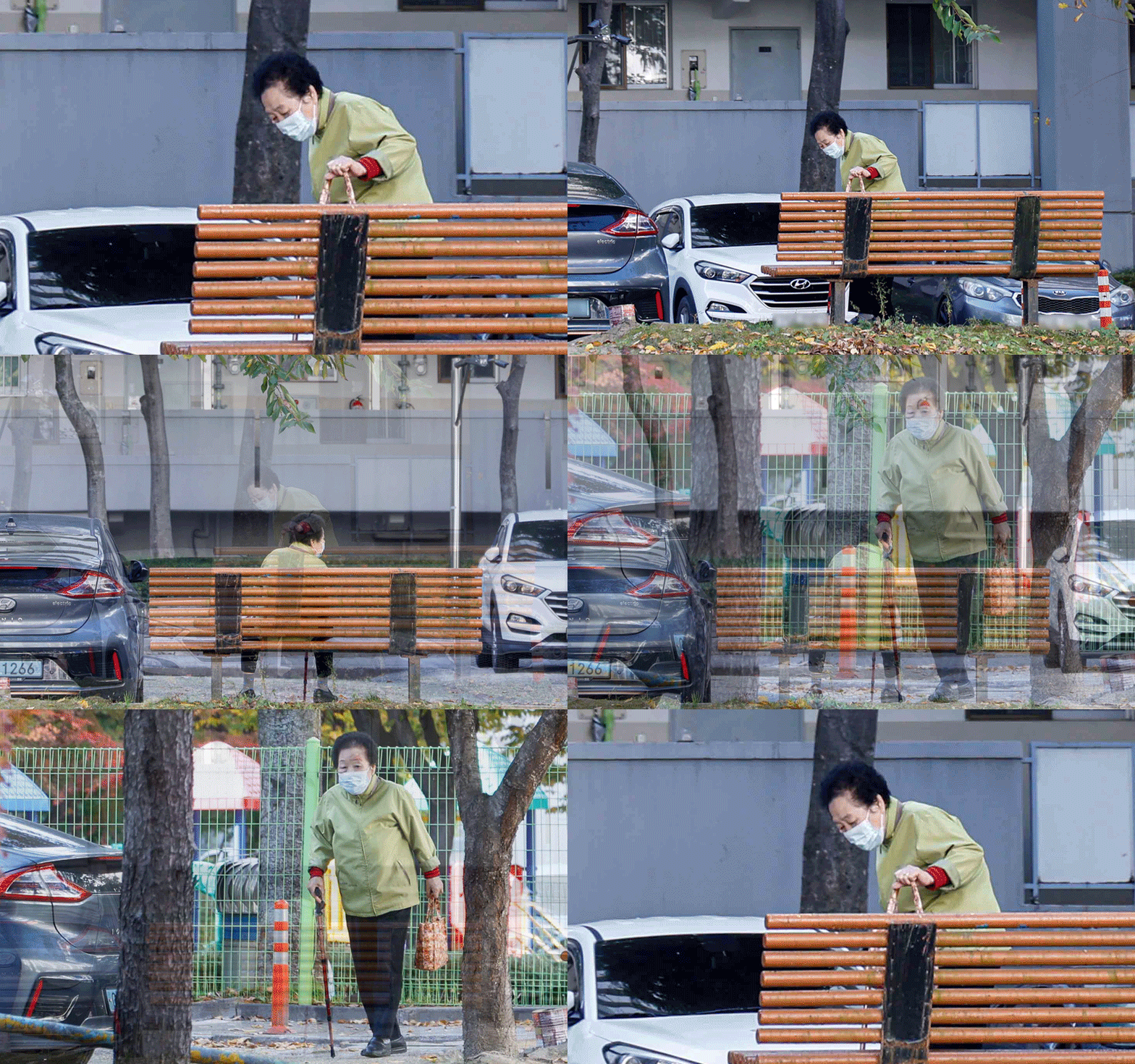
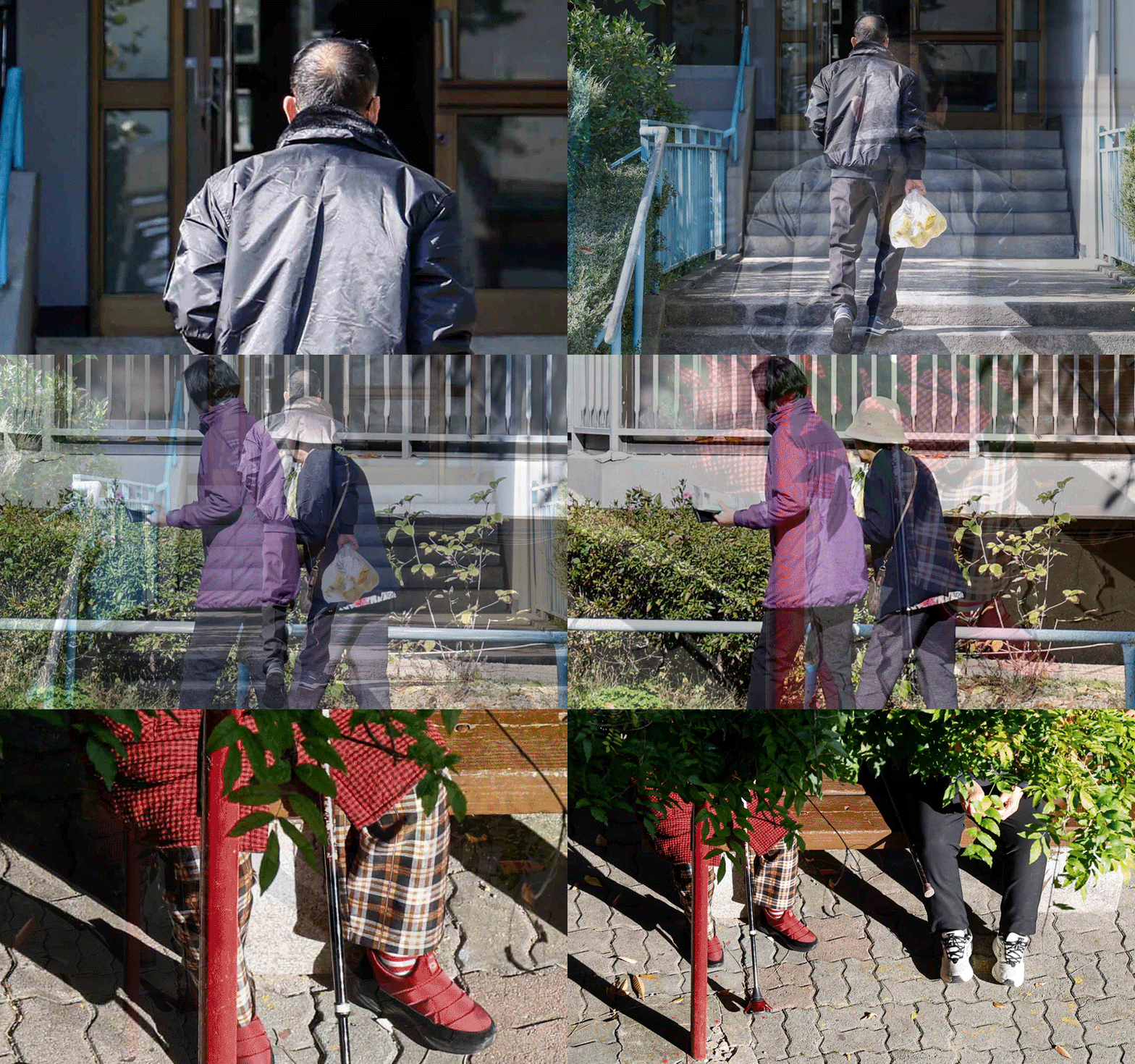
"Walking was not a problem until now. Even three months ago, I went to the swimming pool and did aqua aerobics with my friends."
[Turning My Home into a Senior House]②What Is Needed to Live at Home Until 100
Korea entered a super-aged society last December
Taking the first step toward "community-based integrated care" like Japan
Preparing for "integrated care" to support seniors at home,
including home medical visits, nutrition management, and home repairs
Urgent need to address shortages in budget, workforce, and experience
Taking the first step toward "community-based integrated care" like Japan
Preparing for "integrated care" to support seniors at home,
including home medical visits, nutrition management, and home repairs
Urgent need to address shortages in budget, workforce, and experience
"But suddenly my knee joint got severely damaged. Now I can't even go to the market to buy side dishes. The surgery date keeps getting postponed due to the medical strike."
"My daughter who lives nearby comes every morning to prepare meals, but she's the one who suffers. Every morning she goes to the bathhouse in front of the house with a cane and soaks her knee in hot water."
"But if I just spend time like this and can't move anymore, I wonder if I can live alone at home. That's what worries me."
- On October 28 last year, Park Jongim, 81, living in an apartment in Seongbuk-gu, Seoul
For seniors, living at home becomes difficult when illness or injury limits their mobility. According to the National Territorial Research Institute's report "Supporting Continued Residence of the Elderly in the Community," the life stages of seniors are divided into "healthy," "frail," and "care" stages based on physical condition. The healthy stage is defined as "being able to manage life independently." The frail stage is "when one or more types of care become necessary." About 60% of seniors fall into this category, and it is the time to prevent further health decline. The care stage is "when a certain level of care is needed." About 10% of seniors are in this stage, requiring health management and daily living support to continue living at home.

When Do Seniors Living at Home Face a Crisis?

▲On November 18 last year, Sachiko Watanabe (90), who lives in Toyoakeshi, is being assisted by helpers from the "Chatto Service" (a service that helps elderly people for 30 minutes at 250 yen) as she enters her home.
원본보기 아이콘At the threshold between "frail" and "care," seniors face a crossroads: whether to stay at home or move to a facility. Yoo Aejeong, Director of the Integrated Care Research Center at the National Health Insurance Service, said, "For seniors with limited mobility, doctors need to visit their homes, care workers need to cook for them, and safety handles must be installed in their rooms," adding, "These conditions must be met for seniors to continue living at home."
Japan has supported seniors living at home in this way since entering a super-aged society in 2005. This system, called "community-based integrated care," operates on three pillars: "medical care" (hospital and pharmacy services), "daily living support" (housekeeping and welfare checks), and "nursing care" (assistance with bathing and rehabilitation training). Doctors, nurses, care workers, and social workers ride bicycles through alleyways, frequently visiting the homes of local seniors. They can respond within 30 minutes in emergencies. In a society where children no longer care for their parents, the intention was for local governments to step in so seniors could remain at home.
"Community-based integrated care" became established throughout Japan after 2010. Around this time, the number of late-elderly people aged 75 and older increased rapidly, raising concerns that social security finances would be depleted. As the number of ill seniors grows, medical and care costs snowball, increasing the burden of medical and long-term care insurance premiums. Helping seniors live independently at home became urgent.

Korea Takes the First Step Toward "Integrated Care," but There Is a Long Way to Go
Last December, Korea also entered a super-aged society, with one in five people over the age of 65. In response, Korea launched its own version of community-based integrated care, called "integrated care." In March last year, the National Assembly passed the "Integrated Care Support Act" (Act on Integrated Support for Community Care Including Medical and Nursing Services). Under this law, from next year, all local governments must provide medical and care services so seniors can continue living at home.
Currently, pilot programs are being conducted in 12 areas, including Buk-gu in Gwangju, Jincheon in Chungbuk, Yuseong in Daejeon, and Bucheon in Gyeonggi. Each area operates integrated care services with a total budget of 1.06 billion won, with 530 million won each from the national and local governments. Director Yoo said, "The 12 pilot areas are well prepared, but other local governments have not even taken the first step yet," adding, "It will take a long time for integrated care to spread nationwide due to issues such as lack of budget, workforce, and experience."

There is a reason the word "integrated" is used with "care." Lee Jaechul, an official in charge of resident welfare in Jincheon-gun, one of the pilot areas, said, "The core of integration is effectively combining medical care and daily living support." He added, "Before selecting recipients, we always visit the seniors' homes. Even opening the refrigerator is necessary to see how they are eating, what medications they are taking, and what inconveniences they have."
Jincheon-gun holds a video conference once a week to manage integrated care recipients. Welfare officials, medical staff, social workers, public health center staff, and dementia care center representatives participate. Depending on the recipient's condition, National Health Insurance Service employees, physical therapists, Korean medicine doctors, and pharmacists may also join. Lee explained, "We share information about the recipients and provide necessary care services such as home medical visits, nutrition management, daily living support, and home repairs," adding, "We monitor progress and decide when to end the care."
Can We Spend Our Final Days at Home?

▲On October 29 last year, 89-year-old Youngil An is receiving long-term care home medical services from medical staff at an apartment in Buk-gu, Gwangju Metropolitan City. Photo by Jinhyung Kang
원본보기 아이콘Eligibility for integrated care is determined by health status, not income level. Seniors do not need to be low-income or have a long-term care grade to qualify. Anyone whose health is poor enough to require care can receive support. Candidates can be recommended by hospitals, the National Health Insurance Service, or senior welfare centers, or seniors and their children can contact local governments directly.
Medical and care services like these already exist. For a sick senior living alone, three or four people such as a social worker, care worker, and local government official provide support. The problem is that they rarely communicate with each other. Each only knows about the senior within their own area of responsibility. For example, if a senior living alone forgets to take medication, the social worker providing daily support may not even notice.
Director Yoo said, "Even just connecting the services that already exist can start integrated care," adding, "Once integrated care is established, seniors' current homes can become senior houses, and, like in Japan, more seniors will be able to spend their final days at home."

IndexTurning My Home into a Senior House
- "I Want to Live in My Own Home Until the End"... Seeking the Right to Age and Die at Home
- "Can I Live Alone? That's My Worry... What You Need to Stay at Home Until 100"
- ¡°There¡¯s No Such Thing as a Free Lunch¡±: Wealthy and Highly Educated Seniors Are Coming
- "No One Is Healthy. Just Wait Until Professor Itmom Comes Home"
- "Doctor, I¡¯d be happy to pay if you could visit my home again"
- "I Felt Lost After Discharge... The Home Caregiver Saved Me Again, Ju"
- "If You Plug the Care Plug in Your Living Room... You Can Feel Secure Even Living Alone"
- "I Don't Want a Nursing Home... To Live in My Own House, I Must Avoid Dementia"
- "It's Hard to Go Out... Fitness Instructor Comes to Your Home"
- Do You Go to Senior Centers?... Come to the 'Rochiwon' Instead
- To Feel Safe Enough to Close My Eyes at Home, These Changes Are Necessary
- "It's My Neighborhood, but I'm 200th on the Waiting List"... Local Nursing Homes More Competitive Than Housing Subscriptions
- Turning Closed Schools into Nursing Homes... Why Aren't There Schools for Seniors?
- Today, Father Went Out Through the Wall, Not the Door, Again
- Senior Centers Providing Lunch: Is the Budget Only 70,000 Won for 30 People per Meal?
- Preparing for Retirement by Moving to a Smaller Home... "The Key Issue Is the Tax Burden"
- A Home in Old Age That Resembles Its Owner's Face
-

Reporter Sim NaYoung sny@asiae.co.kr
-

Reporter Park Eugenie genie@asiae.co.kr
-

Reporter Kang Jinhyoung aymsdream@asiae.co.kr
-
Edit Hong Jayeon hongzaa@asiae.co.kr
© The Asia Business Daily(www.asiae.co.kr). All rights reserved.

![[Exclusive] "Looking Beyond Financial Statements for Future Value"... IBK Injects 170 Billion Won into 72 Innovative Companies](https://cwcontent.asiae.co.kr/asiaresize/304/2026011314545989464_1768283699.jpg)