

According to the Act on the Development and Promotion of Environmentally Friendly Vehicles (Electric Vehicle Charging Interference Prohibition Act), rapid chargers are prohibited from being used for more than 1 hour, and slow chargers for more than 14 hours. On the 9th of last month, the amendment to the "Regulations on the Requirements for Environmentally Friendly Vehicles" was also announced for administrative notice. According to the amendment, the allowable usage time of slow charging zones for PHEV vehicles will be reduced to 7 hours.
Mr. A, a man in his 40s living in Suwon, Gyeonggi Province, feels his blood boil every time he sees the apartment parking lot. This is because he often cannot charge his own vehicle as electric cars that have already finished charging continue to occupy the chargers. Taking photos of the license plates of vehicles parked beyond the allowed time and reporting them has now become part of his daily routine.
Despite the current electric vehicle (EV) "chasm"?a temporary stagnation in demand?conflicts among neighbors over EV chargers are intensifying. Although the supply rate of EV chargers in Korea is higher than in advanced countries, most chargers are slow chargers, and outdated regulations are cited as the main causes of charging-related conflicts.
According to the Ministry of the Interior and Safety on the 5th, the number of reports regarding "eco-friendly vehicle charging zones" increased by about 452%, from 61,106 cases in 2022, when statistics first began, to 337,374 cases last year. This figure does not even include reports from December. In particular, the rate of increase in "EV charging obstruction reports," such as illegal parking and leaving vehicles unattended after charging, was found to be especially high. In November last year alone, a total of 1,098 reports were filed for such reasons, a 1,032% increase compared to the same month the previous year (97 cases).
It is interpreted that the surge in reports is due to the increasing frequency of vehicles not vacating chargers even after exceeding the legally allowed time. In fact, online communities and EV enthusiast forums are sharing "how to report to the Safety Reporting Center." There are also numerous posts complaining about regular vehicles parking in EV charging spots and plug-in hybrid electric vehicles (PHEVs), which require only about one-third of the charging time compared to EVs, occupying chargers for extended periods.
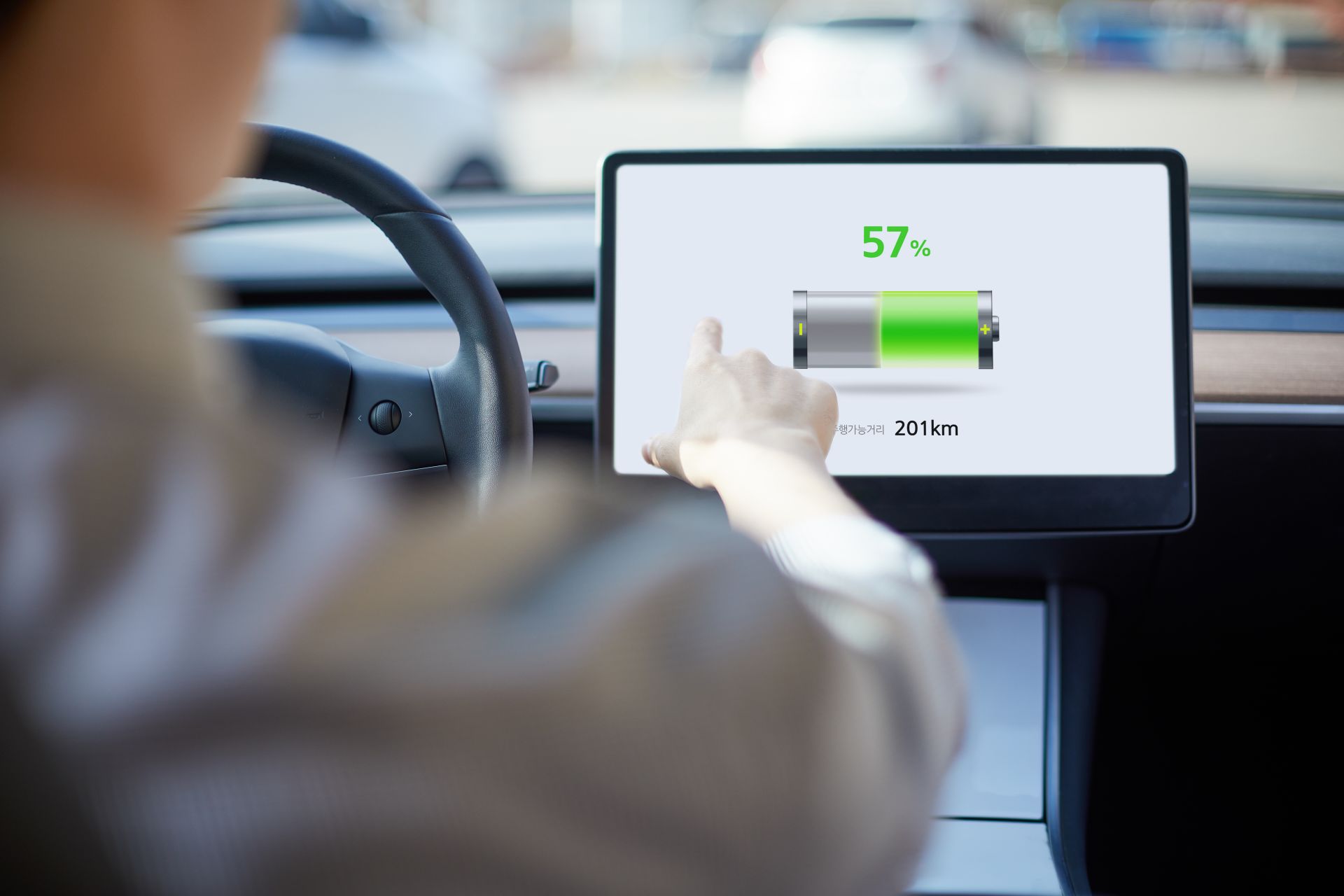
According to the Act on the Promotion of Development and Distribution of Environmentally Friendly Automobiles (the EV Charging Obstruction Prohibition Act), it is prohibited to use a rapid charger for more than one hour or a slow charger for more than 14 hours. On the 9th of last month, a revision to the "Regulations on the Requirements for Environmentally Friendly Automobiles" was also announced for administrative notice. According to the revision, the maximum allowable time for PHEV vehicles to use slow charging zones will be reduced to seven hours.

Occupancy status of an electric vehicle charger at an apartment located in Mapo-gu, Seoul, on the afternoon of the 5th. Screenshot of a mobile phone screen.
원본보기 아이콘The cumulative number of EV chargers installed in Korea has surpassed 400,000, and the "car-to-charger ratio," which indicates the number of EVs per charger, stood at 1.7 EVs per charger as of December last year. According to International Energy Agency (IEA) statistics, the global average car-to-charger ratio in 2023 was about 10 EVs per charger, with both the United States and Europe exceeding 10. This means Korea's EV charging infrastructure is at a high level. However, due to the lack of rapid chargers, EV owners are experiencing negative charging experiences.
Kim Pilsoo, professor at Daelim University’s Department of Future Automotive Engineering, pointed out, "Of the 400,000 EV chargers, only about 50,000 to 60,000 are rapid chargers. Although the number of rapid chargers has increased significantly since last year, it is still absolutely insufficient, so more urgent action is needed." He added, "EV charging technology has advanced to the point where charging can be completed in 6 to 8 hours, so the 14-hour regulation does not make sense."

-

Reporter Choi Youngchan elach1@asiae.co.kr
-
Edit Heo Seoyeon lala22@asiae.co.kr
© The Asia Business Daily(www.asiae.co.kr). All rights reserved.