

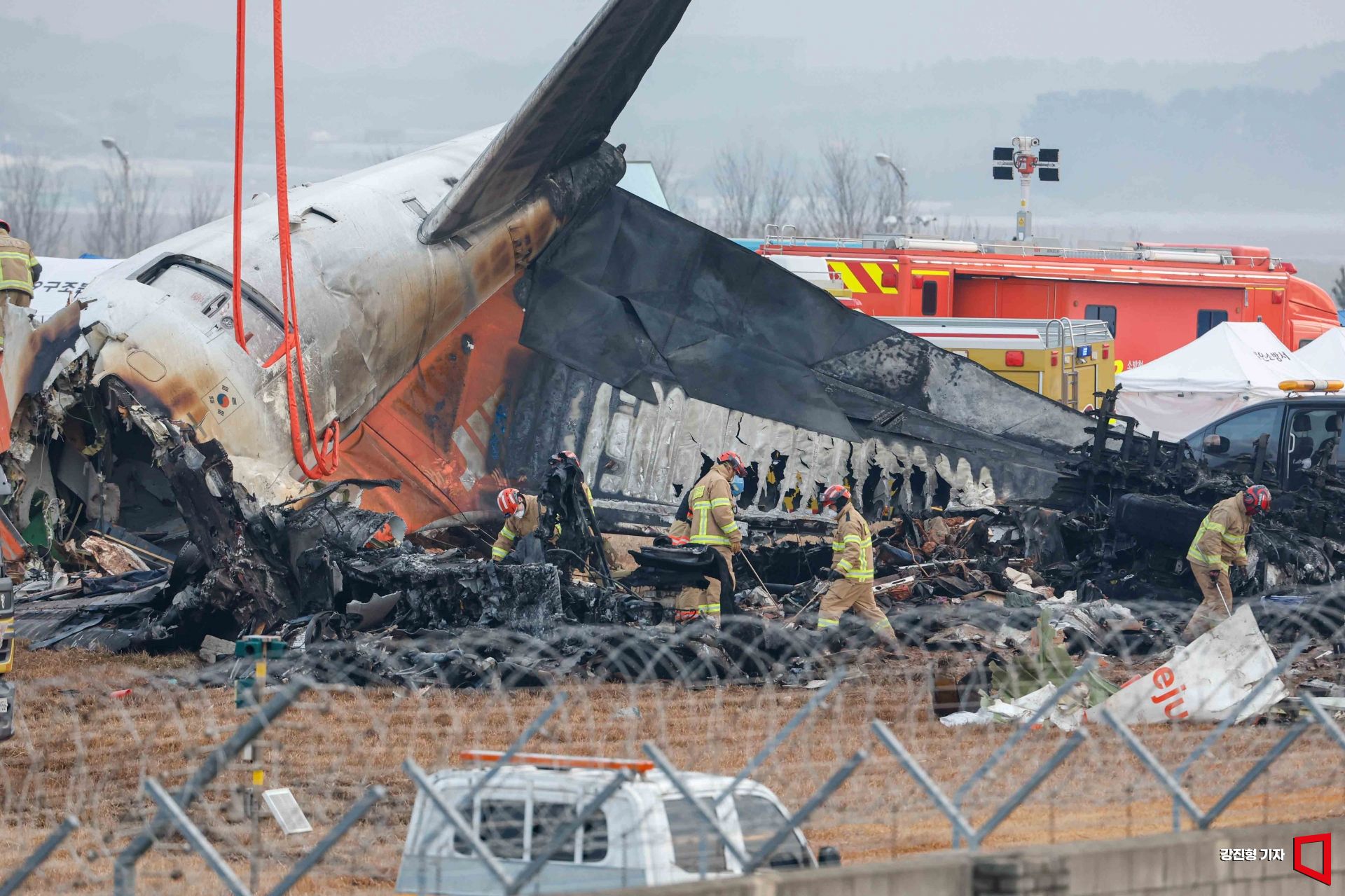
Firefighters are searching for fuel remnants at the site of the Jeju Air passenger plane collision and explosion accident that occurred on the 30th of last month at Muan International Airport in Jeonnam. Photo by Kang Jinhyung
"I'm afraid of flying."
Housewife Ms. Kim canceled her Southeast Asia travel tickets, which she had booked for her parents' 80th birthday celebration in April. This was due to a series of passenger aircraft accidents, including the Jeju Air disaster a month ago and the recent Air Busan fire during the Lunar New Year holiday. She had planned the trip with her family for a long time and was excited that it would happen soon, but decided it was better to have peace of mind than to be anxious. Kim said, "All my family members felt uneasy, so after discussing it, we changed our plans," and added, "I don't think we'll be able to travel overseas by plane for a while."
A Series of Domestic and International Passenger Aircraft Accidents... Travel Cancellations Due to Anxiety
These days, it is not hard to find posts on social media expressing 'aviophobia.' One user wrote, "The year has barely started, and I can't even count how many plane accidents have already happened. I had planned two overseas trips this year, but I'm already scared." Another user said, "Plane accidents are happening so often these days that I'm anxious and frightened."
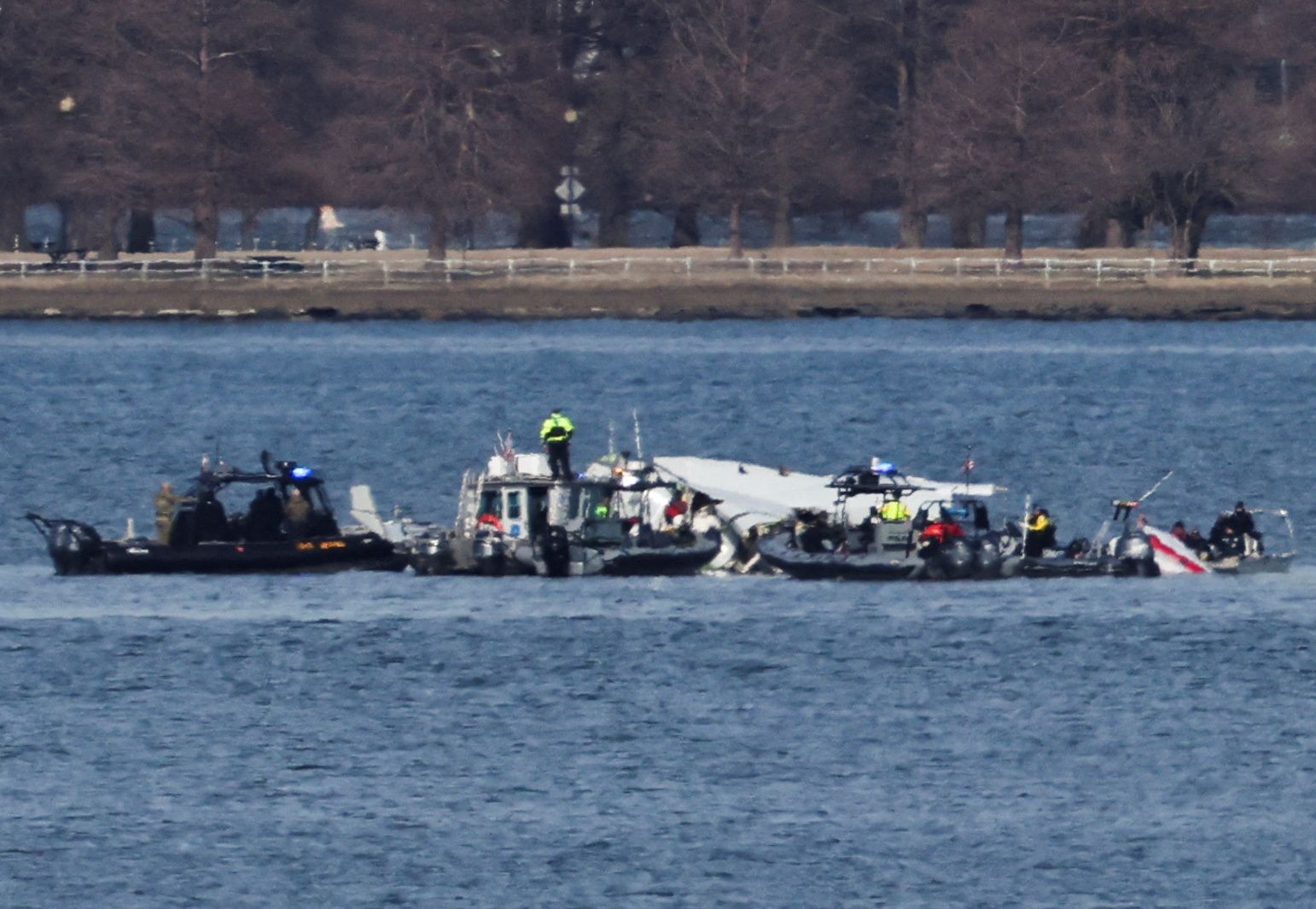
On January 30, 2025, in Virginia, USA, emergency responders are recovering debris from the Potomac River after American Eagle flight 5342 collided with a Black Hawk helicopter. Photo by Reuters Yonhap News
'Aircraft accidents' are not limited to Korea; foreign countries are not safe zones either. On the night of the 29th (local time), a passenger plane and a military helicopter collided near Washington D.C., USA, leaving the fate of all 67 people on board unknown. Seo Youngwon (36), who is scheduled to depart for New York next month, said, "I heard that the flight I'm taking has recently experienced frequent delays due to maintenance issues. It's too late to cancel my plans now, so I'm very worried." Lim, who lives in Yeongdeungpo-gu, Seoul (38), also said, "I don't know why plane accidents keep happening these days," and pointed out, "I'm not sure if safety inspections are being properly conducted."
Air Busan Fire Suspected to Be Caused by Spare Battery

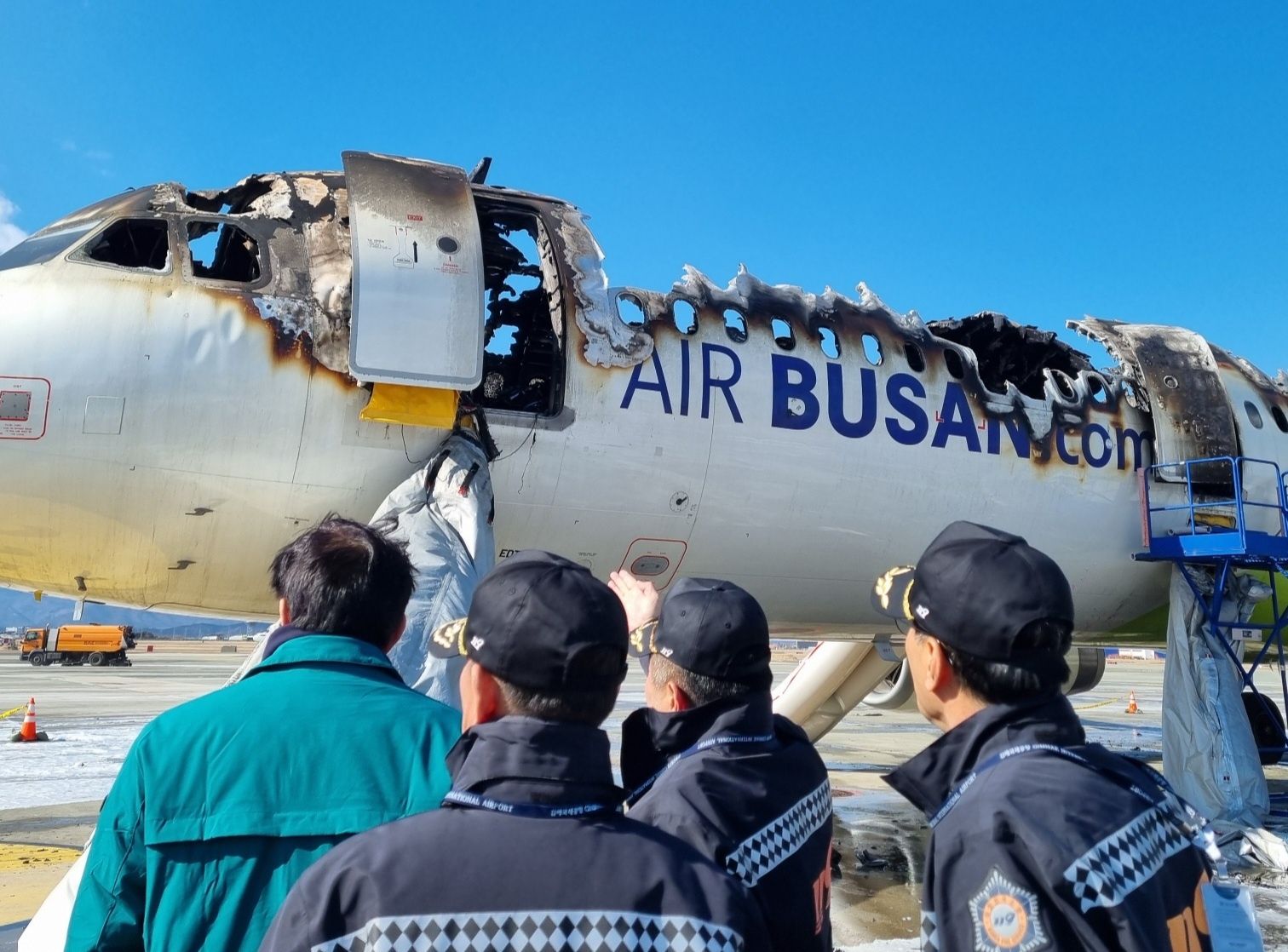
On the night of the 28th, eyewitnesses reported that the Air Busan passenger plane fire at Gimhae Airport started from an overhead compartment, raising cautious suspicions that a portable auxiliary battery may have caused the fire. As fires suspected to be caused by such batteries have occurred repeatedly on domestic and international aircraft, there are growing calls for stricter regulations on carry-on items. The photo shows a notice about the allowable amount of lithium batteries for carry-on luggage installed at the departure hall of Incheon International Airport on the 30th. Photo by Yonhap News
원본보기 아이콘Meanwhile, as it is suspected that a 'spare battery' was the cause of the Air Busan passenger plane fire, concerns about carry-on items are spreading. Currently, on the Aviation Security 365 Portal's 'Prohibited Carry-on Items Search,' 'spare battery' ranks first. Other items with fire risks, such as chargers and sprays, are also high on the search list. According to aviation dangerous goods transport regulations, spare batteries with lithium content of 2g or less and capacity of 100Wh or less can be brought into the cabin, up to five per person. Electronic devices such as laptops, tablet PCs, and electronic cigarettes can also be carried on board.
Some argue that passengers should personally manage spare batteries or electronic devices brought on board and that storing them in overhead bins is dangerous. In fact, in-flight announcements often instruct passengers to keep lighters and spare batteries on their person. However, few people pay close attention to these announcements. It is also difficult to hold people legally responsible for not following these instructions. For this reason, there are calls to strengthen regulations on carrying and managing spare batteries that pose fire or explosion risks on board.
-

Reporter Choi Youngchan elach1@asiae.co.kr
-
Edit Kim Yumi ymkim91@asiae.co.kr
© The Asia Business Daily(www.asiae.co.kr). All rights reserved.