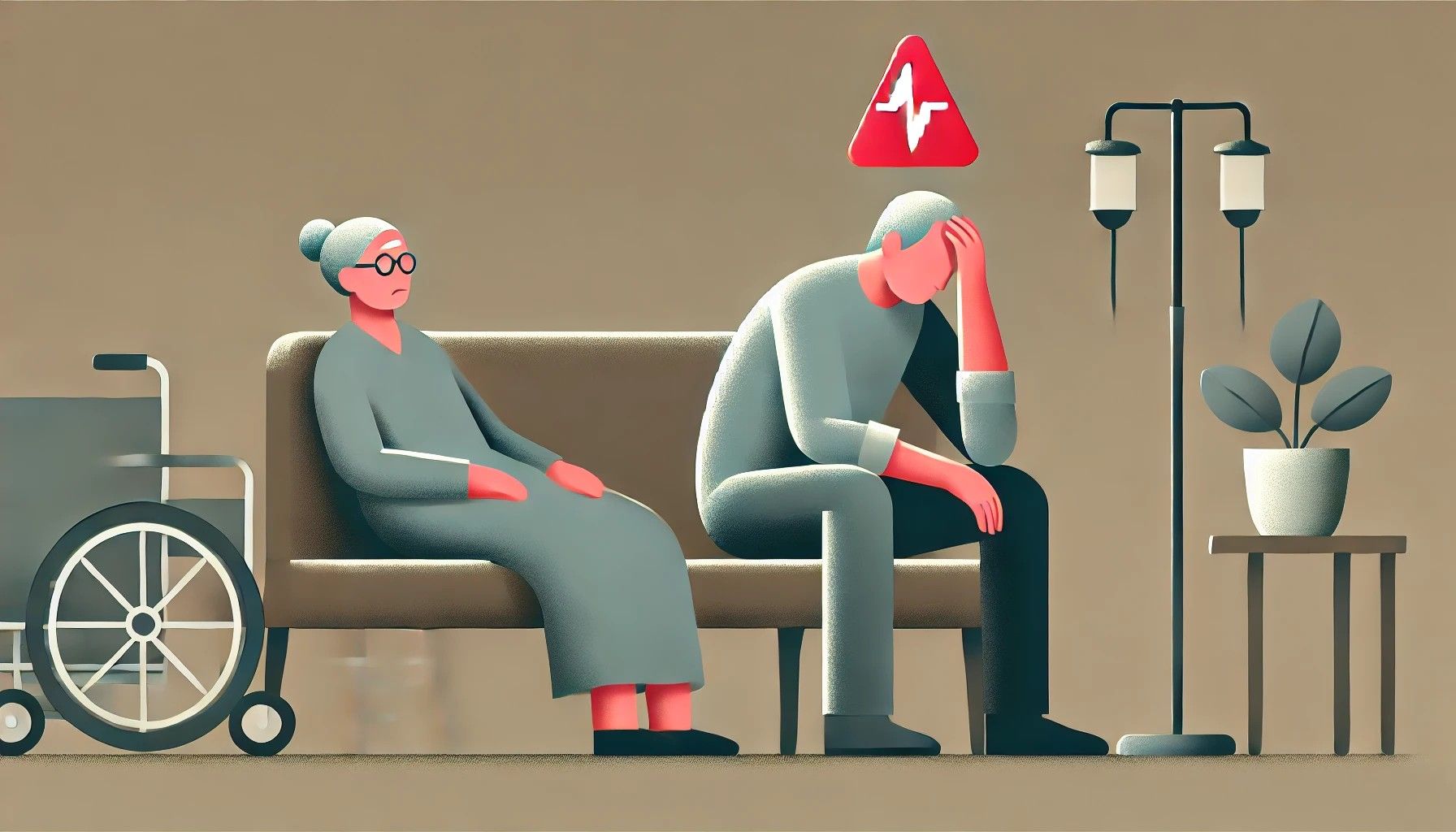
For Ujeong, now 33, money has always been an issue. Her father lost contact with the family when she was young, and her mother, diagnosed with schizophrenia in 2003, was unable to hold a steady job. Without her grandmother's care and her uncle's support, it would have been difficult for her to grow up without major problems.
She realized her mother was different from others even before starting elementary school. Ujeong’s mother would suddenly get angry, claiming, "Those people talked behind my back," or become terrified at the sound of airplanes, believing a war had started. Ujeong said that being with her mother felt like being with a five-year-old child.
The place where Ujeong and her mother lived was a semi-basement apartment in Yangcheon-gu, Seoul. The deposit was 500,000 won, and the monthly rent was 240,000 won. The house barely got any sunlight, making laundry a struggle in the summer, but with average studio rents in Seoul nearing 700,000 won for a 10 million won deposit, this was the best Ujeong could afford. She managed living expenses, her mother’s medical bills, and rent by working part-time at a pharmacy (she has since moved to Dongjak-gu, Seoul, with help from the Seoul Welfare Foundation and LH).

Woojung (right) and her grandmother. The grandmother who took care of Woojung since childhood passed away five years ago. Photo by Woojung
원본보기 아이콘The reason she admitted her mother to a hospital four hours away from home was the same?she was always searching for a more affordable option. Though she had lived in Yangcheon-gu since childhood, she moved her mother from hospital to hospital in Geumcheon-gu, Seoul, Gyeyang-gu, Incheon, and Uijeongbu, Gyeonggi Province. Without a car, Ujeong had to take Line 5 to Gimpo Airport Station, transfer to the Airport Railroad to Gyeyang Station, switch to Incheon Subway Line 1, get off at Jakjeon Station, and then take a bus to reach the hospital.
She wanted to go to college but couldn’t afford the tuition. Given her family’s situation, she likely would have qualified for a national scholarship, but when she entered college as someone born in 1991, the current scholarship system was not yet in place, making tuition a heavy burden. “Maybe my uncle would have helped if I had asked. But that’s not easy, you know? I’m not even his daughter. He has a daughter my age. No one made me feel bad, but I always felt strangely inferior.”
Ujeong entered a cyber university a year later than her peers, majoring in social welfare. The tuition was relatively cheaper than a regular four-year university, and she could secure time to care for her mother, making it the best option available.
By the time she became an adult, another caregiving responsibility awaited her. The grandmother who had raised her since childhood became so frail with age that she could no longer eat on her own. At the same time, Ujeong also became the primary caregiver for her mother.

Long-term Care Insurance Application Tag for Woojung's Mother under the National Health Insurance Service. Photo by Woojung
원본보기 아이콘Naturally, depression and frustration grew. She began to feel sick and swollen for no apparent reason, but doctors couldn’t find the cause. Poor diet, inadequate housing, caregiving stress, or perhaps all three combined could have been the reason. What was clear was that none of these causes could be separated from her daily life.
“My face was so swollen I was embarrassed to go outside. It was so bad people would think it was a botched cosmetic surgery. I was unrecognizable. Being sick in my early and mid-20s, when I should have been at my healthiest and prettiest, was really hard. Steroid injections would reduce the swelling for two or three days, but then it would come back. The pain keeps recurring every few years.”
She started gaining weight as a side effect of psychiatric medication for depression. Her weight suddenly increased by 15 kilograms, and her confidence plummeted. Ujeong said, “I have to take care of both my grandmother and my mother, I barely eat, but my body keeps getting bigger. While others my age are getting promoted at work, I’ve been doing part-time jobs for years,” adding, “It was hard to escape my environment.”
The difficulties Ujeong faced are chronic issues for family caregiving youth. They must juggle caring for family members with school and work, and especially during adolescence and young adulthood, long-term caregiving can deprive them of educational opportunities. The resulting gaps in education and experience can negatively affect social adaptation and reintegration, often trapping them in a cycle of poverty.

This is why society must support the independence of young caregivers. It is urgent to guarantee opportunities for education and training and to provide conditions that allow them to grow as independent individuals in physical safety and emotional stability.
In fact, three out of ten children and adolescents who care for family members report difficulties with their studies. According to a September study by ChildFund Korea titled “Analysis and Support Strategies for Family Caregiving Children and Adolescents,” 29.6% of respondents said they struggled with homework, studying, and other school activities. Many also cited job training and employment support (35.5%) or career education and counseling (34.4%) as needed assistance.
Heo Minsook, legislative researcher for the Health, Welfare, and Women’s Team at the National Assembly Research Service, said, "Caregiving children and adolescents may fall behind in their studies, doze off in class, or forget to bring supplies. Because they lose sleep while caring for family, their academic performance suffers. There is a need to establish awareness and systematic support for caregiving children, adolescents, and youth," she emphasized.

There are also calls not to overlook emotional support. Facing the triple burden of caregiving, housework, and making a living can put mental health at serious risk. These concerns are often shared in communities of young caregivers. Many express fear that they will waste their youth caring for sick family members, or that they will be abandoned with no one to care for them when they themselves grow old and sick.
Jo Gihyeon, head of the family caregiving youth community “N-inbun,” said, "People say self-reliance support is most important, but that doesn’t just mean economic independence like getting a job. Young caregivers develop an unhealthy attachment, thinking, 'Can I do this when someone at home is sick?' or 'My mom can’t live without me.' Emotional independence?building diverse social relationships and separating from these pressures?is also necessary. Many young caregivers have no environment or person with whom they can share their stories," he emphasized.
*In this article, pseudonyms were used to protect the identity of the caregiving youth.
IndexCheongchun Close to Cancer
- The Burden of Care... Double Hardship of Caregiving and Studies Puts Mental Health at Risk


![[Reportage]"It Only Leads to Arguments"... Chungnam's True Sentiments Hide Deeper After Martial Law](https://cwcontent.asiae.co.kr/asiaresize/304/2026051223490460082_1778597344.jpg)