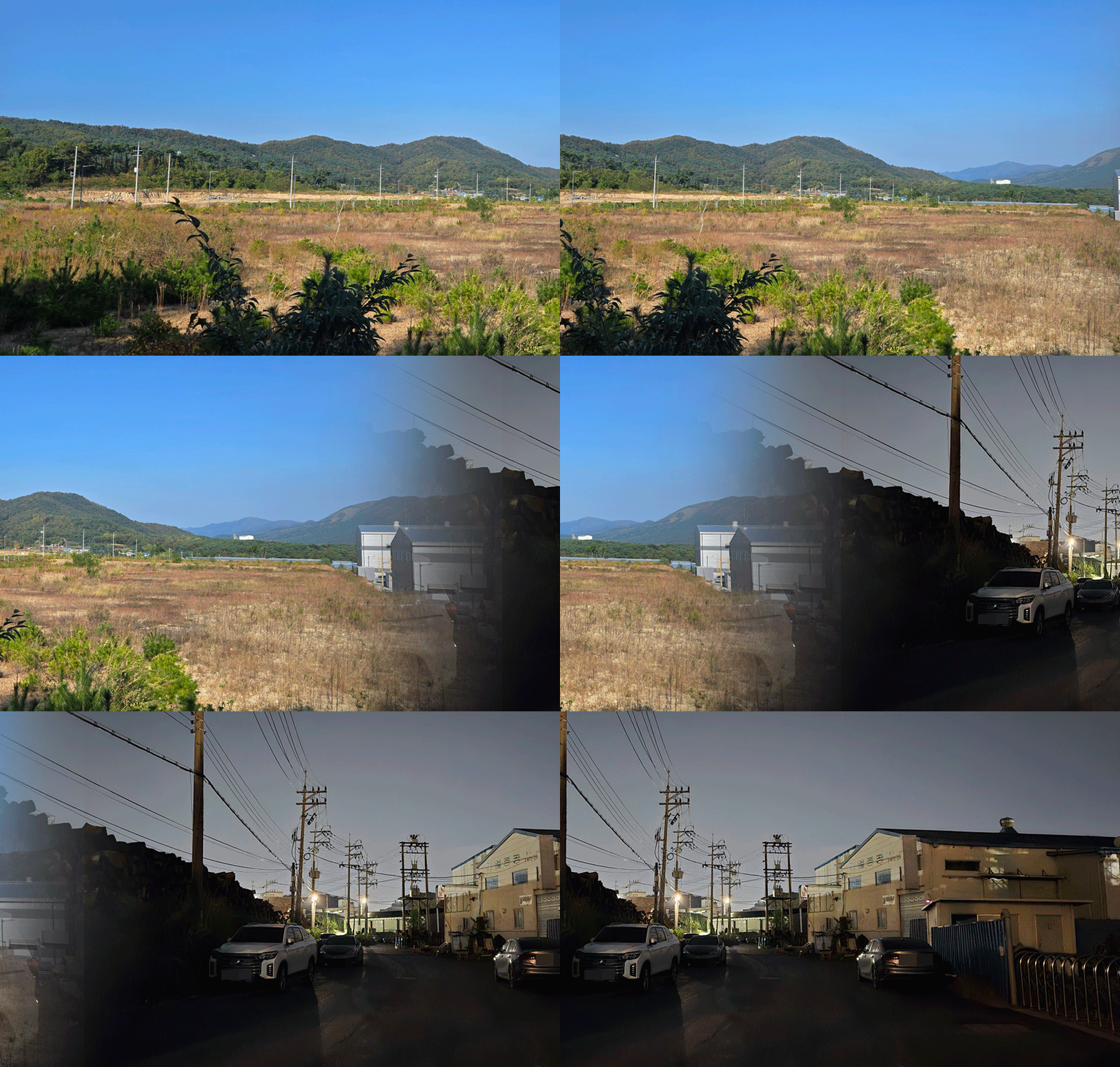
Status of Ungcheon General Industrial Complex
In Korea, there is land that has been abandoned. Its area is 24,490,000 square meters, which is 5.44 times the size of Yeouido. Nothing is done on this land. It is simply left unattended. This is the story of 'industrial complexes.'
Starting with the development of the Ulsan Industrial Complex in the 1960s, these were the driving force behind Korea's rapid economic growth. However, because they were established indiscriminately, they now suffer from chronic unsold lots. While efforts have been focused solely on building new industrial complexes, existing ones are facing serious aging problems.
Promised 600 jobs, but only 92... More than half remain unsold
Ungcheon General Industrial Complex in Boryeong, South Chungcheong Province. From 2015 to the end of 2019, 65 billion won was invested to develop a 685,400 square meter site. However, Ungcheon Industrial Complex has nothing but a large signstone; the sidewalks and even the four-lane access road are empty. The old yellow container that served as the sales office is also closed with no staff inside.
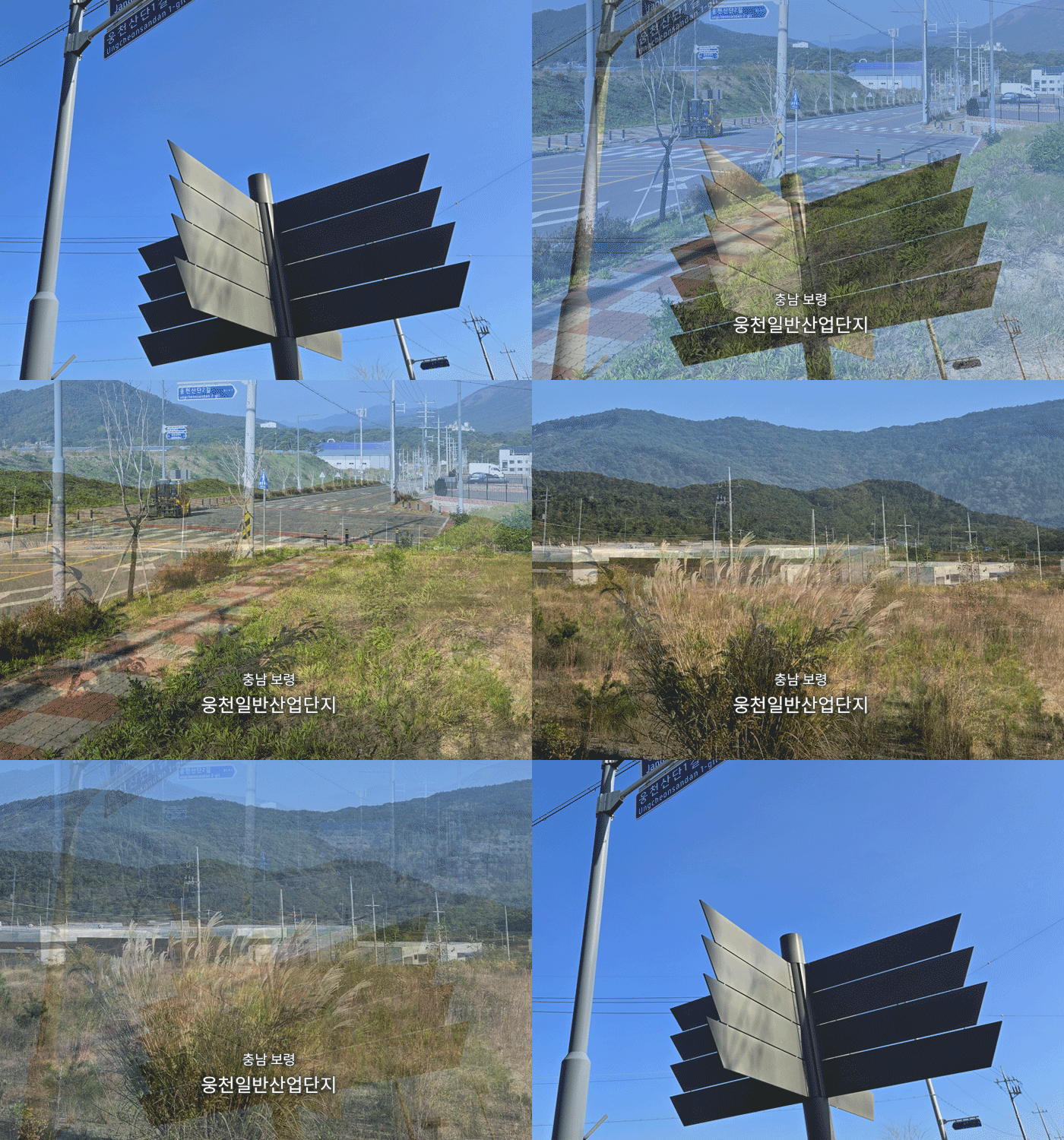
Ungcheon Industrial Complex has only a large monument, and the pedestrian paths as well as the access road, a four-lane road in both directions, are completely empty.
The inside situation was similar. Since few people walk on the sidewalks, weeds were growing between the pavement blocks. All the signboards indicating the locations of tenant companies were blank.
The industrial complex roads were empty, and the site had more neglected vacant land than factories.... On the plots where tenant companies could not be found, only weeds and shrubs taller than a person were growing.
The situation inside was similar. Few people walked on the sidewalks, so weeds grew between the paving blocks. All the signs indicating the locations of tenant companies were blank. The roads in the complex were empty, and more land was left unattended than used for factories. On lots that failed to attract tenant companies, only weeds and scrub taller than a person were growing.
This place has not solved its unsold land problem. Of the 499,649 square meters available for sale, only 87,679 square meters, or 17.5%, have been sold. By the end of the second quarter this year, only 207,000 square meters, or 43%, had been sold. Of the 16 companies that signed sales contracts, only 6 are currently operating. The number of employees is just 92, only 15% of the original estimate.
This is not an isolated case. According to the Korea Industrial Complex Corporation, as of the second quarter of this year, there are 1,315 industrial complexes nationwide, covering a designated area of 1,454,820,000 square meters. Of the 619,220,000 square meters available for sale, 24,490,000 square meters remain unsold, unable to attract tenant companies.
97 industrial complexes have zero sales, yet new ones keep being built
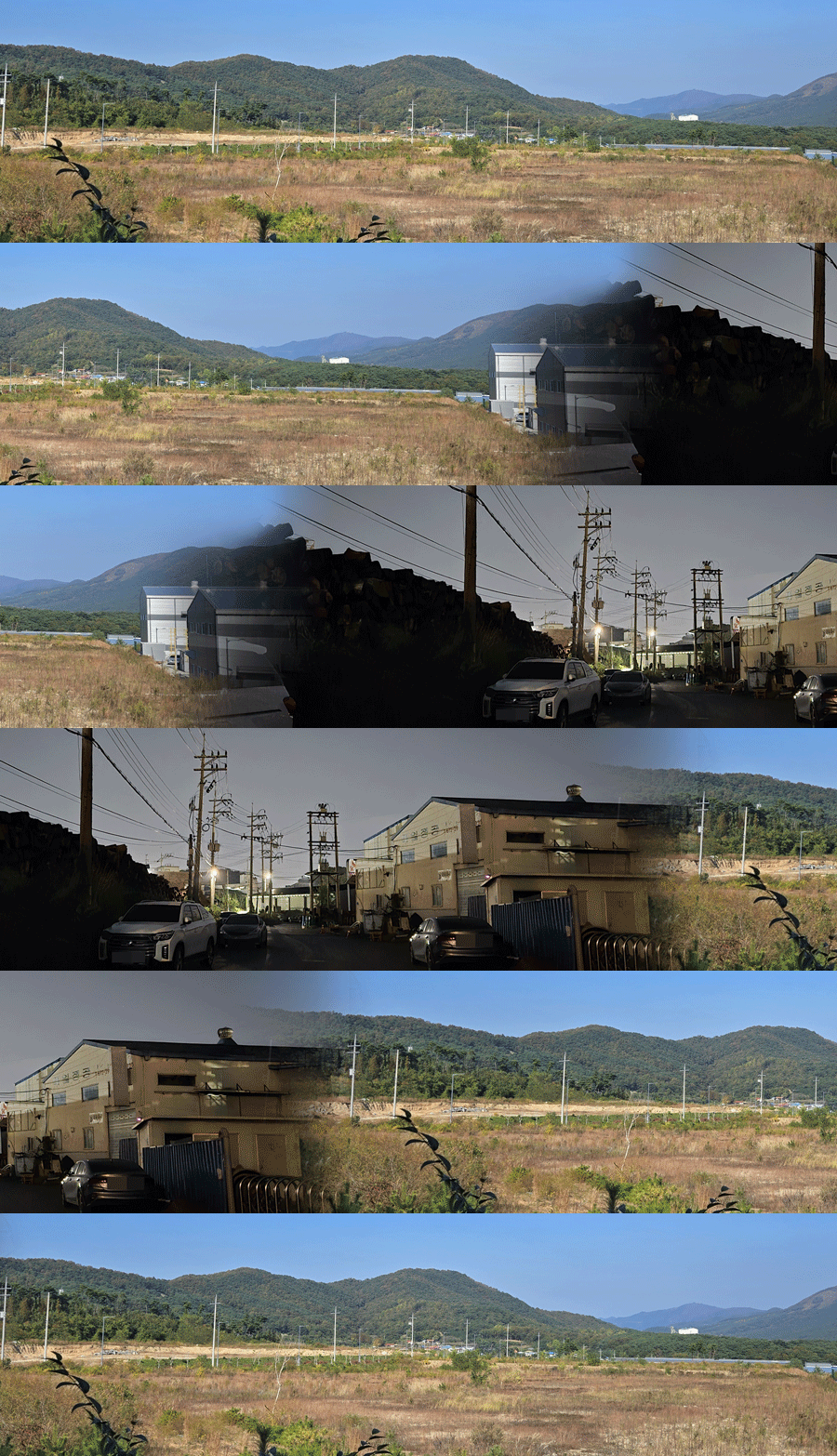
Status of Remodeling and Regeneration Projects for Aged Industrial Complexes Since the 2000s
This means that industrial complexes equivalent to 5.44 times the size of Yeouido (4,500,000 square meters) are being left abandoned. The area of unsold industrial complexes hit a record low of 20,820,000 square meters in the third quarter of last year, but by the second quarter of this year, it had increased by 3,670,000 square meters to 24,990,000 square meters in just nine months. During this period, 26 new industrial complexes were created. In other words, new industrial complexes were continuously built while unsold land was left as is. Of the 97 industrial complexes nationwide that are under development or have been completed, not a single lot has been sold.
While only focusing on building new industrial complexes, the existing ones are aging. As of June this year, there are 487 aged industrial complexes nationwide that have been in operation for more than 20 years since groundbreaking. This means 37% of all 1,315 industrial complexes are over 20 years old.
Attempts were made to solve the problem, but they were not successful. This is because efforts were focused only on expanding infrastructure such as parking lots and road construction. According to Kim Taeseon of the Democratic Party, the government has carried out remodeling and regeneration projects for a total of 47 aged industrial complexes since 2000. The total budget invested was 925.55 billion won. The most common project was 'building parking lots' (33 cases). There were zero projects for expanding convenience, cultural, or welfare facilities, or improving residential conditions.
Green spaces and welfare facilities remain poor. According to the Industrial Site Information System, as of September this year, green space in industrial complexes amounted to 18,392,000 square meters, or just 12.6%. Compared to 20 years ago, this is about one-third less. Of the 83 industrial complexes managed by the Korea Industrial Complex Corporation, 43 (51.8%) do not have a single restaurant on site. There are also 50 complexes (60.2%) with no cafes at all.
The world's oldest industrial complex 'Trafford'... Revitalized by attracting abundant cultural facilities


What about overseas? The Trafford Industrial Complex in Manchester, UK, the world's oldest, is reminiscent of a theme park. The 3,715-square-meter indoor playground, now a landmark, attracts about 1,000 visitors on weekends. Four minutes away by car is an indoor kart track, and to the south of the complex is the UK's largest indoor climbing gym. There is also an inflatable theme park for children, a large shopping mall, an aquarium, and a museum.
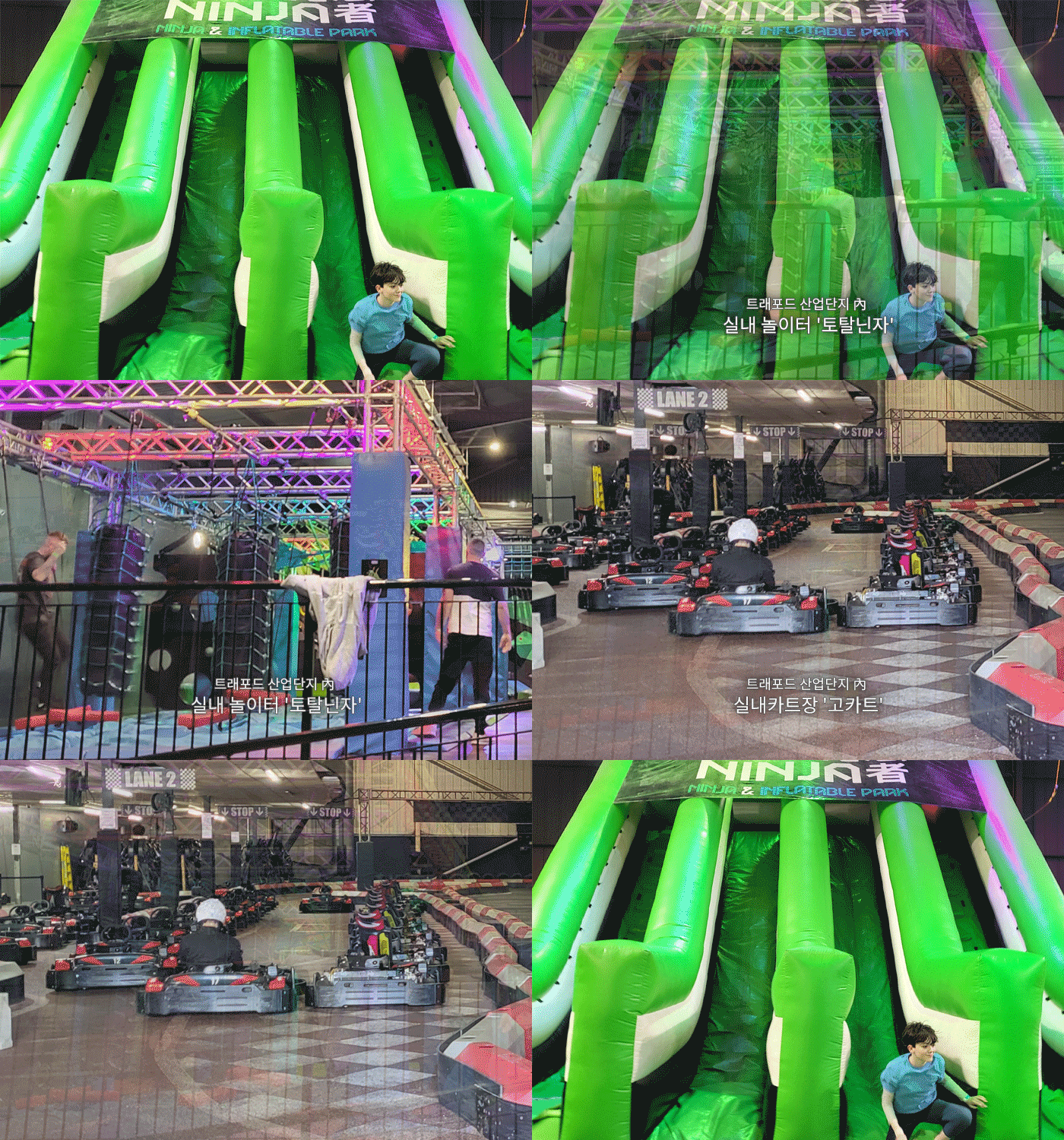
The Oldest Industrial Complex in the World 'Trafford'
It might seem unlikely that an industrial complex would be popular because of a playground, but this place's popularity is sky-high. There are even exciting facilities for adults, with an average of 500 visitors on weekdays and around 1,000 visitors on weekends. Not only employees of the Manchester industrial complex and local residents but also tourists from other regions come here.
Especially through social media, it has gained word-of-mouth popularity and emerged as a unique dating spot for young people in the UK.
On one side of the industrial complex, a lake and park have been created where people can enjoy picnics and walks. Since there are no special boundary markers, local residents and industrial complex workers can freely use the area.
It was not like this from the beginning. At the end of World War II, Trafford Industrial Complex had 75,000 workers, but by 1976, this had dropped to 15,000. To overcome this, from 1987, cultural facilities, public art, and landmarks were created over 11 years.
Thanks to these cultural facilities, Trafford Industrial Complex made a dramatic comeback. It attracted 990 companies and succeeded in creating 29,000 new jobs. It also drew in 1.7 billion pounds (about 3.0599 trillion won) in private investment.
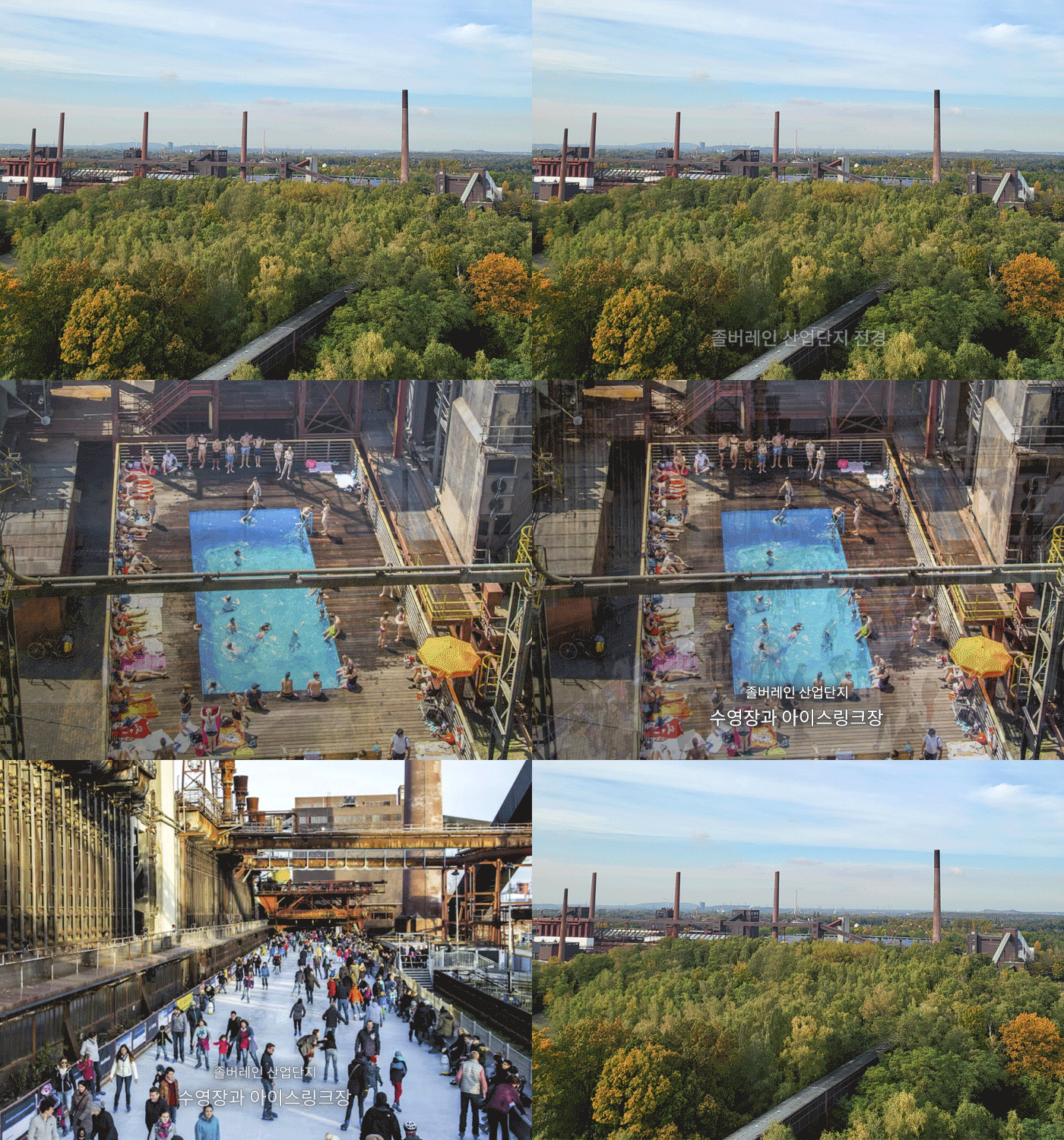
The Zollverein coal mine in Essen, Germany, a representative landmark of Germany visited by 1.7 million people annually
The massive 1 km water stream that used to carry cooling water was transformed into an ice rink in the dead of winter, and the leftover space in front of the coke plant was turned into a swimming pool in midsummer.
The huge winding tower that used to haul coal from the mine shaft was made into the landmark of Zollverein. World-renowned architects were invited during the remodeling.
The Zollverein Coal Mine in Essen, Germany is a similar case. Once so polluted with smoke that it was hard to breathe, it was closed in 1986 due to severe environmental pollution.
The local government cleaned up the area and transformed it into a UNESCO World Heritage Site. The waterway that once carried cooling water was turned into an ice rink, and a unique swimming pool was built for local residents right below the coal plant. Now, it is one of Germany's most famous landmarks, attracting 1.7 million visitors annually.
This feature was supported by the Press Promotion Fund, created with government advertising fees.
-

Reporter Song Seungseop tmdtjq8506@asiae.co.kr
-

Reporter Ju Sangdon don@asiae.co.kr
-

Reporter Kwon Hyeonji hjk@asiae.co.kr
-
Edit Hong Jayeon hongzaa@asiae.co.kr
© The Asia Business Daily(www.asiae.co.kr). All rights reserved.