"Semiconductors are technology first and foremost, technology second"
If we lose the battle, there is no future for Korean semiconductors
by Choi Ilgwon
by Moon Chaeseok
by Hong Jayeon
Published 01 Nov.2024 15:13(KST)
Updated 01 Nov.2024 16:40(KST)
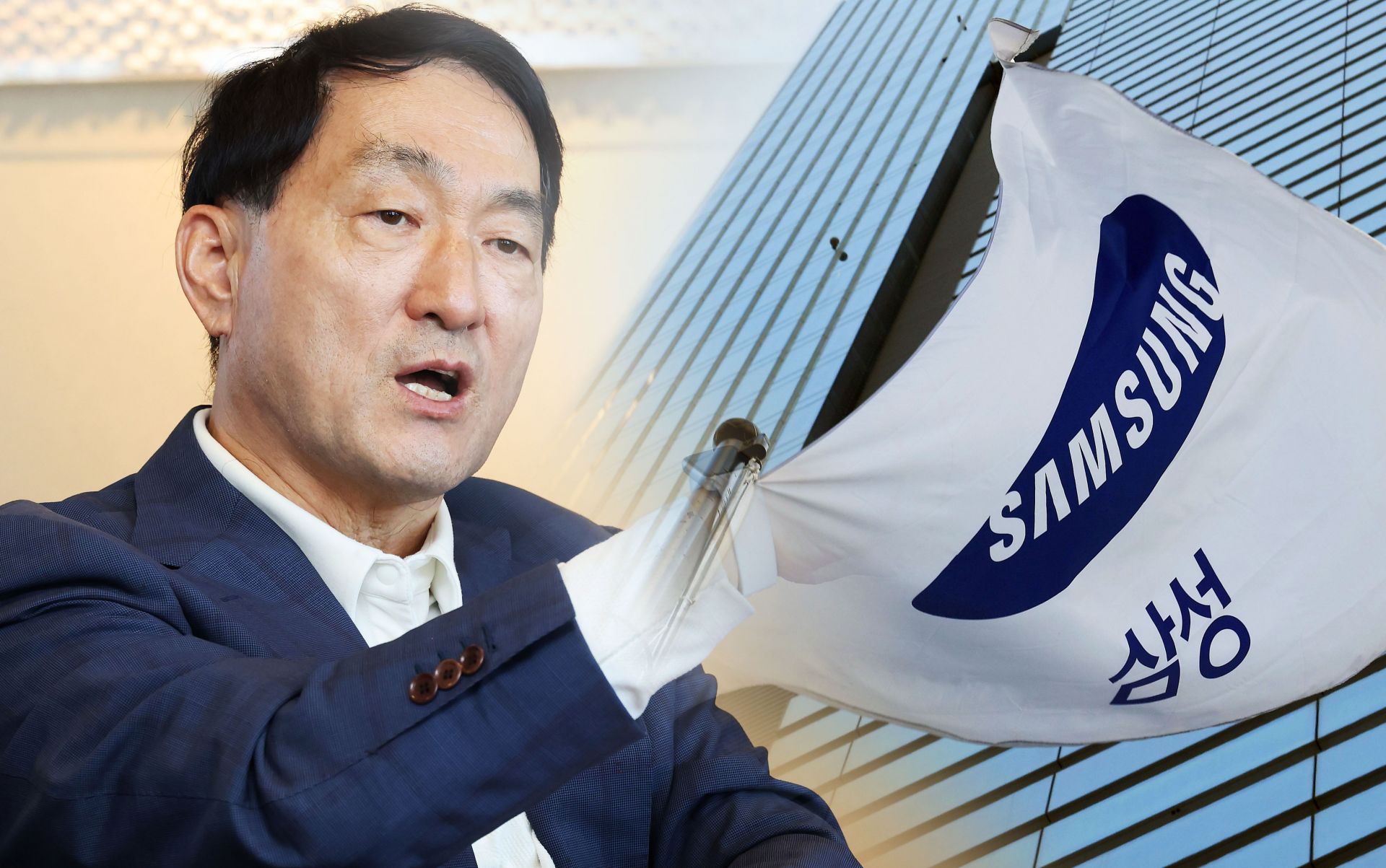
Lim Hyungkyu, former president of Samsung Electronics, who led Samsung Electronics to become the world’s No. 1 in memory semiconductors in the 1990s and laid the foundation for Samsung’s system (non-memory) semiconductors, said in an interview with Asia Economy on the 31st of last month that there is no solution for overcoming Samsung Electronics’ current difficulties other than sticking to the fundamentals. On that day, Samsung Electronics announced its third-quarter performance, with semiconductor operating profit falling short of 4 trillion won. While memory performed well, the foundry (semiconductor contract manufacturing) business continued to post losses.
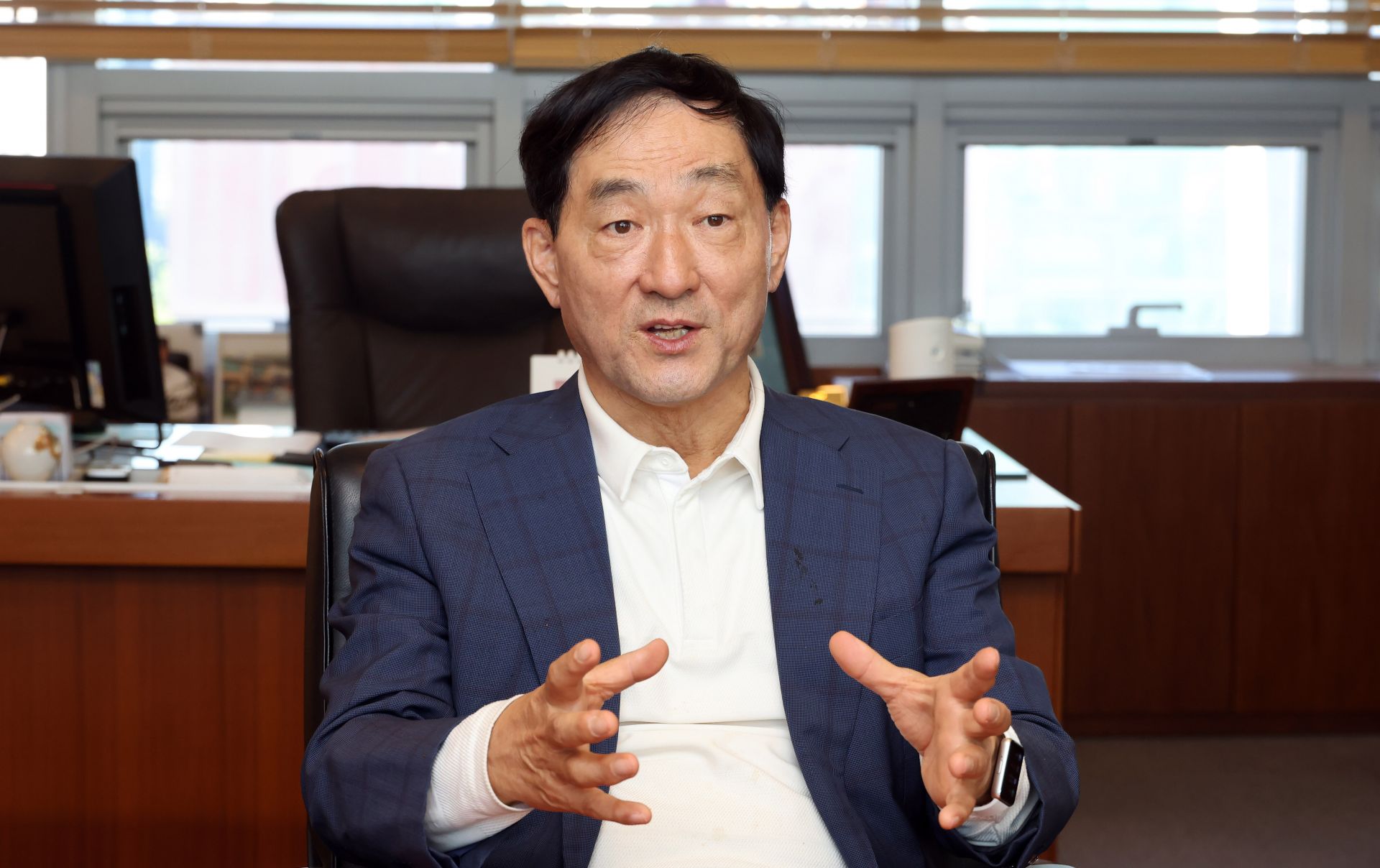
"Semiconductors are technology first and foremost, technology second"
If we lose the battle, there is no future for Korean semiconductors
For Samsung Semiconductor to leap forward again...
"Full authority must be given to the field general manager"
Regarding the foundry business, Lim commented, "I wonder if Samsung Electronics underestimated the challenge somewhat," adding that "the strategy needs to change." In 2019, Samsung Electronics announced its 'System Semiconductor Vision 2030,' aiming to become No. 1 globally in both fabless and foundry by 2030. According to Lim’s analysis, putting more emphasis on the foundry business has also weakened the memory business. He said, "It was a mistake to disperse resources by running memory and non-memory simultaneously." However, regarding spinning off the foundry business, he evaluated, "The investment prospects are uncertain," and "it could be risky."
Samsung Electronics garnered attention by succeeding in mass-producing the 2nm (nanometer, one-billionth of a meter) Gate-All-Around (GAA) process ahead of TSMC. However, it is struggling due to somewhat lower yield rates. Meanwhile, TSMC is focusing on maximizing the yield of its 3nm process. Lim said, "Developing the most advanced process is important, but so is the stability of technological capabilities," and added, "The foundry business requires a long-term perspective."
He also suggested that, just as Taiwan’s TSMC established a foundry centered on image sensors through its investment in Japan, Samsung Electronics should also consider formulating a non-memory strategy centered on specific chips, such as mobile application processors (APs).
Lim said that in the past, Samsung Electronics was able to surpass Japan and become No. 1 in memory semiconductors due to a constant sense of crisis. He recalled, "When memory prices plummeted and the so-called 'chicken game' began in 1996, it was truly a war," and added, "The late Chairman Lee Kunhee instilled this sense of crisis, and the mindset of employees that 'we must win' ultimately led to victory."
Lim stated that Samsung Electronics needs time to steadily solve problems in order to strengthen its fundamentals. He said, "There are about 500 core technologies needed for memory semiconductors," and "the task is to examine each one to identify what is lacking." For this reason, he advised that the field must be given full authority.

Vice Chairman Young-Hyun Jeon, head of the semiconductor division at Samsung Electronics (DS Division). Vice Chairman Jeon previously handled semiconductor design work and has a track record of defeating Taiwan in the memory semiconductor war from 2007 to 2009, known as the "second chicken game."
원본보기 아이콘He positively evaluated the decision to appoint Jun Younghyun as the head of the semiconductor division. Jun previously handled semiconductor design and has a track record of defeating Taiwan in the so-called 'second chicken game' during the memory semiconductor war from 2007 to 2009.
Throughout the interview, Lim emphasized the importance of technical talent. This was interpreted as highlighting the difficulty of securing talent not only for Samsung Electronics but for the entire Korean semiconductor industry. According to Lim, the fundamental reason Samsung Electronics is now writing a letter of reflection is the weakening of technological capabilities. In his book 'Hidden Heroes,' Lim also stated that about 5,000 to 6,000 elite members?three for each core technology?must be secured. He said, "People with deep technical knowledge should be placed in key positions such as division heads, business unit heads, and managing directors, and a strong technical organization must be established."
Lim also stated that, for Samsung Electronics to overcome its crisis, it is necessary to further deepen its understanding of customers. He explained that the reason Samsung was able to surpass all Japanese memory companies in the past was its ability to quickly supply customers with a variety of products. At that time, when demand for PC chips surged and competitors launched five new products a year, Samsung Electronics released 20 new chips annually.
He said, "The essence of the semiconductor business is execution at the field level," emphasizing that product planning, business strategy, and customer sales all take place within the technical organization. He especially pointed out that "it is important for field engineers to directly face customers and accurately identify their needs."
Lim commented on Samsung Electronics’ slump, saying, "In the end, it’s a matter of how time is used." As it will take at least 10 years for Samsung Electronics to strengthen its technological competitiveness, the key is what and how to fill that time. He stressed, "It is necessary to create an atmosphere where engineers are respected, and to have a mindset of pursuing any future business with promising core technologies without hesitation."
He also said that, from Samsung Electronics’ perspective, having a strong competitor like SK Hynix is helpful. The fact that SK Hynix is making great strides in the global market with high-bandwidth memory (HBM) will serve as motivation for Samsung Electronics.
He said, "From a national perspective, I think Korea’s memory industry will be fine for the time being thanks to competition." As SK Hynix pulls ahead, it has fended off the pursuit of Chinese companies and bought Samsung Electronics time to regroup. He said, "As long as Korea holds on to the 'one-two' (No. 1 and No. 2 in the world) positions in DRAM and NAND flash, the Korean semiconductor industry will never die."
Discussion led by: Choi Ilkwon, Head of Industry IT Department
Compiled by: Moon Chaeseok, Reporter

Choi Ilgwon igchoi@asiae.co.kr

Moon Chaeseok chaeso@asiae.co.kr
Hong Jayeon hongzaa@asiae.co.kr
© The Asia Business Daily(www.asiae.co.kr). All rights reserved.