
"Building a workplace daycare was not easy regardless of the company's will"
[K Population Strategy]
(29) Nami Island, Troubled by Labor Shortage, Builds Workplace Daycare Center
Employees Lead a Virtuous Cycle of Encouraging Childbirth and Childcare
Low Birth Rate and Disappearing Local Populations... Companies Also Flock to the Seoul Metropolitan Area

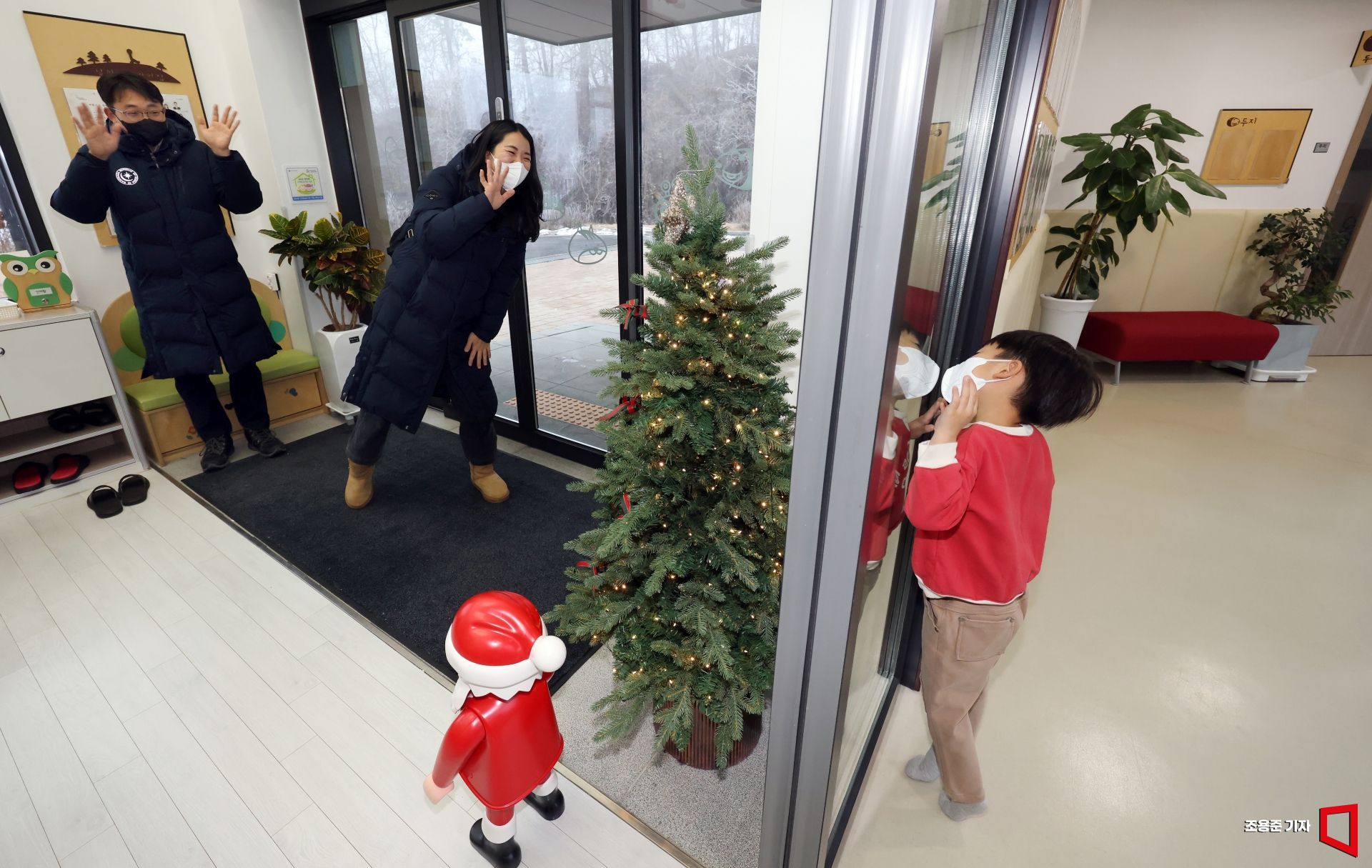
On the 26th of last month, children were playing with toys at the Namisum Corporation workplace daycare center located in Gapyeong-gun, Gyeonggi Province. Photo by Jo Yongjun jun21@
원본보기 아이콘On a foggy morning along the Bukhangang River, a black car carefully drove down the icy road. The car stopped in front of the Nami Island daycare center in Gapyeong-gun, Gyeonggi Province. A couple stepped out of the car with their sleepy, fussy son. They opened the door and handed their child's hand to the daycare teacher, but the boy returned to his mother’s arms. "Roha, let's have fun today too, okay?" Roha’s mother, Jang Jooyoung (39, female), smiled as she stroked Lee Roha’s (7) hair and cheeks. His father, Lee Cheongwon (42, male), also smiled and waved at Roha. After a little more time in his mother’s arms, Roha finally took the teacher’s hand. When Roha made eye contact with the teacher, he smiled and went up to the second-floor play area. After dropping off their son, the couple headed straight to the Nami Island dock next door and boarded the 8:30 a.m. ferry. This is the morning commute of a couple who both work for Nami Island Inc.
Their day starts at 6:30 a.m. They prepare a simple breakfast and wake up their eldest daughter, an elementary school student, along with Roha. Although Roha is a bit grumpy in the morning, he gets up and eats breakfast right away. After breakfast, they drive Roha to the daycare center. Since their home is only five minutes by car from both their workplace and the daycare, they save a lot of time. The couple even enjoys a cup of coffee together in the morning. This relaxed start to the day is possible because they moved to Gapyeong-gun, where the workplace daycare is located, three years ago. Jang said, "Other families say mornings are a war because of feeding kids and sending them to daycare, but we are relatively relaxed," adding, "Moving to Gapyeong-gun saved us time and brought happiness to our family."
A Daycare Open on Weekends... Young Couples Moving to Gapyeong

On the 26th of last month, children were playing at the company daycare center of Namisum Corporation located in Gapyeong County, Gyeonggi Province.
Photo by Yongjun Cho jun21@
The Nami Island daycare center, which has been operating since 2021, currently cares for 20 children. The children play in a two-story building with a total floor area of 770.14 square meters, which includes an indoor playground. The facility was built large from the start, aiming for a capacity of 60 children. As a result, three to four children play in a space large enough for ten adult men to lie down. The daycare is not just for the children of Nami Island employees. Since last year, any resident of Gapyeong-gun can send their child to the Nami Island daycare center. Of the 20 children, six are from local families with no connection to Nami Island. Tak Jaeyoon, director of the daycare, explained, "Parents who run pensions or restaurants in Gapyeong-gun often struggle to look after their children on weekends. Since the Nami Island daycare is open on weekends, parents with limited time bring their children here."
Nami Island is not required by law to have a workplace daycare center. According to the Infant Care Act, only businesses with over 300 female employees or 500 total employees are required to establish a daycare or contract with one. Nami Island currently has 149 total employees, with only 42 women. However, facing difficulties in recruiting young employees, the company decided to build a daycare center. First, there simply aren’t enough people in Gapyeong-gun. The young population is rapidly declining, while the elderly population is soaring, leading to its designation as a depopulation area. Furthermore, as Nami Island is a tourist destination, employees must often work weekends, making it hard to attract the younger generation who value work-life balance without special benefits. This is why the company invested a total of 4 billion KRW (2 billion from government subsidies and 2 billion from company funds) in building the daycare and spends 200 million KRW annually on its operation.
The results were immediate. As of 2020, there were 79 employees in their 20s, 30s, and 40s; last year, the number jumped to 96. The proportion of employees in their 20s, 30s, and 40s also increased from 57% to 65%. CEO Min Kyunghyuk of Nami Island said, "Tourism is driven by people, but it’s much harder to recruit staff in Gapyeong-gun compared to big cities. Nami Island is not a large company, so we can’t drastically increase salaries," adding, "We decided to build a workplace daycare center as a long-term benefit for employees. The benefit employees gain is time."
Employees raising children at Nami Island unanimously say they chose the company for the time-saving benefits of the daycare. Jang once left her first job at Nami Island to work at another hotel. However, as she prepared for marriage and children, she noticed the reality faced by her female seniors?many quit their jobs or gave up having children because they didn’t have time to care for them. Eventually, Jang returned to Nami Island, despite the lower salary, and moved nearby for more time. Nami Island welcomed her return, saying it’s better to have employees with previous experience. Jang emphasized, "I needed a job where I wouldn’t have to worry about my career even if I had a child. For parents, what’s needed for childcare is not money, but time."
Falling Birth Rates and Disappearing Local Populations... Even Companies Flock to the Capital Area
With the low birth rate, local populations are disappearing. In October 2021, the Ministry of the Interior and Safety designated 89 out of 229 cities, counties, and districts nationwide as depopulation areas, based on indicators such as average annual population change, net youth migration, aging rate, and crude birth rate. Not only Gapyeong-gun, but also metropolitan districts like Dong-gu, Seo-gu, and Yeongdo-gu in Busan, and Nam-gu and Seo-gu in Daegu, were included. As of 2022, except for Andong and Yeongcheon in North Gyeongsang Province, none of these regions had more than 500 newborns. In Ulleung-gun, North Gyeongsang Province, only 20 babies were born in 2022.
Companies are inevitably concentrating in the Seoul metropolitan area, where the population is large. According to the Ministry of SMEs and Startups, as of 2021, 4,024,987 out of 7,723,867 companies (52.11%) were located in Seoul, Gyeonggi, and Incheon. The number of employees in the metropolitan area was 13,600,809, accounting for about 59.5% of the national total of 22,865,491. Professor Cho Youngtae of Seoul National University Graduate School of Public Health said, "To find young talent, companies naturally move to the metropolitan area. The remaining young people also flock to the metropolitan area for jobs, creating a vicious cycle."
The Thorny Path of Building and Operating the Nami Island Daycare Center... "A Childcare-Centered Culture Comes First"
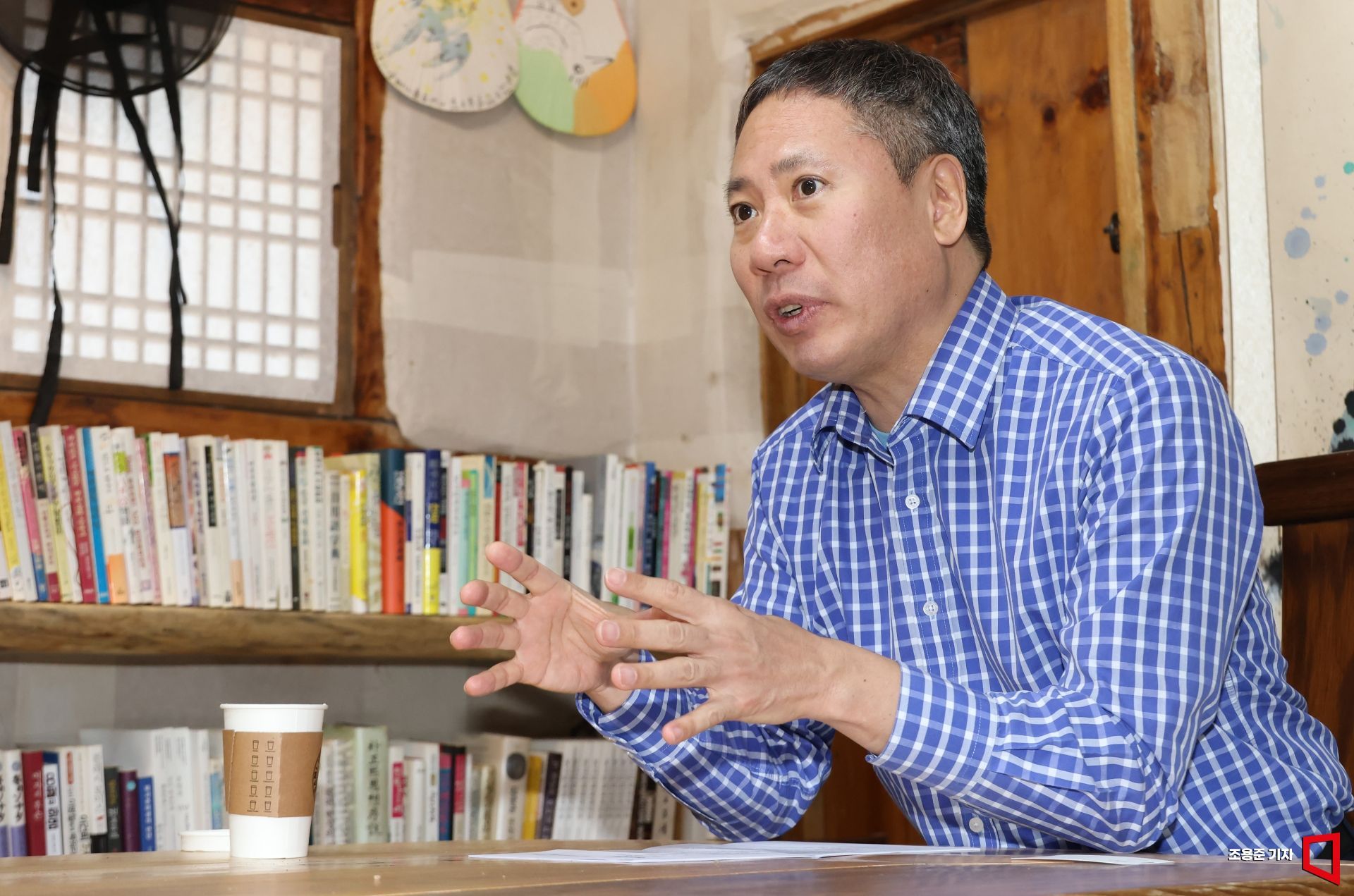
Lee Cheongwon, Head of Management Planning at Nami Island, who led the establishment of the workplace daycare, had to face opposition from various places during the promotion period.
He said, "The workplace daycare was an investment in people from a long-term perspective. I thought it was one of the welfare benefits that should not be cut off, even if costs could be reduced."
"Regardless of the company’s intention, building a workplace daycare center was not easy." Lee Cheongwon, head of management planning at Nami Island and leader of the daycare project, faced opposition from various quarters during the process. The strongest resistance came from private daycare centers in the area, who feared losing children to a company-backed facility in a region already lacking children. Gapyeong-gun also initially opposed the daycare project, considering the backlash from private centers. There was internal resistance as well?employees in their 20s without children complained that the benefit was not relevant to them. Lee said, "It’s true there was passive opposition from the local government and some employees," but added, "In the end, everyone agreed on the virtuous cycle the workplace daycare would bring. Employees who complained in their 20s now feel relieved to have the daycare as they get married and prepare for children."
There were also operational challenges. With the spread of COVID-19, foreign entry was restricted and the domestic tourism industry was devastated. Nami Island was no exception: sales fell from 32.2 billion KRW in 2019 to 13.4 billion KRW in 2020. Nevertheless, construction and operation of the daycare center continued. CEO Min said with a smile, "Honestly, we didn’t expect COVID-19 to last this long, so we just kept pushing forward." He added, "Investment in people?meaning employees?cannot be done on a yearly basis. The workplace daycare was a long-term investment in people. Even if we can reduce costs, this is a benefit that must not be cut."

An Aerim (43, female) from the HR team emphasized that building the daycare center would not have been possible without a company culture that prioritizes childcare. The daycare project could continue because there was already an atmosphere where employees could freely take parental leave, half-days, and flexible work for their children. An said, "If I say I’m taking a half-day because my child is sick, everyone sincerely worries and tells me to focus on my child, not work. It’s a workplace that values family," adding, "Of course, a workplace daycare cannot solve every childcare problem. Small acts of consideration at work are necessary."
The ‘childcare swap’ among employees is an example of Nami Island’s childcare-first culture. If there’s nowhere to leave an elementary school child on weekends, they ask another employee to look after them. The children are close because they meet often, making this possible. The oldest child takes care of the younger ones. Seven families, including Han Jaesung (42, male), who works at the pottery craft center, not only swap childcare but also gather for meals at Christmas and year-end, maintaining close relationships. Han said, "When my children see me working on crafts, they call me ‘uncle’ and come to say hello. Seeing the children get along and respect each other’s parents makes me proud."
With a company culture that puts children first, employees themselves encourage childbirth and childcare. An is now a ‘childbirth ambassador,’ actively encouraging company couples to have children. If an employee is unsure about having a child, she explains the happiness a child brings. An said, "Of course, having a child is hard. You can’t shop as freely as before, and you suffer from lack of sleep while soothing a crying baby," but added, "The happiness a child brings is incomparable. It’s a happiness you shouldn’t give up for work." She also said, "I hope others can experience that happiness too."
An emphasized the virtuous cycle created by a company culture that values childcare. She said, "I’ve received so much from the company and colleagues while raising my child. From now on, whenever I have the chance, I want to give back this gratitude to those around me."
Editor's NoteThe key to solving South Korea’s population problem lies with companies. A workplace culture that evaluates employees based on their work, regardless of gender, and is family-friendly, is crucial to addressing the K-population issue. While low birth rates are caused by many factors, it’s important to ensure that workplace burdens do not become an obstacle to having children. Asia Economy visits companies leading family-friendly policies to identify what enabled their successful implementation, and explores solutions with companies that face practical challenges. Through this, we encourage change starting from companies and analyze the government’s role in making this possible. We listen to voices emphasizing that a company culture and atmosphere that reduces psychological burdens, rather than just financial support, is key, and present alternatives from various perspectives.
Special Reporting Team 'K Population Strategy - Gender Equality is the Answer'
Kim Yuri, Lee Hyunju, Jung Hyunjin, Boo Aeri, Kong Byungseon, Park Juni, Song Seungseop (reporters)
Kim Pilsoo, Economic and Financial Editor
Kim Pilsoo, Economic and Financial Editor
IndexK-Population Strategy - Gender Equality
- "Dads Pushing Strollers on Weekday Afternoons... The Secret Behind the Rising Birth Rate"
- A Miracle Blossoms in Depopulated Areas: Settling in Gangwon-do Thanks to a Childcare-First Culture
-

Reporter Kong Byeongseon mydillon@asiae.co.kr
-

Edit Kim Dongpyo letmein@asiae.co.kr
© The Asia Business Daily(www.asiae.co.kr). All rights reserved.