Major Corporations Ban or Restrict 'Corporate Card' Golf Course Payments
Top Golf Courses Begin to See Decline in Revenue and Customer Numbers
Membership Golf Course Users Drop by 7.7%
After a record-breaking boom fueled by increased corporate card spending following COVID-19, golf courses are now starting to see their performance decline. This is due to a growing number of people traveling abroad for golf and major corporations moving to restrict the use of corporate cards at golf courses amid concerns over economic downturn. As golf courses rely on corporate cards for one-third of their revenue, the spread of corporate card usage restrictions among large companies is directly leading to decreased profits for golf courses.
The top revenue-generating golf courses saw their performance decline last year. This marks the first downturn in four years since before COVID-19. According to the Financial Supervisory Service’s electronic disclosure system on the 21st, last year, Daeyoung Base in Chungju recorded sales of 62.2 billion KRW, an 11% decrease from 70 billion KRW the previous year. During the same period, Jeju SK Pinx dropped from 66.8 billion KRW to 60.3 billion KRW, Seowon Valley in Paju, Gyeonggi, from 57.8 billion KRW to 55.5 billion KRW, and Lakeside in Yongin, Gyeonggi, from 61.6 billion KRW to 60.4 billion KRW.
Large Corporations Restrict Golf Course Visits Starting This Year Samsung Electronics Implements Six-Day Workweek SK Group Revives Saturday Executive Meetings LS Issues Golf Restrictions for Some Affiliates
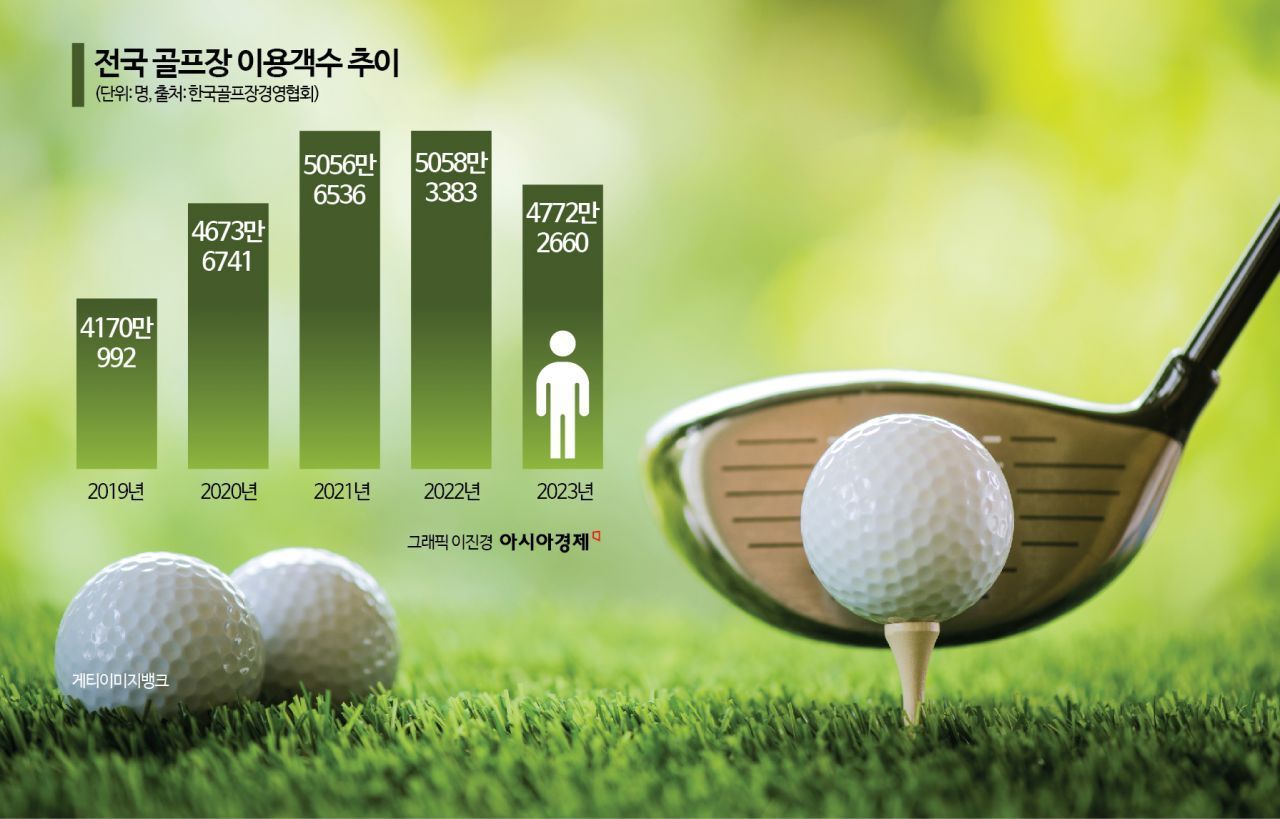
The number of golf course users also declined. According to the Korea Golf Course Business Association, the number of golf course users nationwide last year was 47.72 million, a 5.7% decrease from 50.58 million the previous year. Notably, the decline rate for membership golf courses, which are largely owned by corporations, was 7.7%, higher than the 4.6% decrease for public golf courses. With corporate card sales accounting for 27.6% of total revenue at golf courses as of the end of 2022, the growing trend of restricting corporate card use at golf courses, especially among major companies, is now showing a direct impact on sales.
In response to last year's uncertain business environment, major corporations tightened their belts and this year have officially instructed employees to refrain from visiting golf courses. Lotte Group began regulating golf course visits in March. According to the 'Basic Work Guideline Compliance' sent by Lotte Holdings to all affiliates, executives are restricted from visiting golf courses on weekdays, are advised to avoid overseas business trips including weekends, and are prohibited from demanding excessive social or networking activities with partner companies under the pretext of maintaining relationships.
Since April, Samsung Electronics has implemented a six-day workweek for executives. With the main affiliates such as Samsung Electronics facing weaker performance and growing uncertainties in the business environment, including exchange rates and oil prices, the company has entered emergency management mode. Executives of other major affiliates, such as Samsung Display and Samsung SDI, have also started participating in the six-day workweek.
SK Group, which is struggling due to poor performance of its main affiliates, also revived Saturday executive meetings in April for the first time in 20 years. SK Telecom announced that while it would not prohibit personal golf activities, playing golf at company expense should be minimized. Emart, facing worsening business conditions, has also recommended that executives refrain from using golf courses except for essential business entertainment. LS has issued similar restrictions to some affiliates, with LS Electric recently reclaiming some executives' golf memberships to cut costs. Hanwha has also reduced executive golf memberships, leading to Jade Palace memberships being released onto the market.
An executive at a major corporation said, "Except for essential business activities, there is a general atmosphere of restricting personal visits to golf courses," and added, "Guidelines for corporate card use have also been strengthened compared to before."
As companies rush to restrict entertainment golf, concerns are growing within the golf course industry. Especially for regional golf courses, the impact of worsening business conditions is already being felt, and there is growing anxiety about a possible decline in the golf population.
A CEO who operates a membership golf course in Jeju, which experienced a significant boom during COVID-19, said, "It's not easy to fill tee times on weekdays," and lamented, "There's even talk that it's better to host tournaments and collect usage fees." He added, "We're trying various ways to boost golf course revenue, but the general public already perceives golf courses as expensive, making the situation difficult."
Editor's Note'Entertainment golf' using corporate cards has driven the golden era of the golf industry since COVID-19, but with companies now restricting corporate card payments at golf courses, the industry is facing a crisis. The golf boom was so strong that even the term 'Gollini' (golf+children) emerged, but now the enthusiasm is quickly fading amid economic uncertainty. In fact, golf courses that benefited the most from increased corporate card sales due to the 2020 entertainment expense limit increase have seen a decline in visitors since last year, worsening their business conditions. The number of large companies restricting corporate card use at golf courses is also on the rise.