Trends
Dongjak District Approves Management Disposition Plan for Noryangjin New Town Zone 1... All Eight Zones Surpass the 'Ninth Milestone'
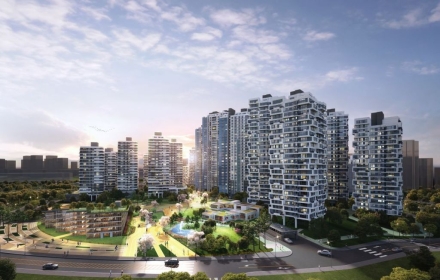
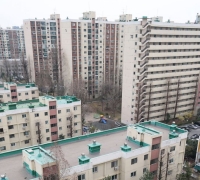
On April 24, Dongjak District Office in Seoul (headed by Mayor Park Il-ha) announced that it had approved the management disposition plan for the Noryangjin 1 Redevelopment Promotion Zone (hereinafter referred to as Noryangjin 1 Zone) housing redevelopment and maintenance project on April 21.With this, all eight zones within the Noryangjin Redevelopment Promotion District have now passed the management disposition stage. Management disposition is often referred to as the ‘ninth out of ten major milestones’ in redevelopment projects. The creation of a residential complex representing the southwestern part of Seoul has now entered full swing. Noryangjin 1 Zone is located in the area of 278-2 Noryangjin-dong. It is the largest among the eight zones. As a “triple station area” served by subway lines 1, 7, and 9, it boasts excellent accessibility to major business districts such as Yeouido, Yongsan, and Gangnam, making it the core project site of the Noryangjin New Town. To maximize its loc
-
Nationwide Land Prices Rise 0.58% in Q1... Seoul Up 1.10%
-
Seoul Apartment Jeonse Prices See Sharpest Weekly Rise Since 2019
-
Seoul Home Prices Rise in March Except for Three Gangnam Districts... Jeonse Growth Rate Hits Three-Month High (Update)
-
Seoul Home Sale Price Gains Slow While Jeonse and Monthly Rents Rise
-
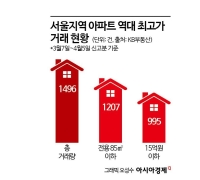
"Who Would Buy Here With So Many Better Options?" Over 100 Million Won Jump as Record-High Prices Continue
-
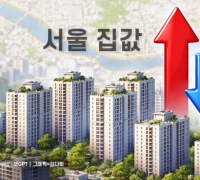
Seoul Apartment Prices: Gangnam Alone Sees Decline as Yongsan and Dongjak Turn Upward
![Is the Seoul Apartment Auction Market Cooling Off? Winning Bid Rate Drops Below 100% for First Time in 6 Months [Real Estate AtoZ]](https://cwcontent.asiae.co.kr/asiaresize/93/2026031817420280664_1773823323.jpg)
Is the Seoul Apartment Auction Market Cooling Off? Winning Bid Rate Drops Below 100% for First Time in 6 Months [Real Estate AtoZ]
The court auction winning bid rate for Seoul apartments has fallen below 100% again after six months. The auction market is experiencing a slowdown due to a weakened buying trend, particularly for ultra-high-priced apartments, coupled with an increase in listings from multiple-home owners and concerns about the burden of property taxes. According to JiJi Auction, a company specializing in auction data, the winning bid rate for Seoul apartment auctions last month was recorded at 99.3%. The winning bid rate is an indicator that compares the actual auction price to the appraised value. If the rate is higher than 100%, it means the property was sold above the appraised value; if it is below 100%, it was sold for less than the appraised value. The winning bid rate for Seoul apartments was 99.5% in September last year, but it rose to 102.3% in October and remained above 100% for five consecutive months until February of this year. However, after peaking at 107.8% in January this year, the ra
!["If Even Nowon Has No Listings, Where Can We Go?" Gwangmyeong and Dongtan Also Facing Lease Crisis [Real Estate AtoZ]](https://cwcontent.asiae.co.kr/asiaresize/93/2026022013425546558_1771562575.jpg)
"If Even Nowon Has No Listings, Where Can We Go?" Gwangmyeong and Dongtan Also Facing Lease Crisis [Real Estate AtoZ]
"There are no monthly or lease listings available, so I simply can't move at all." The shortage of apartment lease listings on the outskirts of Seoul is spreading to Gyeonggi Province, causing lease prices to jump by hundreds of millions of won. According to the real estate brokerage industry on March 27, the lease price for a 59㎡ unit at Gwangmyeong E-Pyeonhansesang Centreville in Haan-dong, Gwangmyeong City, recently increased from 560 million?570 million won to 600 million won. The lease price for an 84㎡ unit also jumped from the mid-600 million won range to 700 million won. A representative at a nearby brokerage office said, "There is demand coming in from the southwestern districts of Seoul such as Yangcheon, Guro, and Gangseo, but there are no listings available." Another broker added, "As the supply of new units has been exhausted, the number of listings has dropped, causing prices to rise by tens of millions of won." According to weekly apartment price trends for the fourth we
![Seoul Apartment Price Gains Widen After 8 Weeks... Gangnam Falls Again While Nowon and Guro Rise Further [Real Estate AtoZ]](https://cwcontent.asiae.co.kr/asiaresize/93/2026032613265091916_1774499210.gif)
Seoul Apartment Price Gains Widen After 8 Weeks... Gangnam Falls Again While Nowon and Guro Rise Further [Real Estate AtoZ]
The increase in apartment sales prices in Seoul has widened for the first time in eight weeks. However, this rise was primarily driven by mid- to low-priced areas such as Nowon and Guro Districts, while Gangnam District saw the largest decline so far this year. According to weekly apartment price trends for the fourth week of March (as of the 23rd) released by the Korea Real Estate Board on March 26, apartment sales prices in Seoul rose by 0.06% compared to the previous week. The increase rate last week was 0.05%. After peaking at 0.31% in the fourth week of January this year, the rate of increase had slowed for seven consecutive weeks before picking up slightly this week. Mid- to low-priced areas in the northeastern (Gangbuk) and southwestern (Seonam) regions lifted the overall figure for Seoul. Nowon District posted the largest increase among all Seoul districts, rising 0.23%, mainly due to small and mid-sized apartments in Sanggye-dong and Junggye-dong. Guro District (from 0.14% to
![[Why Did K-pop Leave Korea] Overseas Revenue Grows, But Less Returns Home... The Paradox of K-pop Globalization](https://cwcontent.asiae.co.kr/asiaresize/303/2026042415521039824_1777013531.jpg)
![[Why Did K-pop Leave Korea] The Era of Selling Only Songs Is Over... K-pop Competes with Four Key Survival Strategies](https://cwcontent.asiae.co.kr/asiaresize/303/2024050815595964978_1715151598.jpg)
In the News

- Chairman Ryu Jin's Decision on "Poongsan Headquarters Relocation": Will It Spur Other Major Corporations to Move Their Headquarters?
- Semiconductor Stocks Rally on Big Tech's Surprise Earnings... KOSPI Hits Intraday Record High
- "Running Into a Top CEO While Taking Out the Trash"...The Apartment Complex Where Executives Gather
- 146 Years of U.S.-UK Friendship Embodied in Trump's White House Desk... The Secret Behind King Charles III's Gift
- "South Korea as a Model"...The Country Looking to Korea for Low Birth Rate Solutions
- "Why Is Genesis Faster?" Surprised Ferrari... Promising First Results