
In Depth
K-pop, Why Did It Leave Korea
-
26.04.29 06:00
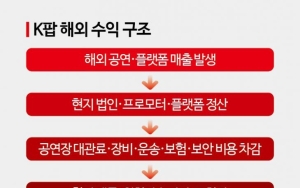
- Overseas Revenue Grows, But Less Returns Home... The Paradox of K-pop Globalization
-
K-pop generates enormous revenue overseas. However, that money does not all remain in Korea. As the K-pop stage has expanded globally and sales have grown, the profit structure has become increasingly complex. HYBE posted record sales of 2.6499 trillion won in 2025. Of this, concert sales amounted to 763.9 billion won. The company held 279 global concerts in various countries. However, operating profit dropped significantly. In the same year, operating profit was 49.9 billion won, a decrease of about 73% compared to the previous year. This was due to costs associated with the debut of new artists and restructuring expenses. Sales increased, but profits did not keep pace?a paradox of K-pop globalization. The local business structure is a key reason. K-pop is no longer just about producing albums at the Korean headquarters and selling them abroad. Local subsidiaries and partners are now involved. Revenue is generated overseas, and so are the costs. Local staffing, publicity, legal, and a
-
26.04.28 06:00

- The Era of Selling Only Songs Is Over... K-pop Competes with Four Key Survival Strategies
-
The global survival strategies of K-pop companies are undergoing structural reorganization. Moving away from the traditional model that relied on album sales and overseas tours, the industry is diversifying its revenue streams by focusing on concerts, local production, platforms, and intellectual property (IP). The key competitive factor has become how long a company can retain its fans and how effectively it can convert that loyalty into revenue. According to the industry on April 28, concerts are currently delivering results most rapidly. By expanding world tours centered on artists with proven fandoms, companies are able to secure cash in a short period. JYP Entertainment is a prominent example. In 2025, its concert revenue reached 188.9 billion won, while overseas sales in regions such as North America and Europe increased to 269 billion won. Concerts go beyond ticket sales, extending into merchandise, advertising, and collaborations, which ensures a fast turnover of revenue. Howev
-
26.04.27 08:06

- "From Korea to the World? That's History"... K-pop Heads Straight to the Heart of Pop
-
The stage for K-pop is changing. The conventional formula of achieving domestic success before expanding overseas no longer applies. "Global pre-planning"?designing teams, music, and tour strategies from the debut stage with North America and Europe in mind?has become the standard. As the market's center has already shifted beyond Korea, K-pop is no longer just an export product but has been reorganized into an industry designed for the global market from the outset. According to the International Federation of the Phonographic Industry (IFPI), global music market revenue reached 31.7 billion dollars in 2025, marking eleven consecutive years of growth. North America (38.7%) and Europe (30.4%) together accounted for 69.1% of the total. The reason major K-pop agencies prioritize the Western market is not just a trend, but a matter of market structure. The core revenue sources?combining music and concert profits?are concentrated in these regions. ◆ North America and Europe Account for 70%