Seo Juno, Nowon District Office Candidate: "Gwangwoon University Station Area and Changdong Rail Yard Development to Create Northeastern Economic Hub"
"Reinvigorating Nowon with an Administrative Support System for Reconstruction and a Garden City Vision"
[Interview] Seo Juno, Nowon District Office Candidate for the Democratic Party of Korea
"Four years ago, when I ran for city council, only the second floors of commercial buildings were visibly vacant. Now, there are even empty first-floor spaces. We need to attract businesses to create quality jobs and revitalize reconstruction and redevelopment in order to expand the supply of new apartments that residents prefer."
Seo Joono, candidate for mayor of Nowon District, whom we met at his campaign office in Nowon-gu, Seoul, remarked, "The population of Nowon District peaked at 650,000 in 2010, but has dropped to the 480,000 range this year. If the city fails to strengthen its competitiveness, the population could fall below 400,000 by 2030." His assessment was solemn and grave. Seo emphasized, "Nowon District must become an economic hub in the northeastern region," adding, "We can address this issue through the development of the Gwangwoon University station area and the Chang-dong vehicle depot."

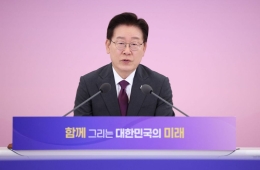
Seo Joono, candidate for mayor of Nowon District, is explaining his main campaign promises in an interview with The Asia Business Daily. Provided by the election office.
View original imageSeo has spent 13 years as an aide to Assemblyman Woo Won-shik (the current Speaker of the National Assembly), served as chief of staff to Kim Sung-hwan when he was mayor of Nowon District and Minister of Climate, Energy, and Environment, and worked as a Seoul city councilor. For over 20 years, he has been at the forefront of administration and policy in Nowon. We sat down with him on the afternoon of May 15. The following is a Q&A.
-What is the most urgent issue facing Nowon District?
The decline in population and the resulting stagnation of neighborhood economies, as well as the weakening of urban competitiveness that caused these issues, are the most pressing concerns. Attracting businesses and expanding jobs, improving transportation connectivity with Gangnam, and expediting reconstruction and redevelopment are all essential. These three elements must function together like interlocking gears.
If businesses move in and fast transit lines to Gangnam are established, the profitability of reconstruction and redevelopment projects will improve. A case in point is when the relocation plan of the IPARK Hyundai Development Company headquarters to the Gwangwoon University station area was announced, which immediately changed the market prices of neighboring complexes and the calculation of reconstruction contributions.
-You have emphasized the vision of a self-sustaining city and economic hub in the northeastern region.
To achieve this vision, the development of the Gwangwoon University station area, the creation of the Chang-dong vehicle depot Seoul Digital Bio City (S-DBC), and the development of the Korea Electric Power Corporation (KEPCO) Human Resources Development Center site must all succeed. The headquarters of Hyundai Development Company will relocate to the Gwangwoon University station area in 2028, but one company alone is not enough. We expect about 10 additional companies to move into this area.
The Chang-dong vehicle depot is targeting the start of infrastructure construction in 2028, according to the S-DBC plan announced last year. The initial agreement to relocate the vehicle depot dates back to 2007, when Assemblymen Woo Won-shik, Park Ki-chun, and Lim Chae-jung promoted the signing ceremony. Nearly 20 years of groundwork are now coming to fruition. A large number of high-quality bio companies are expected to move in here.
We must also consider the flow connecting Dobong and Nowon. Next year, with the opening of the Seoul Arena in Chang-dong, five-star hotels in Nowon, and reconstructed complexes such as Mimiseum, Miryung, Samho, and Wolgye Dongsin will connect with the Gwangwoon University station area to form a pedestrian and cultural corridor in the northeastern region. This will naturally link job, tourism, and consumption flows from Dobong and Nowon toward Nowon Station. Plans are also underway for a mixed-use complex combining five-star hotels with shopping and convention facilities.
We are also asking Hyundai Development Company to contribute to the local community. The company should participate in welfare, cultural, and sports programs in the region as part of its corporate social responsibility (CSR).
The KEPCO Human Resources Development Center site, located between Seoul National University of Science and Technology and Seoul Women's University, is still in the planning stage. However, after the relocation of the center, there are plans to utilize the site as a bio and research complex.
-You proposed making "Garden City" the next paradigm for Nowon.
The welfare and environmental infrastructure and the healing city assets created by previous mayors are valuable resources for Nowon. The "Garden City" upgrade aims to connect and promote these scattered assets—such as the Suraksan and Bulamsan trails, Gyeongchun Line forest path, Jungnangcheon and Danghyeoncheon riverside walks, Azalea Park, and Butterfly Garden.
The underground "Running Station" at Junggye Station, for which I secured funding during my city council term, will be completed within this year. We can also connect the Danghyeoncheon runner hub with the K Mountain (Suraksan and Bulamsan) initiative to attract more foreign visitors. Preparations for becoming an international city are underway as well.
-If elected, what will be your "first approval"?
The first approval will be to restore budget cuts. Over 80% of Nowon's budget consists of fixed costs, such as welfare and personnel expenses, leaving little room for discretionary spending. Therefore, I have set priorities: projects that can generate immediate and tangible benefits for residents, urgent personnel support for certain facilities, restoring operating funds for grassroots organizations, and new campaign pledge projects, in that order.
The first policy approval will be the establishment of an "administrative support system for reconstruction and redevelopment." Rather than leaving everything to maintenance companies, the district office will run a separate advisory group to provide pre-consulting from the planning stage onward.

In an interview, candidate Junho Seo stated, "I will make Nowon District an economic hub in the northeastern region." Provided by the campaign office.
View original image-Nowon District has the highest number of complexes eligible for reconstruction.
Fifty-eight complexes in the Sanggye, Junggye, and Hagye residential districts have entered full-fledged reconstruction following the announcement of the district unit plan. The original six-year plan was shortened to two years, and the district unit plan was finally announced last December. With the starting line now drawn, it's time to drive each complex's project forward. The current cap on the profitability adjustment coefficient is set at 2.0. Based on the average officially assessed land price, many complexes in Nowon and Gangbuk should exceed 2.0 for normalization.
If the next Seoul city administration allows for a higher cap, we will advocate for further increases in the adjustment coefficient. The Wolgye Mimiseum complex, located right next to the Gwangwoon University station area, gained momentum for its project by combining a higher adjustment coefficient with relaxed station area regulations. In the case of Wolgye Dongsin Apartments, the maintenance company omitted some profitability criteria in its calculations. The district office and city government jointly reviewed them, resulting in an improvement of about 35 million won per household, totaling approximately 3 billion won in project costs. This kind of process needs to be systematized.
-You have highlighted your achievements during your four years as a city councilor, such as establishing a master plan for the reconstruction of 58 complexes in Nowon, rationalizing the profitability adjustment coefficient, and securing a 298.4 billion won budget for regional development.
Ultimately, the work of a metropolitan council bears fruit only when it is implemented at the district level. I have handled all major issues in Nowon for over 20 years as a National Assembly aide, district mayor's chief of staff, and city councilor. My strength lies in being part of the ongoing progress built by Speaker Woo Won-shik, Minister Kim Sung-hwan, and Mayor Oh Seung-rok.
Hot Picks Today
 At President Lee's Call to "Give Enough to Shock," Whistleblower Rewards Become a Real Lottery
- If They Fail Next Year, Bonus Drops to 97 Million Won... A Closer Look at Samsung Electronics DS Division’s 600M vs 460M vs 160M Performance Bonuses
- Lived as Family for Over 30 Years... Daughter-in-Law Cast Aside After Husband's Death
- "If Both Spouses Work There, How Much Would They Make?" "They Earn More Than Me, and I'm a Doctor"... Envy Erupts Over Samsung Electronics' Bonus
- "Who Is Visiting Japan These Days?" The Once-Crowded Tourist Spots Empty Out... What's Happening?
Minister Kim, as a two-term mayor, reorganized Nowon's administrative system and established the foundation for a welfare and environmentally friendly city under difficult circumstances. Mayor Oh has elevated Nowon to a "healing city" over the past eight years. Now, it's time to build upon this foundation and further enhance the city's competitiveness.
© The Asia Business Daily(www.asiae.co.kr). All rights reserved.