Trump: "Talks in Final Stages," Iran Reviewing U.S. Proposal... Oil Prices Plunge 5% (Comprehensive)
Pursuing Diplomatic Solutions Despite Netanyahu's Objections
Iran's Declaration of "Controlled Waters" in the Strait of Hormuz Becomes an Obstacle

U.S. President Donald Trump announced that negotiations with Iran have reached their final stages. Iran also stated that it is reviewing a new U.S. ceasefire proposal, raising hopes for an end to the conflict. Furthermore, news that South Korean and Chinese oil tankers safely passed through the Strait of Hormuz contributed to a drop in international oil prices by more than 5% on this day.
Trump: "Iran Talks in Final Stages"... Netanyahu Responds Strongly

On May 20 (local time), President Trump stated at a White House press conference, "Negotiations with Iran are in their final stages. We need to get the right answer, and that answer must be complete and 100% satisfactory. It could be over very quickly, or it might take a few days." He continued in a speech at the U.S. Coast Guard Academy graduation ceremony on the same day, saying, "The remaining question is whether we will go there and finish the job ourselves, or if they will sign the documents. Let’s see how it unfolds."
Within and outside the U.S. administration, there are reports that President Trump is considering a plan to discuss detailed agreements with mediating nations for 30 days following a ceasefire deal. The political outlet Axios, citing government sources, reported, "On the night of May 19, President Trump told Israeli Prime Minister Benjamin Netanyahu during a phone call about the ongoing talks with mediating nations," and added, "President Trump told Prime Minister Netanyahu that after first signing a ceasefire agreement, he is preparing a letter of intent to begin 30 days of detailed negotiations on key issues such as Iran’s nuclear program and the reopening of the Strait of Hormuz."
In response, Prime Minister Netanyahu reportedly reacted strongly. Axios reported, "Prime Minister Netanyahu used harsh language during the call and became extremely angry, expressing strong skepticism about the negotiations, claiming Iran would not abide by an agreement to dismantle its nuclear program. However, President Trump maintained his commitment to pursuing a diplomatic solution."
Iran: "Reviewing New U.S. Ceasefire Proposal"... Visit from Pakistan’s Interior Minister

In Iran, reports emerged that a new U.S. ceasefire proposal had been delivered and is currently under review. Tasnim News Agency cited sources familiar with the negotiations with the U.S., stating, "Three days ago, our side submitted a 14-point proposal, and subsequently, through a Pakistani mediator, the U.S. delivered a new proposal. The document is currently under review, and nothing has been decided yet."
Iranian Foreign Ministry spokesperson Esmail Baghaei also said in a state television interview, "We are currently reviewing the new proposal in detail," and added, "The Pakistani interior minister’s visit to Tehran is to facilitate message exchanges between the two countries." He continued, "At this stage, we are focused on ending the war on all fronts, including Lebanon," and emphasized, "Iran’s frozen assets must be released, and harassment and piracy targeting Iranian vessels must stop. These have been clear issues from the beginning." According to Iran’s IRNA news agency, Pakistan’s Interior Minister Mohsin Naqvi delivered the 14-point ceasefire proposal to the Iranian side.
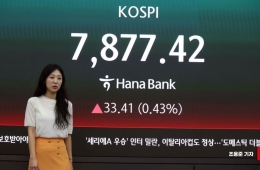
With growing expectations of a ceasefire, international oil prices plummeted. On the New York Mercantile Exchange (NYMEX), July West Texas Intermediate (WTI) crude futures fell sharply by 5.66% to close at $98.26 per barrel. On the London ICE exchange, July Brent crude futures ended down 5.63% at $105.02 per barrel. It is analyzed that in addition to the ceasefire expectations, news that ultra-large oil tankers from South Korea and China had safely passed through the strait also contributed to the decline in oil prices.
Iran’s Declaration of "Controlled Waters" in the Strait of Hormuz: An Obstacle

However, concerns have been raised that Iran’s announcement of its intention to establish a controlled maritime area in the Strait of Hormuz could become the final obstacle to a ceasefire agreement with the United States. On this day, the newly established Persian Gulf Strait Authority (PGSA), which manages the Strait of Hormuz, announced via the social network X (formerly Twitter), "We will establish a controlled area in the Strait of Hormuz. The eastern boundary is a straight line connecting Kuh-e Mobarak in Iran and southern Fujairah in the United Arab Emirates (UAE), and the western boundary is a line connecting the tip of Qeshm Island in Iran with Umm al-Quwain in the UAE." It further emphasized, "All vessels seeking to transit the Strait of Hormuz via the controlled area must undergo prior coordination and obtain official authorization."
Separately, Iran also expressed its stance that it will not succumb to U.S. military pressure. Mohammad Bagher Ghalibaf, Speaker of the Iranian Parliament and former head of the Iranian negotiating delegation, stated to Iranian state media, "We must enhance our readiness to respond effectively and powerfully to any potential attack," and stressed, "Iran will not be intimidated by threats under any circumstances."
Market experts warned that concerns over crude oil supply disruptions due to the risk of war with Iran have not been fully resolved. According to CNBC, Citibank stated in a report, "The risk of prolonged disruptions to oil supplies through the strait is not yet fully reflected in the market," and pointed out, "Brent crude could rise to $120 per barrel in the short term."
Hot Picks Today
 At President Lee's Call to "Give Enough to Shock," Whistleblower Rewards Become a Real Lottery
- If a Samsung Electronics Employee with a 100 Million Won Salary Receives a 600 Million Won Performance Bonus, Taxes Total 247.19 Million Won
- Lived as Family for Over 30 Years... Daughter-in-Law Cast Aside After Husband's Death
- "Who Is Visiting Japan These Days?" The Once-Crowded Tourist Spots Empty Out... What's Happening?
- Park Minshik Shaves Head: "I Will End Han Donghoon's Predatory and Parasitic Politics"... Ongoing Calls for Conservative Consolidation in Busan Buk-gu Gap within PPP
Wood Mackenzie, an energy consulting firm, also commented, "In the worst-case scenario, if the Strait of Hormuz remains closed through the end of the year, oil prices could approach $200 per barrel. Conversely, if the United States and Iran reach a peace agreement next month that includes reopening the Strait of Hormuz, prices could fall to around $80 per barrel."
© The Asia Business Daily(www.asiae.co.kr). All rights reserved.