[Shaken K-Automotive]② US, China, Japan, EU Tighten Protection for Their Industries... Only Korean Cars Left Unprotected
US IRA, EU IAA, and Japan’s Strategic Sector Production Tax System
Industry Voices Growing: “Urgent Need for a Domestic Production Promotion Tax System”
China’s Vehicle Exports Continue to Rise... Countermeasures Needed
Global protectionism aimed at safeguarding domestic automotive industries is becoming increasingly sophisticated. As China intensifies its aggressive export push, the European Union (EU) has followed the United States and Japan in tightening defensive measures by linking incentives to domestic production. Meanwhile, there is growing concern across the Korean industry that a lack of effective countermeasures could result in Korea falling behind in global competition.
![[Shaken K-Automotive]② US, China, Japan, EU Tighten Protection for Their Industries... Only Korean Cars Left Unprotected](http://www.asiae.co.kr/news/img_view.htm?img=2026051515225565089_1778826175.png)
According to the China Association of Automobile Manufacturers on May 19, China exported 7.1 million vehicles last year, an increase of 21.1% compared to the previous year. After remaining at around 1 million vehicles annually until 2020, exports nearly doubled in 2021 and have continued their steep growth. The main driver of this increase has been new energy vehicles, including electric vehicles (EVs) and plug-in hybrids (PHEVs).
As China targets the global market with new energy vehicles as its core export engine, major economies are rapidly raising their defensive measures by offering incentives tied to domestic production. The EU is the most recent to join this movement. In March, the EU unveiled a draft Industrial Acceleration Act (IAA), which stipulates that, for vehicles, only those meeting local manufacturing and origin requirements will qualify for public procurement and subsidy support. Previously, the United States granted tax credits to vehicles finally assembled in North America through the Inflation Reduction Act (IRA), and Japan began providing benefits to domestically produced vehicles in strategic sectors through its Strategic Fields Promotion Tax System. Now, the EU has also entered the fray with concrete measures.
Japan's Strategic Fields Promotion Tax System is even more specific. It covers five strategic sectors, including electric vehicles (EVs), low-carbon steel products, and sustainable aviation fuel. For EVs sold by companies meeting the government's minimum investment criteria, a tax credit of 400,000 yen (approximately 3.8 million won) per vehicle is provided. There are also subsidies for purchases of eco-friendly vehicles. These policies are designed to secure supply chains for strategic materials and prevent domestic companies from relocating overseas.
![[Shaken K-Automotive]② US, China, Japan, EU Tighten Protection for Their Industries... Only Korean Cars Left Unprotected](http://www.asiae.co.kr/news/img_view.htm?img=2026051515151465076_1778825715.png)
As major economies continue to strengthen their protective measures, calls are mounting in Korea for the introduction of a 'Domestic Production Promotion Tax System.' The government has reportedly acknowledged the need for such a policy and is considering concrete support measures, such as subsidies and tax credits.
However, there are considerable disagreements regarding the system’s design. The industry is wary that the government may limit the eligible sectors and products, citing concerns about overlapping tax credits and reduced tax revenue. Especially since, even if core industries like automobiles are included, there is speculation that large companies or those with high sales and operating profits may be excluded from the benefits. This has led to concerns that the key players supporting the industry could be left outside the support framework.
Hot Picks Today
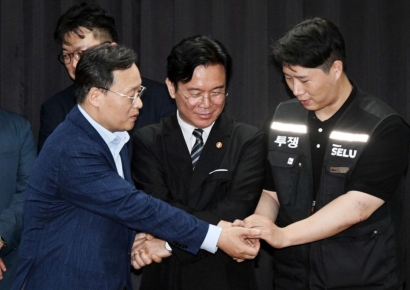 Dramatic Agreement Reached on Eve of Samsung Electronics General Strike... Minister Kim Young-hoon: "Showcased Korea's Strength in Dialogue" (Update)
- "It Has Now Crossed Borders": No Vaccine or Treatment as Bundibugyo Ebola Variant Spreads [Reading Science]
- "From a 70 Million Won Loss to a 350 Million Won Profit with Samsung and SK hynix"... 'Stock Jackpot' Grandfather Gains Attention
- "Stocks Are Not Taxed, but Annual Crypto Gains Over 2.5 Million Won to Be Taxed Next Year... Investors Push Back"
- "Who Is Visiting Japan These Days?" The Once-Crowded Tourist Spots Empty Out... What's Happening?
Since the Domestic Production Promotion Tax System is intended to support the entire industrial ecosystem rather than specific companies, the scope of its coverage will be a critical factor in determining its effectiveness. If the production and sales of finished vehicles falter, first- and second-tier suppliers and subcontracted parts manufacturers will inevitably be affected as well. Thus, many believe that both the upper and lower segments of the industrial supply chain must be supported. Recovering export competitiveness is also crucial, as it is directly linked to maintaining domestic jobs and production bases.
© The Asia Business Daily(www.asiae.co.kr). All rights reserved.