[Insight & Opinion] Global Financial Cycle and Interest Rates
Exchange Rate at 1,500 Won: Independent Monetary Policy Not Possible
Cross-Border Capital Flows Determined by U.S. Interest Rates
Financial Stability Should Take Priority Over Interest Rates
Capital Outflow Controls... Securing Foreign Curr
![[Insight & Opinion] Global Financial Cycle and Interest Rates](http://www.asiae.co.kr/news/img_view.htm?img=2024091308483929211_1773620765.jpg)
Bond yields are on the rise, and the exchange rate is fluctuating around the 1,500 won per dollar mark, drawing heightened attention to the Bank of Korea's future interest rate and foreign exchange policy decisions.
In this context, the "Global Financial Cycle (GFC) theory" has also gained the spotlight. This theory was developed by Bank of Korea Governor Rhee Changyong and Professor Hélène Rey of the London Business School (LBS). The theory is especially noteworthy for its significant policy implications for interest rate and foreign exchange policy in emerging market economies.
The Global Financial Cycle theory focuses on the cyclical fluctuations observed as global banks’ credit supply and asset prices move in sync. The theory asserts that global credit supply—meaning cross-border capital flows—depends on the VIX, the volatility index of the Chicago Board Options Exchange, as global banks’ risk aversion increases due to concerns about balance sheet deterioration. Since the VIX is influenced by U.S. interest rates, the core claim is that cross-border capital flows are ultimately determined by U.S. interest rates.
This theory provides important policy implications in four key respects. First, it highlights that even emerging market economies with open capital markets find it difficult to maintain independent monetary policy, even if they adopt a floating exchange rate system. This challenges the traditional theory that exchange rates can absorb shocks from capital inflows and outflows caused by interest rate differentials with the U.S., thereby allowing independent monetary policy. The new perspective is based on the view that cross-border capital flows are determined more by global banks’ risk-averse lending behavior than by bilateral interest rate differentials. As a result, emerging markets face a dilemma: they must choose between capital account liberalization and an independent monetary policy.
Another important feature is the emphasis on macroprudential supervision. Since an interest rate hike alone cannot prevent a financial crisis stemming from capital outflows, the theory proposes strengthening proactive macroprudential oversight as an alternative. Ensuring the soundness of the financial system—such as by imposing levies on non-core liabilities of financial institutions—can help avert a financial crisis even if capital outflows occur due to rising U.S. interest rates.
In terms of monetary policy objectives, the theory prioritizes financial stability. It argues that monetary authorities should set financial stability as an additional policy goal alongside controlling inflation and stabilizing economic growth, to prevent financial crises. The theory also suggests that sharp interest rate hikes are not desirable as a means to curb capital outflows. Instead, it argues for gradual rate increases to stabilize prices and reduce non-performing loans, thereby supporting financial system stability.
The theory also emphasizes the importance of securing liquidity for financial stability. This is why Governor Rhee is focusing on securing foreign currency liquidity rather than merely worrying about exchange rate rises. The theory is positive about regulations and interventions in the foreign exchange market to curb excessive capital movements and reduce exchange rate volatility. Excessive capital inflows and outflows, as well as exchange rate volatility, can undermine financial stability, making regulation and intervention inevitable. In fact, Korea has previously imposed levies on banks’ foreign currency borrowings as part of its "three macroprudential policy tools" (forward position limits, foreign currency soundness levies, and taxation on foreign bond investment). However, this stance differs from that of the United States, which opposes capital flow regulations and foreign exchange market intervention. In contrast, international organizations such as the International Monetary Fund (IMF) and the Bank for International Settlements (BIS) have recently emphasized the importance of financial stability and shown a positive attitude toward arguments for curbing excessive capital flows and exchange rate volatility.
The Korean economy is exposed to risks of excessive capital flows and high exchange rate volatility due to increased stock investment. Rising debt and asset price bubbles have made interest rate hikes and financial stability top policy priorities. Now, more than ever, policymakers must carefully consider the policy implications of the Global Financial Cycle theory as they make their decisions.
Hot Picks Today
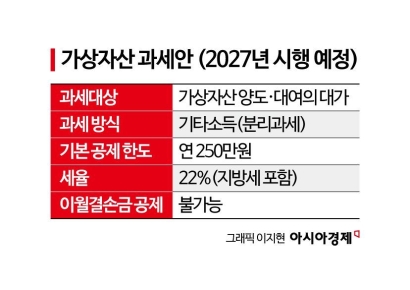 "Stocks Are Not Taxed, but Annual Crypto Gains Over 2.5 Million Won to Be Taxed Next Year... Investors Push Back"
- "Not Jealous of Winning the Lottery"... Entire Village Stunned as 200 Million Won Jackpot of Wild Ginseng Cluster Discovered at Jirisan
- "Rather Than Endure a 1.5 Million KRW Stipend, I'd Rather Earn 500 Million in the U.S." Top Talent from SNU and KAIST Are Leaving [Scientists Are Disappearing] ①
- "How Did an Employee Who Loved Samsung End Up Like This?"... Past Video of Samsung Electronics Union Chairman Resurfaces
- "Even With a 90 Million Won Salary and Bonuses, It Doesn’t Feel Like Much"... A Latecomer Rookie Who Beat 70 to 1 Odds [Scientists Are Disappearing] ③
Kim Jeongsik, Professor Emeritus, Department of Economics, Yonsei University
© The Asia Business Daily(www.asiae.co.kr). All rights reserved.







