"Korean-style Green Transformation Must Go Beyond Greenhouse Gas Reduction to Drive Industrial Transformation"
Ahead of the Government’s K-GX Strategy Announcement in June
Proactive Strategic Directions Proposed by the Private Sector
Key Tasks: Expanding the Power Grid and Creating a Market for Low-Carbon Products
With the government’s K-GX (Korean-style Green Transformation) strategy set to be announced in June, there are recommendations that this policy should go beyond simply reducing greenhouse gas emissions and become a core initiative driving industrial transformation and the advancement of the industrial structure.
The Federation of Korean Industries (hereafter FKI) announced this on May 12, as it held the "New Growth Engine K-GX Strategy Seminar" jointly with the National Future Strategy Institute at Seoul National University at the FKI Tower Conference Center. This seminar was held to proactively present strategic directions at the private-sector level ahead of the government’s K-GX strategy announcement and to seek ways to promote public-private cooperation.

Yoon Je-yong, a professor at Seoul National University, who presented on behalf of the private sector, stated, "The center of global competition is rapidly shifting to competition based on decarbonized industries," and emphasized, "The K-GX strategy must be designed not just as a greenhouse gas reduction policy, but as a strategy for industrial transformation and the advancement of the industrial structure."
Professor Yoon presented two key tasks for the K-GX strategy to function effectively at the industrial level. First, he cited 'expanding the power grid' for stable power supply as the top priority. As securing carbon-free electricity—including renewable energy and nuclear power—is the starting point for industrial transformation, he explained that it is urgent to strengthen the transmission and distribution infrastructure to deliver this power reliably to industrial sites.
Alongside this, he proposed 'creating a market for low-carbon products' as a major task. Since low-carbon products such as low-carbon steel have higher production costs compared to existing products, he recommended that a market environment be established in which these products are recognized for appropriate pricing and can be actively traded.
On the government side, Kim Byoung-hoon, Deputy Director of the K-GX Planning Team at the Ministry of Climate, Energy and Environment, gave a presentation on the "Korean-style Green Transformation Implementation Direction." Deputy Director Kim outlined the basic directions of the K-GX strategy as follows: ▲ "New Growth Engine GX" by fostering key industries such as solar power and batteries, ▲ "GX for All Citizens" by expanding the transformation based on regional growth and cooperation between large and small-to-medium enterprises, and ▲ "Sustainable GX" supported by the creation of investment resources and tax incentives.
Experts participating in the panel discussion unanimously agreed that the government’s role is crucial to the successful establishment of K-GX. Ahn Young-hwan, a professor at Sookmyung Women’s University, stressed, "To ensure the success of K-GX, it is important to consistently send stable signals to the private sector."
Lee Sang-hoon, an invited professor at Ulsan National Institute of Science and Technology (UNIST), also stated, "The climate actions of major countries are no longer confined to the realm of environmental policy, but have become the core of industrial policy, trade policy, and energy security strategy," and suggested, "The government should play a leading role in three areas: process innovation, market creation, and supply chain reinforcement."
Nam Ihyun, Standing Advisor at Hanwha Solutions, added, "For the green transformation of the petrochemical industry, a low-carbon technology portfolio is necessary," and stated, "It is essential to select technologies that are suitable for the domestic situation and to establish long-term investment plans to implement them."
Hot Picks Today
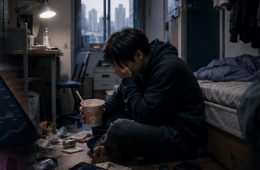
!["Spending 1 Million Won a Month Just to Breathe": Ramen Every Day in a Tiny Room... "Escaping Reality Through Dopamine" [University Students in Crisis] ⑥](https://cwcontent.asiae.co.kr/asiaresize/93/2026051210083259001_1778548113.jpg) "Spending 1 Million Won a Month Just to Breathe": Ramen Every Day in a Tiny Room... "Escaping Reality Through Dopamine" [University Students in Crisis] ⑥
"Spending 1 Million Won a Month Just to Breathe": Ramen Every Day in a Tiny Room... "Escaping Reality Through Dopamine" [University Students in Crisis] ⑥
- KOSPI Plunges... Foreign Media Cite Yongbum Kim's AI National Dividend Proposal as Cause
- "SK hynix Could Reach 2.8 Million Won; Why Securities Firms Are Confident That the Main Chapter of AI Has Not Even Begun Yet [Click eStock]"
- "Don't Come to Work from Tomorrow": Two Million Face Unemployment Crisis...Iran Shaken by War Shock
- Famous US Professor Calls Lee Suji's Kindergarten Parody "The Most Shocking in Korea"
Kim Chang-beom, Executive Vice Chairman of FKI, stated in his opening remarks, "Major countries such as the EU’s Clean Industry Deal and Japan’s GX Promotion Strategy are leveraging the energy transition as a strategic opportunity to secure new growth engines for their own countries," and emphasized, "The Korean-style Green Transformation strategy should become a core policy axis that not only strengthens the competitiveness of key industries but also drives the creation of new industries."
© The Asia Business Daily(www.asiae.co.kr). All rights reserved.